

I’m continuing to work on teaching myself Japanese, which has been a fascinating process. It’s been described to me as an extremely difficult language to learn, and as I familiarize myself with it, I’m starting to understand why.

Japanese is, in a lot of ways, a very straightforward, regular language, with very few exceptions to its rules and a surprisingly comprehensible set of grammatical rules. It’s difficult because almost none of these things map to English. I used to wonder how older (and some recent) translations of games and shows could be so incredibly bad, and I’m discovering that it’s because there’s really no direct translation. As I start to parse sentences, it feels a bit like one of the old Magic Eye pictures, where you have to look at it indirectly to allow your brain to see the hidden picture, and if you try to focus on it too much you lose it.
I can’t translate what I want to say in English directly to Japanese; I have to turn the sentence into an abstract thought, and communicate that. It’s made me a lot more aware of how I construct sentences in English, and I’ve started trying to think of English sentences as abstract thoughts to get a better handle on how to better express myself. In English, it’s easy for me to construct elaborate walls of words, adding complexity and waxing poetic to make a very simple thought seem like something a lot more ornate than it actually is. It’s a tendency that’s made it very difficult for me to learn languages in the past. I’ve made attempts at Spanish, and while I can understand it very well, I don’t have the breadth of vocabulary or understanding of complex forms to translate what I want to say from English into Spanish. Faced with Japanese, a language where I can’t make that translation, I’m finding that relying on my intuition to pick up meaning from sentences is really effective.

It makes me think a lot about games and the comfort zones we play in. I had a discussion with a guildmate recently who was intensely frustrated by Summoner, because (as he put it) “you’re always guessing at what you should do next so it’s a constant panic”. He loves rotation-based classes, where he can plan his next moves multiple steps ahead, and couldn’t understand why I, someone who has the same love for planning, liked the class so much. For me it’s because the Summoner playstyle is an abstraction of what a rotation is trying to accomplish– having all of the right things happening at the right times. I’m never guessing at what I need to do next on my Summoner, because I’ve developed a feel for how things should go. I’m not thinking in terms of “this ability, then this one, then this one”, it’s more like “right now feels like the right time to use this”.
Similarly, I watched someone pick up a controller for the first time this past week. He’d been playing games on the PC for twenty years, but had never owned a console. I could see the frustration as he played a game he knew well (FFXIV) via a control scheme he wasn’t familiar with. He knew what he wanted to do, but couldn’t make the buttons respond quite the right way. His intuition about how to control the game was thrown completely off.
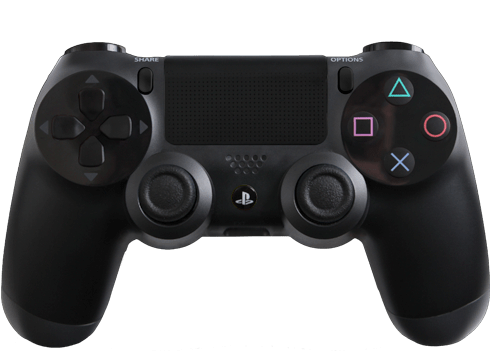
Both things map to language learning for me. Speaking a new language is like trying to play a game through an unfamiliar control scheme, and understanding it is like making sense of a game by feel. I could, if I wanted, break down when to use every Summoner ability with a clock during a fight, so that you could work out a ‘rotation’ that mapped to when everything needed to be used. It would be like trying to translate through English for every sentence in Japanese– doable, but you lose a lot and you’ll never be as quick as if you can internalize the abstraction and just maneuver by feel.
Different people find different things difficult. I have two friends nearby, both from China. One of them speaks English with almost no accent, but sticks to relatively simply constructed sentences and misses a lot of nuance in other people’s speech. The other has a very heavy accent, but a much broader use of vocabulary and sentence construction, but struggles with making her actual words understandable. I’ve had the opportunity to speak with both of them via text over the internet, and their speech patterns are starkly different– both are very eloquent and have a firm grasp of the language. They’re both playing a game with a control scheme they aren’t yet used to, but taking different approaches.

In the meantime, I’ve reached the point in about two weeks of study where I can almost read hiragana and I can hear the shape of sentences– I can’t understand them, but I know enough to pick up pieces and figure out what the subject, topic, verb, etc all are even if I don’t know what they mean. It’s going to be a long time, if ever, before I can hold myself to the same standard in Japanese as I do in English, but the process is giving me a lot of insight into how I speak in English, and how I can improve.
Source: Digital Initiative
Thinking in Abstractions


