Thinking in Abstractions

I’m continuing to work on teaching myself Japanese, which has been a fascinating process. It’s been described to me as an extremely difficult language to learn, and as I familiarize myself with it, I’m starting to understand why.

hiragana-stroke-chart

Japanese is, in a lot of ways, a very straightforward, regular language, with very few exceptions to its rules and a surprisingly comprehensible set of grammatical rules. It’s difficult because almost none of these things map to English. I used to wonder how older (and some recent) translations of games and shows could be so incredibly bad, and I’m discovering that it’s because there’s really no direct translation. As I start to parse sentences, it feels a bit like one of the old Magic Eye pictures, where you have to look at it indirectly to allow your brain to see the hidden picture, and if you try to focus on it too much you lose it.

I can’t translate what I want to say in English directly to Japanese; I have to turn the sentence into an abstract thought, and communicate that. It’s made me a lot more aware of how I construct sentences in English, and I’ve started trying to think of English sentences as abstract thoughts to get a better handle on how to better express myself. In English, it’s easy for me to construct elaborate walls of words, adding complexity and waxing poetic to make a very simple thought seem like something a lot more ornate than it actually is. It’s a tendency that’s made it very difficult for me to learn languages in the past. I’ve made attempts at Spanish, and while I can understand it very well, I don’t have the breadth of vocabulary or understanding of complex forms to translate what I want to say from English into Spanish. Faced with Japanese, a language where I can’t make that translation, I’m finding that relying on my intuition to pick up meaning from sentences is really effective.

JP20130729_4

It makes me think a lot about games and the comfort zones we play in. I had a discussion with a guildmate recently who was intensely frustrated by Summoner, because (as he put it) “you’re always guessing at what you should do next so it’s a constant panic”. He loves rotation-based classes, where he can plan his next moves multiple steps ahead, and couldn’t understand why I, someone who has the same love for planning, liked the class so much. For me it’s because the Summoner playstyle is an abstraction of what a rotation is trying to accomplish– having all of the right things happening at the right times. I’m never guessing at what I need to do next on my Summoner, because I’ve developed a feel for how things should go. I’m not thinking in terms of “this ability, then this one, then this one”, it’s more like “right now feels like the right time to use this”.

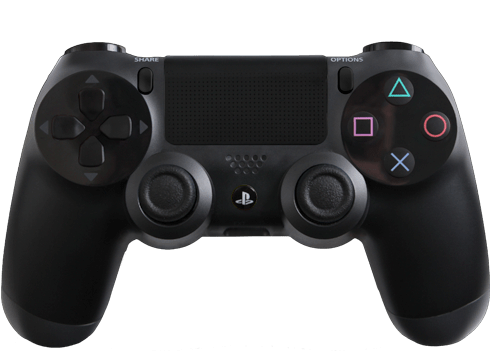
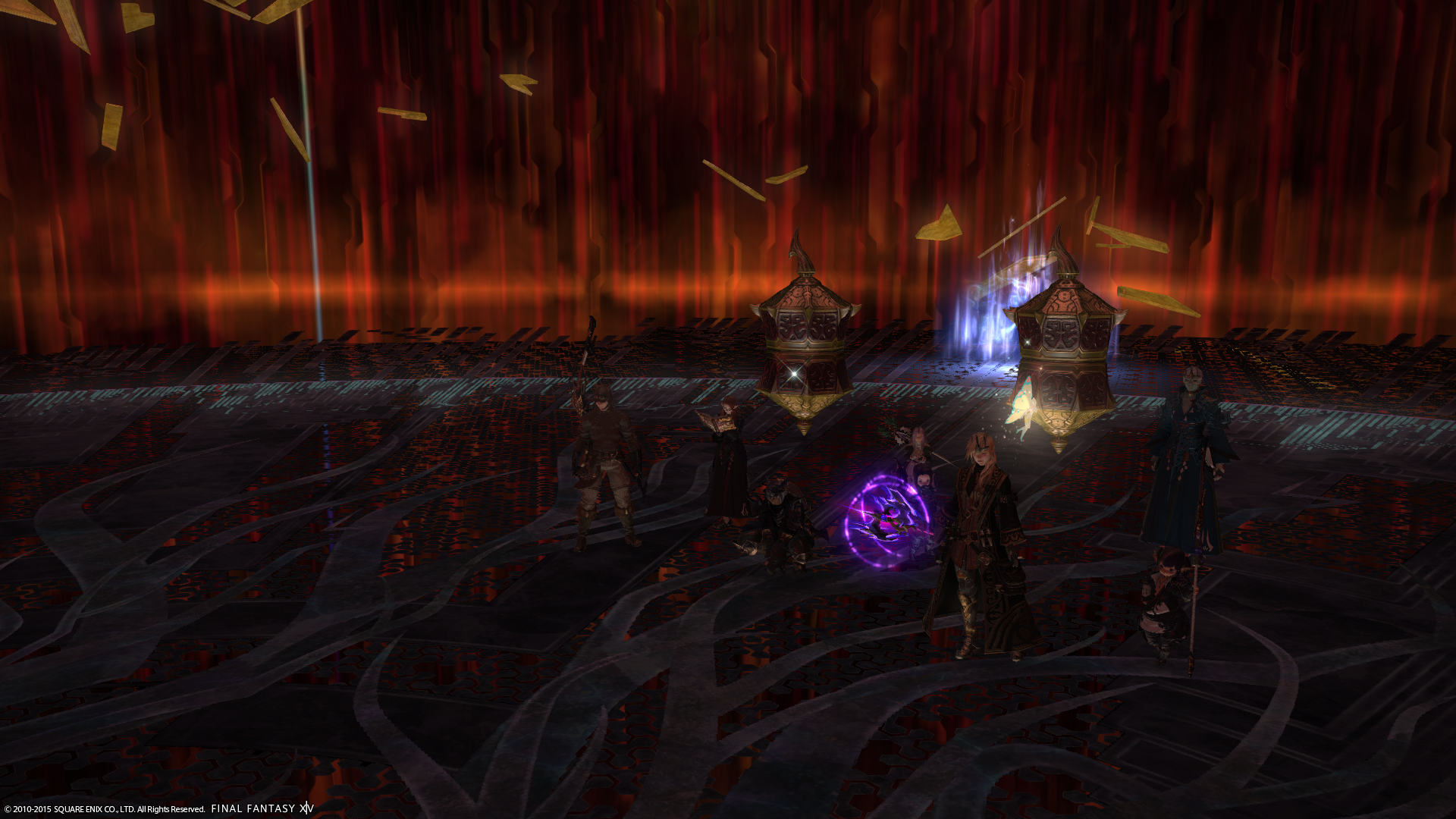
Similarly, I watched someone pick up a controller for the first time this past week. He’d been playing games on the PC for twenty years, but had never owned a console. I could see the frustration as he played a game he knew well (FFXIV) via a control scheme he wasn’t familiar with. He knew what he wanted to do, but couldn’t make the buttons respond quite the right way. His intuition about how to control the game was thrown completely off.

ps4-frontview

Both things map to language learning for me. Speaking a new language is like trying to play a game through an unfamiliar control scheme, and understanding it is like making sense of a game by feel. I could, if I wanted, break down when to use every Summoner ability with a clock during a fight, so that you could work out a ‘rotation’ that mapped to when everything needed to be used. It would be like trying to translate through English for every sentence in Japanese– doable, but you lose a lot and you’ll never be as quick as if you can internalize the abstraction and just maneuver by feel.

Different people find different things difficult. I have two friends nearby, both from China. One of them speaks English with almost no accent, but sticks to relatively simply constructed sentences and misses a lot of nuance in other people’s speech. The other has a very heavy accent, but a much broader use of vocabulary and sentence construction, but struggles with making her actual words understandable. I’ve had the opportunity to speak with both of them via text over the internet, and their speech patterns are starkly different– both are very eloquent and have a firm grasp of the language. They’re both playing a game with a control scheme they aren’t yet used to, but taking different approaches.

meiko_texting__kind_of_by_mysterycycle-d60dnla

In the meantime, I’ve reached the point in about two weeks of study where I can almost read hiragana and I can hear the shape of sentences– I can’t understand them, but I know enough to pick up pieces and figure out what the subject, topic, verb, etc all are even if I don’t know what they mean. It’s going to be a long time, if ever, before I can hold myself to the same standard in Japanese as I do in English, but the process is giving me a lot of insight into how I speak in English, and how I can improve.


Source: Digital Initiative
Thinking in Abstractions

Thinking in Abstractions

I’m continuing to work on teaching myself Japanese, which has been a fascinating process. It’s been described to me as an extremely difficult language to learn, and as I familiarize myself with it, I’m starting to understand why.

Japanese is, in a lot of ways, a very straightforward, regular language, with very few exceptions to its rules and a surprisingly comprehensible set of grammatical rules. It’s difficult because almost none of these things map to English. I used to wonder how older (and some recent) translations of games and shows could be so incredibly bad, and I’m discovering that it’s because there’s really no direct translation. As I start to parse sentences, it feels a bit like one of the old Magic Eye pictures, where you have to look at it indirectly to allow your brain to see the hidden picture, and if you try to focus on it too much you lose it.

I can’t translate what I want to say in English directly to Japanese; I have to turn the sentence into an abstract thought, and communicate that. It’s made me a lot more aware of how I construct sentences in English, and I’ve started trying to think of English sentences as abstract thoughts to get a better handle on how to better express myself. In English, it’s easy for me to construct elaborate walls of words, adding complexity and waxing poetic to make a very simple thought seem like something a lot more ornate than it actually is. It’s a tendency that’s made it very difficult for me to learn languages in the past. I’ve made attempts at Spanish, and while I can understand it very well, I don’t have the breadth of vocabulary or understanding of complex forms to translate what I want to say from English into Spanish. Faced with Japanese, a language where I can’t make that translation, I’m finding that relying on my intuition to pick up meaning from sentences is really effective.

Thinking in Abstractions

It makes me think a lot about games and the comfort zones we play in. I had a discussion with a guildmate recently who was intensely frustrated by Summoner, because (as he put it) “you’re always guessing at what you should do next so it’s a constant panic”. He loves rotation-based classes, where he can plan his next moves multiple steps ahead, and couldn’t understand why I, someone who has the same love for planning, liked the class so much. For me it’s because the Summoner playstyle is an abstraction of what a rotation is trying to accomplish– having all of the right things happening at the right times. I’m never guessing at what I need to do next on my Summoner, because I’ve developed a feel for how things should go. I’m not thinking in terms of “this ability, then this one, then this one”, it’s more like “right now feels like the right time to use this”.

Similarly, I watched someone pick up a controller for the first time this past week. He’d been playing games on the PC for twenty years, but had never owned a console. I could see the frustration as he played a game he knew well (FFXIV) via a control scheme he wasn’t familiar with. He knew what he wanted to do, but couldn’t make the buttons respond quite the right way. His intuition about how to control the game was thrown completely off.

Thinking in Abstractions

Both things map to language learning for me. Speaking a new language is like trying to play a game through an unfamiliar control scheme, and understanding it is like making sense of a game by feel. I could, if I wanted, break down when to use every Summoner ability with a clock during a fight, so that you could work out a ‘rotation’ that mapped to when everything needed to be used. It would be like trying to translate through English for every sentence in Japanese– doable, but you lose a lot and you’ll never be as quick as if you can internalize the abstraction and just maneuver by feel.

Different people find different things difficult. I have two friends nearby, both from China. One of them speaks English with almost no accent, but sticks to relatively simply constructed sentences and misses a lot of nuance in other people’s speech. The other has a very heavy accent, but a much broader use of vocabulary and sentence construction, but struggles with making her actual words understandable. I’ve had the opportunity to speak with both of them via text over the internet, and their speech patterns are starkly different– both are very eloquent and have a firm grasp of the language. They’re both playing a game with a control scheme they aren’t yet used to, but taking different approaches.

Thinking in Abstractions

In the meantime, I’ve reached the point in about two weeks of study where I can almost read hiragana and I can hear the shape of sentences– I can’t understand them, but I know enough to pick up pieces and figure out what the subject, topic, verb, etc all are even if I don’t know what they mean. It’s going to be a long time, if ever, before I can hold myself to the same standard in Japanese as I do in English, but the process is giving me a lot of insight into how I speak in English, and how I can improve.

Daily Chores

I hate dailies. My tolerance for the extends exactly as far as is required for me to access whatever content I’d like to get into and basically no further. It’s the fastest way for me to burn out on a game. The obligation to log in every day and do [whatever] loses me instantly.

Calendar Image-1524x975

At the same time, I understand the need to pace out progression in some sane way. FFXIV has a great system in its daily leve allowances, and I wish that would extend to other things. Let me run a week’s worth of expert roulette on Saturday, rather than needing to log in every single day to max out my currency income.

I haven’t logged in much to FFXIV this week because I’d been grinding every day to reach i170 on my Summoner. I know I can get higher than that, but it’s just not enticing to me. I’ve come to lack the overriding desire to make all of my numbers as high as possible, I’m more than happy with “high enough”, because there’s other stuff I want to do. I appreciate how lightweight the Law grind was in FF, especially right after the levelling process, but I’m not terribly motivated to jump right back into it to chase the gear treadmill a little further, especially because I know my current state is sufficient for what I’m doing and, furthermore, the investment required to move forward to the current “best” tier will drop here relatively shortly. I’ve chased the cutting edge of content before, and I don’t have the interest in doing it again that would motivate me to grind dungeons until I achieve the absolute best [numbers] I possibly can.

41

What motivates me is interesting new stuff to do. I am, at my core, an Explorer-type, though I don’t fall into the category of Explorer that people tend to think of. Wandering around geography isn’t interesting to me; I want to explore the story and the gameworld and see how everything plays out. I don’t care about finding the secret hidden treasure chest in a cave on a mountainside, but I will jump through nearly any hoops to get all of the possible endings to something. I’ve only played one Kingdom Hearts game, but I did get the ‘true’ ending for it, and I played through enough Chrono Trigger to see every way that game ends (it’s a lot).

Exploration for its own sake doesn’t interest me– I want something to find. In the same vein, progression for its own sake rarely excites me: I want to be progressing in order to see something I haven’t previously seen. It’s something I miss from older MMOs– current games want to make sure you don’t miss anything, so there’s rarely anything to find by wandering off the beaten path. You might get some cool screenshots or something (which other people really love, and I appreciate, but don’t care to chase after for myself), but by and large you’re not going to find anything meaningful at the top of that mountain if the game didn’t expressly tell you to go there.

55675468

It was my biggest disappointment with Wildstar– for all it claimed to encourage exploration, I still felt like it was taking me on hikes along well-trodden paths, not rewarding me for forging across the wilderness. The coolest part of the Explorer subclass was finding hidden quest areas that weren’t apparent to other people, but they felt thin; I didn’t really find exciting stuff in there, just a challenge and maybe a single quick quest. It wasn’t the life-changing revolution that was expected.

That being said, I continue to feel like we’re on the cusp of a big sea change in MMOs, but of the various directions it could go, I’m not sure yet which one I think is likely. I hope we get away from games and back towards experiences that feel like worlds. I find I miss the sense of being a denizen of a vast digital world, versus a player in a multiplayer game. The difference is, as always, progression. In worlds, you can make progress in a variety of ways and they’ll all benefit you. In games, if you’re not spending your time progressing in one of a relatively set number of ways, you’re kind of wasting your time. I miss feeling like I could spend my time doing whatever and still be productive.


Source: Digital Initiative
Daily Chores

Tam Tries: SAO RE: Hollow Fragment (PS4)

Good translation makes a huge difference. Honestly, it can make or break the experience, and it’s genuinely hard to do.

sao_eng_title_00_thumb

I picked up Hollow Fragment a few months back on the Vita. It was a really, really interesting game mechanically set in a world that I find really compelling. I can’t talk much about the story because if you haven’t seen any of SAO it drops enormous spoilers within the first five minutes or so of the game, but the game’s concept is a sort of extended “what-if” sequence, which is really interesting and something I haven’t seen in game tie-ins.

I put a solid 15-20 hours into the game before quitting– as much as I loved the gameplay, the translation for the Vita version was atrocious, so much so that I didn’t really have a clear picture as to what I was doing wrong in particular sections nor did I have any idea what was happening in the story. I was fighting exceptionally difficult enemies and dying frequently, and didn’t have a lot of intelligible feedback on what I could do to improve. At the same time, the dialogue was garbled to the point of being incomprehensible, so I could get a vague emotional tone but very little else. It made it difficult to figure out where to go and what to do.

Don't do this.

Don’t do this.

Loading up the new (retranslated) PS4 version was stark. I had a clear picture of what was going on almost immediately, and I suddenly understood how a bunch of game mechanics worked before even leaving the tutorial. One of the big things that the retranslated version did was clarify how the game is structured. There are two separate areas that you can progress through, and it wasn’t clear to me which the right one was. On the Vita, I had this helpful hint:

“For ready players, advance through floors of Aincrad. If still collecting loot and exp, try the Hollow Area.”

Based on that, I jumped into the Hollow Area straightaway. Why not collect loot and exp until I feel “ready”? The PS4 version translates that line a little differently:

“If you’re still getting used to the game, try some of the early floors of Aincrad. If you’re an advanced player and want to test your skill and get rewarded with loot and lots of exp, try the Hollow Area.”

SLIGHTLY different. It explained why I was getting pummeled in my entire Vita playthrough– I was basically trying to advance through the special advanced bonus dungeon right from the start. This playthrough, I started playing through the ‘appropriate’ sections first, and wound up basically crushing my way through the first few sections, largely thanks to the skills I’d honed fighting things way out of my weight class on the Vita.

sword-art-online-hollow-fragment-boss-fight

What I’ve discovered is that the game is much, much more nuanced than I’d realized, mechanically. I can’t talk much about the story, but it does a really good job of interspersing the ensemble cast and keeping all of the characters at the forefront (which the show didn’t do quite as much) and keeping the story relevant– there are a ton of events that occur in between going out and beating up monsters, but you can spend quite a bit of time just doing that if you like, and you have a ton of characters you can level up.

Because the game drops you in the middle of the action, you start at a pretty advanced level with quite a few skills and resources– it’s a little odd to start a game at level 97, but it works pretty well in this context. You’ve got enough abilities to start to make things interesting and you can slowly explore them, but because you’re so overleveled for the starting point (a thematic staple of the series), you can ease into things. It also doesn’t waste any time with introducing things you’ve already covered in the series– the only catch-up it does is letting you know how the game diverges. This probably isn’t great for anyone who hasn’t seen the series, but it’s kind of an obscure title to pick up if you haven’t watched Sword Art Online. Cutting to the chase as far as establishing story and characters lets them get detailed and personal with interactions very quickly, as well as occasionally very silly.

20140401_214033

Overall, I’m having a lot of fun with it, especially with a translation that lets me make sense of the story. Because the game’s story diverges hugely from a major plot point in the series, I’m interested to see where they go with things. I like the idea of the game building out into conceptual space rather than simply retreading the ground covered by the series, and I’d like to see more of that in game tie-ins. It makes me think of KOTOR, which created a whole new space for Star Wars that’s proven to be incredibly fertile ground.


Source: Digital Initiative
Tam Tries: SAO RE: Hollow Fragment (PS4)