One of the weirder / more frustrating parts of being a game designer is being in the position of seeing things that other people don’t. You have to be thinking ahead of the people who might play your game, and your ideas have to reflect the ‘final’ game, not necessarily bits and pieces of them. It’s weird because it means you have to think about what people might want to play well ahead of them actually knowing they want to play it, and ‘people’ in this case includes yourself. It’s frustrating because that foresight represents vision, and it’s hard to get people to see your vision clearly.
It’s often the case that you’ll hear that an idea “will never work” simply because there isn’t a example of it in the wild. In this case, seeing is believing, and until you prove the concept by actually putting it in front of someone to play, they won’t believe you if you tell them how it works.

As an example: take any single mechanic in a vacuum and it can be made fun. Even the most reviled, most hated game mechanics can be fun when applied correctly and implemented properly. You hate hotbar combat? I guess you don’t like KOTOR or Dragon Age. Refuse to play ‘mindless’ shooters? Mass Effect, Portal, and Thief say hi. Can’t stand real-time strategy? Played the Sims or any tower defense game recently? There aren’t bad mechanics, there are just bad implementations. You can combine mechanics in a way that simply don’t work, but a single function isn’t ‘bad’ on its own.
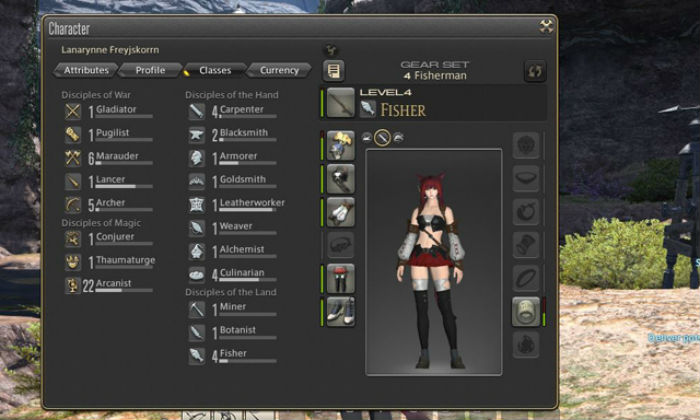
The above having been said: I talked the other day about how much I hate levels, and how I’d want to see a game that does away with them as a hard-locking progression mechanic. A few people I know had the automatic twitch– that “but how will I know I’m more awesome?” response. I want to break that response down a bit, because it’s important to see the parts that go into it. You’ve got a bar, that slowly fills, that tells you how close you are to an arbitrary milestone. You perform activities that fill that bar. The bar usually lights up or noticeably moves when you fill it, and if you get a big chunk of the bar at once (say, by completing a quest), you get a little audio cue. Guild Wars 2 has a TON of ways to fill that bar up, and they let you know by making blatantly obvious sparkles travel from the middle of your screen into that bar to fill it up a little bit, regardless of what you do. FFXIV shows you an arbitrarily large number, starting in the hundreds and going up to the tens of thousands, and plays a familiar bit of music when you complete a quest, or FATE, or levequest and get a chunk of exp. Dungeons show you a fanfare at the end, corresponding to the time at which you get your big chunk of experience. When that bar fills up, you get another cool particle effect, a bit of music, and a new, empty bar. Have you ever looked closely at your exp bar in FFXIV right as you level? It goes from nearly full to empty in a single frame, with absolutely no fanfare at all as the rest of the screen lights up. It’s doing that to take your attention away from it, so you don’t notice that your full bar is now empty until you’ve enjoyed your music and effects.

Turn off all of the music, all of the flashy sparkle effects, and the other HEY LOOK OVER HERE messaging that’s tied to experience gain and levelling, and I guarantee you won’t notice when you level up. Don’t believe me? Talk to someone who played EQ in the early beta/alpha. The loud gong sound, that sound that was so memorable that it’s become the well-known “ding” through game after game despite not actually sounding like that, didn’t exist. It was added a bit later, because players weren’t noticing when they levelled up, and didn’t feel like they were progressing, even when in some cases they had made it through several levels in one sitting and only realized what was up when the mobs they’d been fighting seemed a lot easier, somehow, and were barely worth any experience.
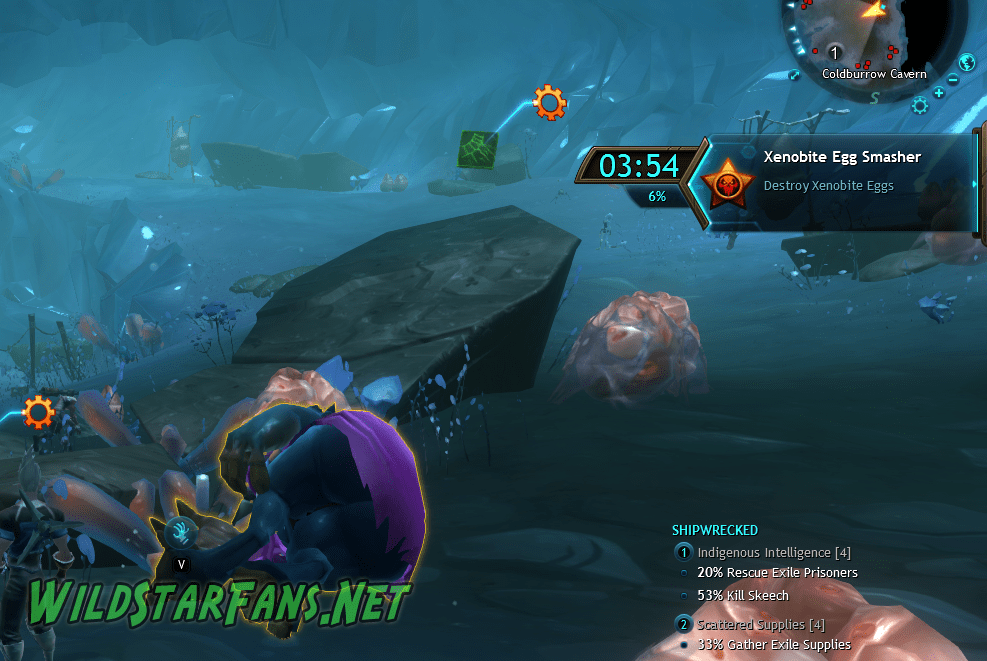
When designing games, that messaging goes wherever you need it to, to guide people to play the game the way you want them to play it. It’s way more effective than telling them how they should play, just make the sparkly things and cool music and sounds play when they do what you want. It’s why Guild Wars 2 gives you sparkles flying across your screen every time you explore, or why Wildstar gives you voiceovers letting you know when a challenge is starting. Those challenges are meant to slow you down, to get you to spend more time in areas that you otherwise might overlook or blast through while you’re levelling. Quests are placed to push you through challenge locations, and when you enter one and start it, it’s suitably distracting such that you spend some time being a little bit inefficient. The cues are hyper-effective, but they’re placed with a purpose and with intent.

I’ve described, a few times, the shape of a game that doesn’t use levels. As you progress through the game, you’d get more options, and more options means you’re more powerful, but you’d be hard pressed (or simply not allowed) to use all of those options at the same time. You have a breadth of skills but can only bring a limited number to bear at a given time. I’ll break down a little bit what I’m talking about:
- Abilities, stat points, and passives are all tied to skill trees. These progress as you use them, unlocking more stuff as they progress.
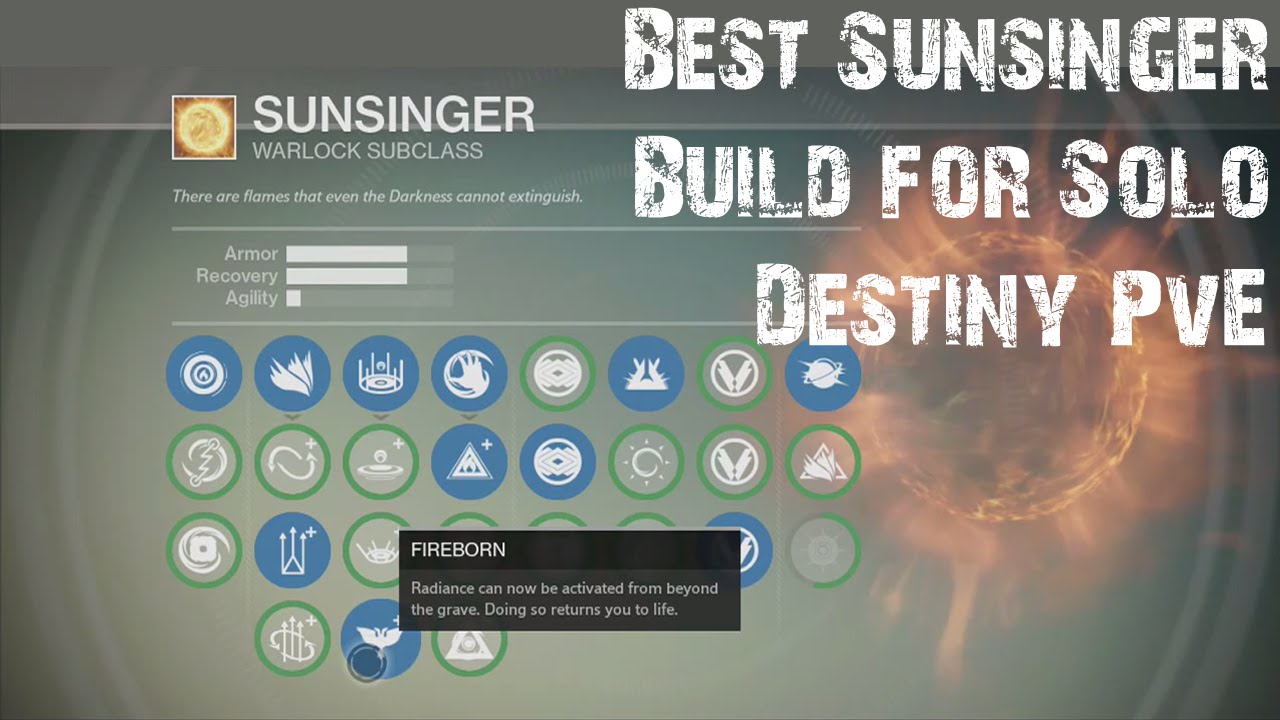
- This takes the place of “traditional” levelling; these skill trees would unlock new abilities and make you more powerful.
- These skill trees would be much flatter than traditional levels– a person with a complete skill tree might have a lot more ability options than someone without any skill in that tree, but isn’t going to be more than marginally more powerful.
- Skill trees must be “slotted” in order to use, and characters have a limited number of slots to equip skill trees.
- Slots can be increased through completing skill trees, allowing you to slot more skill trees and have more abilities at your disposal.
- If we really want to, we can tie this to a meta-tracking system that might as well be “character level”, but it wouldn’t have any bearing on raw power, it would just be representative of how many skill trees and how many unlocks a given character has. It’s a useful measure, but for practical purposes a level 50 character could run around with a level 5 character with the same skill tree equipped and be roughly equivalent in power.
- A more progressed, more powerful character can do more things, but isn’t going to simply be better than another character that might have the same skill trees slotted.
There’s a little fanfare every time you progress the tree you’re currently working on, just like levelling up, but even if you’ve been playing for a week and have a handle on a particular important skill tree, there’s nothing stopping you from hopping in with your friend who’s been playing for a year, provided you’ve got access to the skills that complement theirs.

EvE uses a system like this extremely effectively. A player who’s been playing for years might be adept at piloting powerful capital ships, but a giant capital ship can’t effectively fight small fighter ships. New players can pick up fighter pilot skills very quickly, and within a very short period of time can join a years-progressed player as a light fighter and play a meaningful role– one that the capital ship pilot simply can’t perform at the same time, despite their years of progression.
We retain the progression and its fanfare, but we reconfigure the actual mechanics of progression to be friendlier to players who have played differing amounts of time, allowing them to play together and retaining all of the satisfying parts of levelling without the segregating parts.
What makes a system like this interesting is the limitation on what you can have slotted. Even a fully progressed player can’t do everything at once, even if they have every skill tree in the game maxed out, so from this you have character builds that emerge. Here is where the beauty of this sort of skill system becomes apparent. Mixing and matching trees becomes an optimization game, but it’s entirely possible to have the environment itself react to how players are attacking it. If it’s determined that raw offense is effective against orcs, orcs will start wearing heavier armor and shields. If goblins are being attacked singly, over time they’ll call for help sooner and over a wider radius. If ogres are attacked by groups, they’ll start using AoE attacks. All of these things are well within the technical means we have at our disposal, and furthermore are really easy to message. It breaks the paradigm of “the best build” because a build that is particularly excellent will slowly have the environment work against it, until other builds emerge on top. Rather than trying for the madness of perfect balance, you create a constantly shifting environment which makes both standard encounters more interesting every time you do them and continually moves the goalposts for what constitutes an “optimal build”.

We can use that levelling-inspired sparkle and fanfare here as well. Persona games give you some great messaging when you use an attack that an enemy is weak to– there’s a special effect when they’re hit and they’re briefly stunned. If all of the enemies in an encounter are stunned, you get the chance to unleash a really powerful full-group attack. There’s no real reason that sort of thing couldn’t work in an MMO, where your encounters operate like little puzzles and you try to hit enemy weak points with particular types of attacks, then finish everything off with a big super move. FFXIV’s Limit Break is an incredibly fun button to press, and it’s not something we get to hit terribly often. That kind of mechanic could easily get stolen for this sort of thing, unlocking a powerful attack based on weakening enemies.
The problem that comes in here is one of inputs. To have enough different attacks to make for an interesting byplay between enemy weaknesses, you need a LOT of abilities at your disposal, and your standard hotbars stop being sufficient. You need some better way of accessing a wide repertoire of abilities based on your equipped skill trees, and doing so very quickly and efficiently, as well as chaining them together intuitively. I don’t know what that kind of input looks like, short of having a game console plugged directly into your brain. There’s some possibility of a Magicka-like system, where spells are formed from a selection of possible inputs that you string together, and similarly melee attacks could be a series of directional attacks chained together into combos, but that quickly becomes a lot of memorization. There’s enough combat in an MMO that perhaps that’s okay; you’d learn your favored abilities through frequent use, but it’s a relatively complex system to try to implement.

These are half-baked ideas, formed enough to paint an impression of the kind of game that you could play where levels aren’t the ball and chain they are elsewhere, but hopefully it makes the outline of a picture that makes sense. A lot of times, designing a game means starting with a very rough sketch and establishing the edges and main shapes, then filling in the rest as you go, and sometimes redrawing details as you determine if they will or won’t work.
The goal here is a system where just because I’ve been playing longer than you have doesn’t mean you can’t join me meaningfully, ideally done without a blatantly artificial “level-balancing” system that just inflates your stats but doesn’t actually give you anything more to contribute. Mentoring/sidekicking is a good stopgap solution, but all it does is paint over a problem that doesn’t need to exist in the first place. Everything else is a matter of figuring out where to put the sparkles and fun music.
Source: Digital Initiative
Seeing is Believing