Interlude: Breaking the MMO Paradigm, Part 2

I talked a bit before about a different kind of MMO system, with only two roles: Frontline and Flanking. Actual abilities while in these roles would vary based on player choices, but the core concept revolves around the idea of a front-and-center player and up to two flanking players, who aren’t in the direct line of fire.

A structure like this would have a number of ramifications on encounter design and group content. I’ll split things up by working my way up in encounter size.

2625-arcade-one-player-button

Solo Encounters

A player playing solo is going to still have a Frontline and a Flanking setup, and is mostly going to be using these to change up their tactics mid-combat. The enemy is going to be attacking them no matter which they’re using, so it’ll be more akin to stances than role-swapping. There’s a lot of possibility here for creative solo builds, though it’ll be instantly familiar to a lot of players because it’ll look like the games where you can weapon-swap easily, like Guild Wars 2, WoW’s stance-swapping, and similar.

Design of solo encounters isn’t going to change much, although the variance in how effective players are at fighting enemies on their own should even out a bit. What’s most likely is that players will build a particular ‘stance’ to be their primary, and then put utility and other functions on the secondary, to fill in gaps and reduce downtime.

bds-10

Duo and Trio Encounters

Players playing in pairs will start to see the system take shape (yes, that sentence was fun to write). It’s at this point that the Switch mechanic will enter play, and in theory combo chains can start rolling, giving two players large benefits for playing together as soon as they have a duo. Mostly, it won’t require anyone to change their solo builds much, although some players may set up Switch combos and start to fall into preferred roles at this point.

With a third person added into the mix, we’ll start to see group dynamics form. There may be two players who switch frequently, and a third who spends most of their time flanking and supporting, or all three players may switch frequently. It’d be important to playtest various ways of Switching in a trio, whether a player calls a specific other player to Switch or if they simply call for a Switch and the first player to respond is the one who switches. Normally I’d be against that kind of imprecise design, but with a small number of players it can stay organized pretty easily.

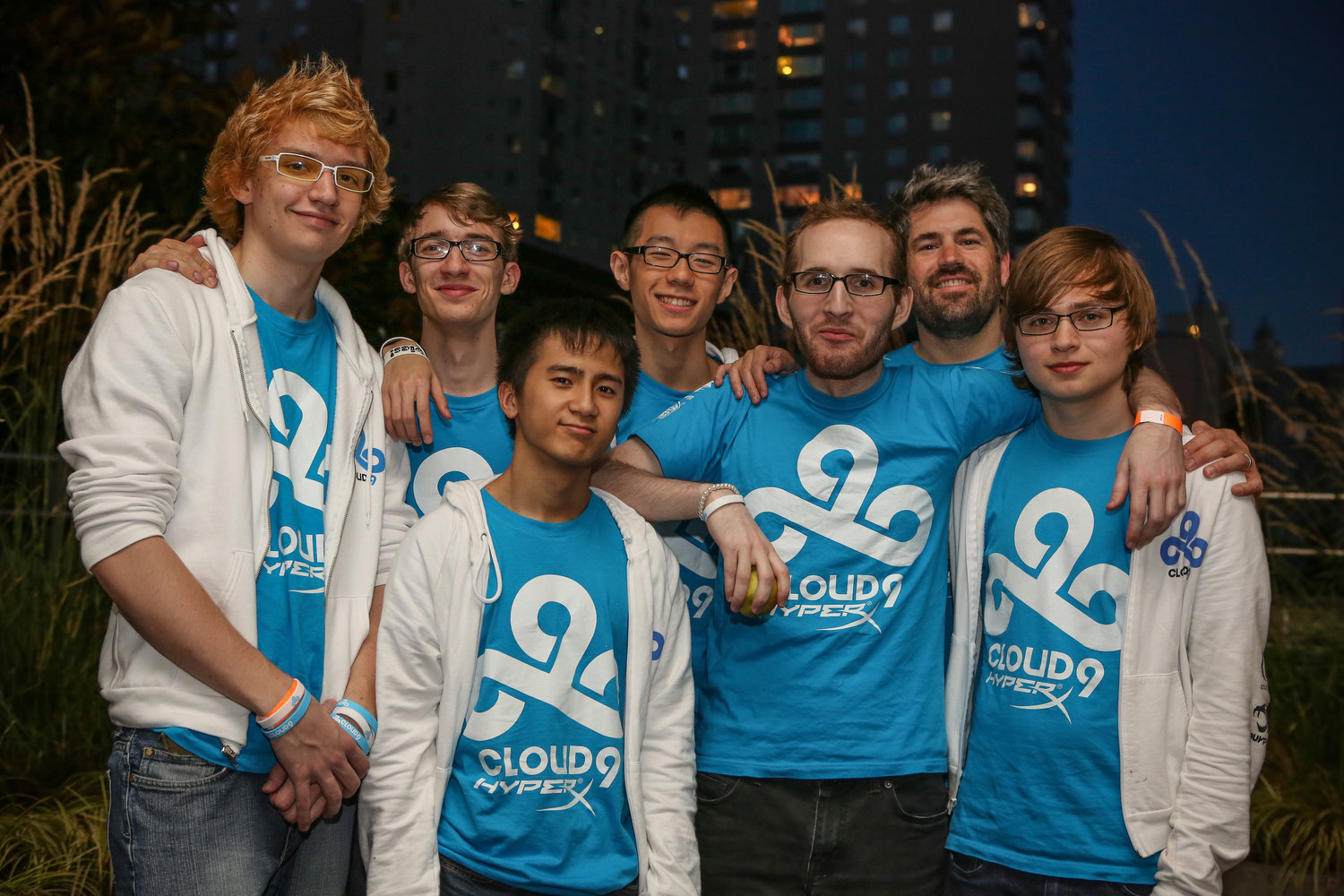
9338-cloud-9

‘Standard’ Groups (4-9 players)

At this size group, we’re looking at dungeons, the kind of everyday delves that you get into with a group, do some exploring, fight a few bosses, collect loot. For standard dungeons, I would tune them for 6 or so players, but allow players to enter with as few as 4 or as many as 9 players. Keep the rewards static, but split them among the party, so the fewer players you bring, the more rewarding the dungeon is for each individual.

In this sort of setup, you’re looking at 2-3 trios, and I think the trio would be the basic group unit of the game, because that’s where the Switch mechanic works best. As a result, encounters are going to need to think more about supporting multiple groups and splitting groups up, with fewer single large bosses and more “controlled chaos” fights. I generally think this will be fine, especially because it allows us to introduce tank-swapping mechanics (in which a boss will overwhelm a single tank, so two or more tanks take turns, usually a much more advanced skill) at a very early stage.

Groups will quickly learn to work together in both their trios and in the party as a whole, which makes the overall transition to larger-sized groups a lot smoother and more natural.

sao__the_skull_reaper_by_moojakok-d5ljyu5

‘Large’ Groups (12-24 players)

This size of group fits solidly in the “raid” encounter size, and it’s here where the difficulty comes in, because these fights are going to need to scale to the player number for them to make any sense. One possibility here is to have a “vanguard” group that gets further bonuses based on the players’ choices and can Switch with other whole groups, a sort of second-tier advanced mechanic that sets one team as the ‘heroes’ of the encounter until swapping out for another group.

There’s a certain amount of appeal to this structure, just because it adds an extra layer of strategy to fights based around juggling Vanguard bonuses, but also because it creates a situation in which different groups can play to different strengths. A group with a very strong core group can focus skilled members in one group and have them be the Vanguard, whereas a group where skill is spread out a lot more might perform Vanguard Switches more often, spreading the punishment (and heroism!) around. A particularly skilled and coordinated group might set up a strong combo, in which they perform rotating Switches in their group to chain combos, while also Vanguard Switching to the next group for them to continue the chain, until everyone in the entire raid has participated.

It wouldn’t be unreasonable to have the Vanguard buff scale based on the number of group members, though I wouldn’t make that the only scaling mechanic for encounters.

nw02campfiregroup

Encounter Design

One of the things that would go away fairly quickly is the idea of the basic tank-and-spank fight, where one tank holds a boss in place while a healer keeps them alive and the rest of the party burns it down. When even a ‘basic’ group is likely to have two tanks, there’s going to need to be a lot more variety in encounter design.

I’d likely move away from single large bosses as the exclusive “major” encounters in a dungeon, and would quite likely change the way dungeons worked in general. With scaling in place, I’d consider freezing most resource regeneration, so players would need to be much more careful about how they played– being less wanton with their health and more careful about throwing around big spells. With that kind of design, every encounter becomes interesting, because it stops being about blowing everything to win, then recovering, then moving on– efficiency of combat becomes a significant factor. A dungeon might have a number of rest points, acting as checkpoints and letting players restore resources once per run, but keeping even minor encounters relevant.

It would also naturally make it valuable to bring more players into a dungeon, to swap in as resources dwindled. A smaller party might get more rewards, but would be much less likely to be able to complete the dungeon. It would also encourage Switching, particularly if Switching could be used to restore some resources. This would conflict with the idea of having resource regeneration be a core boost to slot, but could be used as a “switching restores more”. If Switch was only usable in combat, with the first party member to gain aggro being the default Frontline player, it would prevent spamming Switch out of combat to restore skills, but potentially open up interesting group dynamics wherein combat is prolonged as a resource faucet.


Source: Digital Initiative
Interlude: Breaking the MMO Paradigm, Part 2

Teambuilding from Scratch

I left WoW in late spring of 2007, burned out from the stress of trying to hold together a fragmenting group. A lot of the raid had left to join other friends on other servers for the expansion, and others were taking the expansion slow. Some of the core group had pushed quickly to the new level cap and were raring to get raids in, causing tension. They wanted deadlines set for people to hit max level, something I staunchly opposed. When it became clear I wouldn’t push people faster than they wanted to go, most of the gung-ho raiders left.

Fragmentation_study_by_hameed

What remained was disorganized and, in many cases, bitter from the infighting that had characterized the last few months of raids pre-expansion and the post-expansion disagreements. The heart and soul of the group was gone, so I did what I could to make sure people would land on their feet elsewhere and, burned out myself, moved on.

A few months later, I was pulled back into WoW by a new group of friends. I’d moved across the country for my job and while they’d all played WoW before, they’d never raided and in some cases had never reached max level. It seemed like a nice way to relax, and I missed the game, so I came back, fully expecting that I could avoid my old haunts. This was easier, because we rerolled on the opposite faction, so I had a lot of content I’d never seen and could leisurely play through.

Old habits die hard. Without even trying, I was experimenting and optimizing, and had a newly max-level character in appreciable gear in a couple of months. I’d passed by people who had 60-level head starts on me and gotten the attention of the leader of the guild I was in, who’d already heard stories about me and saw me as a way to get to see top-end raid content that he’d never seen before.

Mary-Poppins-in-Sky-400x401

It’s worth noting at this point that the guild’s leader was, to put it politely, incompetent. Capricious and thoughtless, he would demand that the guild come together to do some activity or another, most of which he wanted to brand with his own ‘creative’ twist. It wasn’t enough simply to run a dungeon, we would run it without a tank, or without DPS, “for an element of fun”. Prior to my joining, these efforts were doomed to failure– because I was geared and familiar with playing the game at high levels, I could often push through these nonsense restrictions, which only fueled more.

It got bad enough that several of us created our own channel to get away from the guild leader, calling it “element of fun” as a jab at his scattered whims. It was through this back-channel communication line that we started having fun with the game again, free to talk and have fun without worrying about the constant reactions of the guild leader, who was insecure enough to feel threatened whenever anyone had an idea other than him. It was here that we started talking about raiding again, and where I started building a new team.

I’d had some friends who I’d left behind when I played WoW previously, particularly from college, who I’d kept in touch with but had never played with. I rolled a new character, different from my rogue, and offered to level up with them, and we could all be a group. None of them had formed any particular ties to where they were before, and so were happy to level up something new and different.

4_05_06_09_9_35_06_5

We also pulled in people from elsewhere on the server that we’d met, slowly forming a core. A few of my former LNR raiding buddies had left and missed having contact, so I pulled them in as well. We had a motley crew of players of vastly differing skill levels, but I had a good handle on how to run a group, and the 10 or so of us were a lot easier to manage than the 80 or so I’d been managing before.

The biggest issue I had was timidity. Most of these players had never played the game at a high tier before, so there was a tendency to wait, heal up to full, wait for full mana, ask three or four times if everyone was ready, and so on before a pull would happen. It was polite and thoughtful, which I appreciated, but it wasn’t conducive to exciting runs or holding everyone’s attention. A dungeon run that could be completed in 25 minutes could take more than an hour, and people who could only be on for 30-45 minutes were twitchy about committing to something that might take that long.

I gently encouraged faster pulling, but it didn’t take. I had flashbacks to old LNR days, when a hunter would pull mobs well before people were ready and we’d all come together once danger was imminent. I had a pack of throwing knives on my rogue, and could easily pull the next pack and force the tanks and healers to react lest we all die. Stealing a comment from our old raiding days, I’d throw a knife at some nearby idle enemies, declare “hlep!” as they attacked, and see how the group handled it.

run-away_monty-python

As it turned out, the group figured it out pretty damn quick, and we went from slow progress to aggressive powerpulling in short order. Our tanks would start pulling on their own, just to stop me from creating chaos, and one of our healers started being able to heal through truly ridiculous situations largely, I think, from not realizing that he shouldn’t have been able to do so. I’d started with a group of timid, inexperienced players and quickly had a successful crew. We never raided in Burning Crusade, but by the time Wrath hit, we were a well-organized, high-functioning group, working our way through all of the content in Wrath from start to finish, very close to keeping pace with content releases.

This group has stuck with me for more than half a decade at this point, and while the precise makeup of the group has changed a bit over time, it’s been these folks that have jumped games with me for years. Even when we’re not playing the same games, we’re in communication and we’re talking about what we like and don’t like. It’s this group that fumbled our way through Karazhan once or twice and it’s this group that will be working at and taking down Turn 9 this weekend.

I could tell more MMO stories, but they’d all center around this group, so this is about the point at which I leave off on the game progression. Since they’re probably reading this: Thanks for sticking around, y’all. It’s been awesome, and I wouldn’t be looking forward to Heavensward (and every other game we play) anywhere near as much were it not for this crew.


Source: Digital Initiative
Teambuilding from Scratch

Organizational Failure (and Passing the Torch)

Probably a few WoW posts this week, as old MMO memories continue.

Late Night Raiders (LNR for short) hummed along for about two years, from not long after launch to slightly after the release of the first expansion. It taught me a lot about large-scale organization and how to manage teams, and its eventual implosion only added to that. It was also one of the hardest decisions I had to make.

pvw2802

Organizationally, LNR broke down fairly neatly. A raid group at the time was comprised of 40 members, spread across 8 classes. In the ideal case, this meant five players of each class filled a raid. Perfect attendance across 40 people was laughably impossible, so we drew from a fairly significant pool of people for our raid. At any given time, LNR had about 20-25 members with very high (80%+) attendance, and so on any given night we were “filling” the last 15-20 members from the pool. This pool, at the peak of LNR, was somewhere in the range of 100 people, give or take a few.

LNR was further subdivided by class. Each class had a separate channel that was used for that class’ organization, and which usually wound up fostering unique subcultures for each class. This also helped us disseminate information by class, rather than having long discussions across raid chat about specific class tasks, most of which weren’t relevant to anyone listening. As a result, a standard LNR boss fight explanation would start with a very basic and quick overview of the fight, and discussion of the details would happen through class channels. This had the secondary benefit of allowing class groups to set up larger-scale decisions (like attendance and loot distribution) amongst themselves– some classes had extremely well planned structures for deciding who would attend a given raid and who would get specific pieces of loot, sometimes worked out months in advance.

ebonroc9

The game also allowed filtering through party chat, as the game’s raid structure broke people out into 8 groups of 5. These channels were used for any cross-disciplinary discussion, and we would frequently rearrange groups to fulfill particular strategic needs.

Owing to people having fairly regular habits, we had a very broad categorization of people, though it was never fully codified. We had people who were reliable with high performance, who could be relied on to show up for the vast majority of raid nights, perform well at all of them, and on whom we could rely for the overall success of the raid. There were people who had high performance and who could often make raid nights, but weren’t around quite often enough to be relied upon. Then there were people who were either very reliable but had mediocre or unreliable performance or who had excellent performance but were around rarely. Finally, there was a pool of people whose performance was unreliable and who were relatively rarely around, or who had not run with the group often.

At first, we prioritized based on performance and reliability, always inviting those players first and working our way down the list. It was a functional but ultimately problematic setup; people who were performant but didn’t often get invites would look for other groups, leaving us with a strong core that could do very well when all of our best players were around at once, but that would deteriorate quickly if a few key people were missing or if we needed a lot of stand-ins. This led to one of the major recurring issues that LNR had to deal with: morale.

WoWRaids

Raid structure in WoW, as in most MMOs since, has focused around a group working their way through a dungeon, learning and ultimately defeating various boss encounters. Each boss encounter would then be practiced until it could reliably be defeated and loot claimed from it, called “farm” status. A dungeon might continue to be worth running for months after the last boss of it was defeated, thanks to the slow trickle of loot, so by the time a group was fully finished with a dungeon, everything within it would solidly be on “farm” status, in theory. In LNR, due to the high variability in our team, we often found ourselves backsliding, particularly on difficult encounters. Too many stand-ins or too few key players and a boss that had been farmed the previous week was suddenly unbeatable, either due to a deficit in power, performance, or simply a lack of teamwork.

About a year into LNR’s life, I suggested we restructure a few key raid constructs, having watched the above play out on multiple occasions, and the strife and finger-pointing it would inevitably cause. I suggested that we mandate class channels for all classes and assign class or role leads to run those groups. Instead of 5 key players and 7-8 potential stand-ins, as we’d been doing before, each class would have 7-8 key players and a smaller number (2-3) of stand-ins. At the time, I’d already been testing the concept with my own class, and we’d not only set up an amiable loot system, cutting arguments over rewards out almost entirely, but we had a more-than-regular core of strong rogues, and we determined on our own who would get to attend any given raid night, in advance. Sitting out every third or fourth night but knowing you were guaranteed a slot otherwise was significantly better than waiting weeks or months in the hopes that you might get a slot, then knowing you were too far behind and too disconnected from the group’s teamwork to contribute as effectively as you otherwise might– which would lead to you getting invited less frequently.

It wasn’t a popular decision, because at the time LNR had a very bloated group of potential players. Many knew they wouldn’t be able to get into the ‘core’ rotation and rejected the suggestion as unfairly exclusive and too cliquish. It was both cliquish and exclusive, but I’d seen the same arguments put forth when the rogue team had made the same transition  few months prior, and while we did lose a number of potential players, we also significantly improved our team’s reliability and performance, as everyone was getting time in with the group to both gear up, get more skilled, and get used to working with the raid.

The jump in LNR’s performance was visible within a few weeks. We went from being stuck on a particular halfway-mark boss to blasting through the entire rest of that dungeon in less than two months, propelling ourselves from a largely unknown raid group to competing for top three on the server. We were one of the very few groups capable of taking on the highest-tier content in the game at the time, and morale, at least as it regarded performance, was way up.

Ragnaros_in_WoW

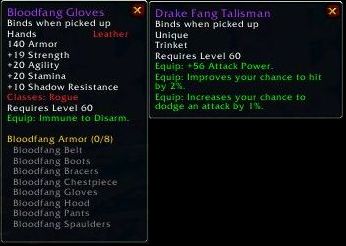
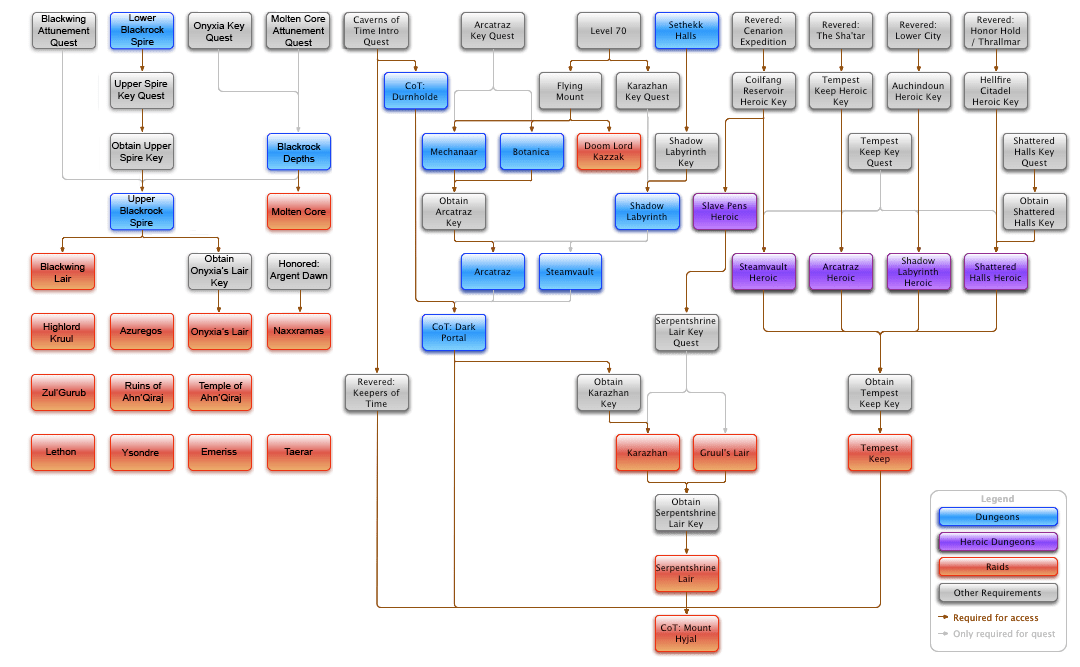
The big problem we ran into after that was one I place squarely on the game design side. In WoW, many pieces of gear were divided up into “sets”, and wearing more pieces of a set gave you often significant bonuses. Unfortunately, these sets were divided up in an extremely unhelpful way. The final boss of the first raid dungeon had one piece of the set, an unrelated solo boss elsewhere had another piece, and the rest of the pieces were available in the second raid dungeon. While inconvenient, once we had things properly farmed, we could blast through the first raid dungeon and the solo boss in about 3 hours, but this required the entire raid to be on their toes the whole time and offered only two bosses’ worth of relevant rewards. That same 3 hours could be spent on nearly ten times as much in the way of relevant rewards elsewhere, making the time spent hoping for two rare drops feel much less worthwhile. This got worse when the third raid dungeon was released, which offered a lot of difficulty in exchange for relatively little in the way of appealing rewards… except for a certain subset of players who couldn’t get relevant gear from anywhere else, thanks to poor itemization. Finally, where things began to break down, a fourth raid dungeon was released that offered vastly superior rewards for everyone except those people who were still trying to complete their sets (from the FIRST dungeon) and those who couldn’t get relevant gear from anywhere except the third dungeon.

All of this led to a logistical nightmare as far as deciding where we were going to go on a given night. There simply weren’t enough raiding hours in a week to hit all of the possible goals. Initially, we tried to message out beforehand where we would be going, but we discovered sharp dropoffs in attendance from people who had little or nothing to gain from going to those places. We wound up having to avoid communicating where we were planning on going until moments before the raid started, which slowed down our startup time but kept raids full, though it didn’t cut down on grumbling when we went somewhere people didn’t want to go– and there was no way to keep everyone happy.

Naxxramas-1

The fourth raid dungeon was problematic in its own way as well. While appealing to everyone and rewarding enough to the players who preferred raid dungeon 3 to be worthwhile for them, it was punishing difficult and extremely frustrating. Very difficult mechanics had to be practiced, and to save time and everyone’s repair bills, we started having smaller teams practice to get used to the mechanics without sacrificing the whole raid to failures. Among the rogues group, who were largely unnecessary for a lot of this practice, we’d all download a poker addon and play poker while sitting around. Progress in that dungeon was slow, and while each victory was extremely satisfying and caused a surge of excitement, they were few and far between for a while.

The beginning of the end was the ramp-up for the game’s first expansion. We expected that the gear we were working very hard for would be outdated almost immediately in the expansion (while not true in our case, it was for a majority of players), and it became a bit of a question as to why we were bothering beating our heads against this content. People wanted to finish their goals before the expansion dropped, and everyone had different goals. Furthermore, the expansion announced that raid groups would be changing sizes, from 40 members to 25 members. This became a brutal problem for LNR– our reorganization had left us with enough players to reliably run a 40-person raid, but not enough to reliably run two 25-person raids, and there was immediate bickering over who would be part of the “A” team and who would be relegated to the “B” team.

pic

By the time the expansion had hit, keeping the raid together had become extremely stressful, to the point where the raid’s primary leadership was fragmenting. The raid’s founder and primary leader needed a break, and passed raid leadership to me. I kept the raid going for as long as I could, but at the time I was dealing with my final year of college and couldn’t devote enough time to the group. Furthermore, some of the group had already pushed extremely hard to clear through the expansion and start raiding, leaving most of the rest of the group behind and quickly becoming exclusive, forming their own group and breaking off from the main raid. Unable to reconcile the work required with the other demands on my time and feeling extremely stressed and burned out from the previous few months, I also withdrew from LNR and left the game. My understanding is that the group fell apart to infighting shortly thereafter.

I took a short hiatus from WoW and focused more on my local, physical friends, many of whom I’d gotten into the game and would be leaving when I graduated college. I wanted to keep in touch with them, and while I’d sworn I wasn’t going to lead another raid group, I ultimately came back to it later, rebuilding a team on my own terms.


Source: Digital Initiative
Organizational Failure (and Passing the Torch)

Interlude: Breaking the MMO Paradigm, Part 1

This week continues with more MMO stories, but I want to take a break to talk a bit about mechanics and teamwork, why they’re important, and what the design space for that can look like.

death-by-chocolatecovered-broccoli-a-case-where-gamification-killed-gaming-practice-27-638

In a majority of MMOs, there is the “holy trinity” of tanks, heals, and DPS. It’s a construct that a goodly number of people are fervently opposed to (often claiming it’s little different from the mechanics in old MUDs, as if age were a salient point against a functional system) but the vast majority of players have bought into and are more than happy to operate in. The way the construct works is as follows: a significant number of enemies in the game cannot be defeated by a single, solo player. Groups of players are thus required to bring down these (groups of) enemies. To create synergy and allow groups of players to be more effective than a set of individual players all standing near one another, games generally offer “classes” or otherwise sort players into particular roles in the party. Tanks are resilient and are good at both holding the attention of enemies and minimizing the effect of the enemies’ attacks. While enemies are thus occupied, DPS (short for damage-per-second) role players do the job of killing the enemy, reducing its health at a rather more significant rate than the tank can. Healers, for their part, primarily keep tanks alive in the face of the enemy’s incoming damage and secondarily keep the rest of the party alive if there’s any incidental damage (there is).

As a result, a party is vastly more effective when it contains the right balance of roles. This balance is determined almost immediately as players start to figure out how the game works, and in some cases is proscribed directly by the game itself, not allowing parties to form unless they have the requisite types of players. Herein lies the crux of the argument against the mechanic– rigid party structures don’t allow players to get creative with their strategies, and tend to lock players into a certain playstyle. I’m ignoring, for the time being, the argument that MMOs should allow solo players to experience whatever game content they want, because I feel like it’s fundamentally invalid for the same reason that not every singleplayer game needs must include a multiplayer component.

tomb-raider-5

That having been said, there’s no real reason the “trinity” construct needs to be the sole mechanic governing MMO parties, other than it’s very well established and easily recognizable and usable by players. It does, however, bring along with it a number of important benefits that are worth paying attention to if we want to explore that design space:

–A group is greater than the sum of its parts. In games that allow more freeform roles or allow players to switch roles easily, there’s little incentive to group and when groups do form, it’s mostly groups of individuals fighting in the same place, rather than a team working together.

–Having well-defined roles helps communication between players and goes a long way towards setting expectations. Classes double down on this, allowing players to explicitly know both their own capabilities and those of their team. It ALSO allows players to have a certain level of expectation in terms of enemy behavior, so that fights can be overcome and controlled with skill rather than devolving into every-player-for-themselves chaos.

–Role-based systems allow for much more robust enemies with significantly more depth and strategic/tactical complexity. This is because they allow players to subdivide the enemy’s attacks and mechanics among the group, each handling different parts of the encounter and allowing more parts to form.

–Because of the first and third points, enemies can be more powerful and more intense, demanding a higher tier of skill from players because the capabilities of a given group of players at a given level is better known and can be planned for when designing encounters.

fKmNXiT

Any system that doesn’t contain these core concepts is going to have a lower ceiling than a system that does. Any system we create that doesn’t use classes (or whose classes don’t correspond with particular roles) needs to address these concepts, or it’s going to offer a subpar grouping experience. There are, however, a few things that the role-based system DOESN’T provide that are worth looking into as a way of improving the construct:

–Player variety. Players who choose a role are often stuck in that role with no way of diversifying their play experience, which may cause them to get bored quickly. A high amount of hybridization within class options has a tendency to exponentially increase the number of balance issues in the game.

–Scalability. In role-based MMOs, party sizes are fixed, and are either notably suboptimal at smaller sizes than “recommended” or simply unable to bring more players than “recommended”. This puts a hard numerical barrier on players playing with their friends which is antithetical to the MMO concept.

These aren’t easy problems to solve, and there aren’t very many successful models that take them into account. I’ve been watching a few other games and other teamwork inspirations (The Avengers, Sword Art Online, Persona as examples), however, and there are some interesting things we can take away from that in trying to break the MMO paradigm without sacrificing the experience.

ttt-logo-big

First, a great many fighting games use a “tag out” mechanic. There’s a primary fighter and at certain points on command, they can tag out with another, secondary fighter who takes center stage. Sword Art Online’s fictional game world is clearly inspired by the same sort of concept. It’s not well defined, but frequently parties of players call for a “Switch”, either to enable a powerful attack or to get a breather from front-line fighting. It’s a neat concept, and one we can do some interesting things with. At the very least, it allows players to have two roles in combat that they switch between; something front-line and something supportive. We also see this sort of thing in the Avengers movies, as various characters tag out and swap roles to let, say, Captain America’s shield defense hold the line when Iron Man’s all-out offense doesn’t do the trick, and vice-versa.

We can start to construct some mechanics from here. Let’s say we have a Switch mechanic, which puts one player directly in front of an enemy and a second player off to the side, either flanking or out of harm’s way. These players can Switch, swapping positions in the fight and changing tactics, or simply recharging. There are some immediately interesting possibilities here. A pair of players might both go for defensive styles, Switching to give each other breathing room, wearing powerful enemies down. A different pair of players might go for all-out offense, Switching to set up devastating attack chains, defeating enemies quickly and efficiently. Yet another pair of players might focus on supporting one another, with the front-line player healing themselves while the secondary weaves in debilitating effects and increases the potency of the front-line player. Any of these concepts can be blended, allowing a very wide set of tactics that are still relatively effective. A flat set of game-wide effects for being the front-line or flanking player would help cement this system.

sao21_10_cs1w1_960x540

As an example, a player may be able to pick a certain set of buffs to gain while in each role, standardized across players. Say we have “reduced incoming damage”, “increased ability potency”, “faster resource regeneration”, “faster skill/spell speed”, “shortened cooldown rate”, “increased mobility” and “increased enemy attention (threat)”. Players then split these among front-line and flanking bonuses, and may even map different abilities to each. With a limit set on how many bonuses can be set at once, players are then made to choose what they value.

You can create specific roles if desired without altering player fantasy– one player who favors heavy armor and a sword+shield might have a “reduced incoming damage”+”increased threat”+”faster resource regeneration” front-line build, allowing them to be up in enemy faces longer. Another character might take “reduced incoming damage”+”shortened cooldown rate”+”increased ability potency” in their flanking build, allowing them to stay right beside the first character with their own sword and shield and stay in the enemy’s face, creating a tanking duo team. Similarly, those players might focus on something more standard– “reduced incoming damage”+”increased threat”+”faster skill/spell speed” in the front-line builds and “increased ability potency”+”shortened cooldowns”+”faster resource regeneration” in the flanking builds, allowing them to use Switch to continually switch off.

I can only imagine the kind of person who would focus on tanking at all times forever.

I can only imagine the kind of person who would focus on tanking at all times forever.

With more than two people in a group, builds get more interesting. Another pair of players might join with the first pair, creating a symbiotic duo that meshes with the original pair. It could also be possible to form trios, where two people are in a flanking role (possibly/likely doing different things) while one is in the front-line role. When Switch is called, either player could then switch in, either creating longer potential Switch chains or allowing a player with a particularly potent flanking build to remain flanking for a longer period of time while the other two party members focus on Switching. It creates a space for players who want to focus on doing a single thing and doing it extremely well without breaking the construct.

Any given party can be broken down into duos or triads, allowing parties to scale up organically, possibly even rearranging the duos/triads in between encounters. Using Switch as a combo function (as in some fighting games) would also allow the duos and triads to use the mechanic offensively rather than defensively, making it a versatile mechanic that still allows for a wide variety of options.

Note here that this mechanic, as designed, does away with classes and gives players a lot of freedom while retaining the concept of roles. While these roles are very fluid, they still exist, giving us the benefits of role-based systems without the rigid structure.

More possibilities with this sort of thing later– how it might affect encounter design, large-group battles, etc.


Source: Digital Initiative
Interlude: Breaking the MMO Paradigm, Part 1