Taking Things For Granted

Sorry about the lack of updates this week; I’ve been sick, and the oppressive heat in my apartment hasn’t helped my energy levels.

TO GO WITH Australia-weather-drought-farming,FEATURE by Glenda KWEK In this photo taken on February 11, 2015, the sun scorches an already cracked earth on a farm in the Australian agricultural town of Walgett, 650 kilometres (404 miles) northwest of Sydney.  The Australian agricultural town -- which takes its name from the Aboriginal word meaning the meeting of two rivers -- is in the grip of the worst drought in a century, with disillusioned farmers battling to stay afloat.       AFP PHOTO / Peter PARKS

In this photo taken on February 11, 2015, the sun scorches an already cracked earth on a farm in the Australian agricultural town of Walgett, 650 kilometres (404 miles) northwest of Sydney. The Australian agricultural town — which takes its name from the Aboriginal word meaning the meeting of two rivers — is in the grip of the worst drought in a century, with disillusioned farmers battling to stay afloat. AFP PHOTO / Peter PARKS

I’ve never lived in a place that lacks AC despite it being required until now. There’s a pretty strong myth in the Pacific Northwest that air conditioning isn’t necessary or even worthwhile. My 92-degree apartment would strongly disagree. In Maryland, the prevailing wisdom went something like this: “Sure, you might have summers where you don’t need AC at all, but when you need it, it’s important, and sometimes you’ll have months at a time where you need it.”

It’s a mentality I’ve taken for granted, listening to people tell me, even in 90+ degree weather with interiors even higher, that AC is an unnecessary luxury. It very likely is, for someone used to a few sweltering weeks or months out of the year. For myself, I’ve always viewed my home as a place of refuge from whatever’s going on outside, whether that’s people, events, or the weather, and having that taken away makes me realize how much I value it. It’s caused me to think of other things that I take for granted, and evaluate what they mean to me.

home-shield-19691589

One of my classes this quarter is focused around generating creative ideas. I refuse to use the word “ideating” here, though it’s the technically correct one. The first couple of sessions of the class were mind-numbing for me, focusing on building self-confidence in the ideas each person comes up with, and trying to get these ideas to flow. Having worked for years in a creative industry, where I’ve literally had to come up with ten or fifteen original ideas in a twenty-minute meeting, this sort of activity is something I find almost laughably easy. I’ve been surrounded for most of my professional career by people who have a similar skillset, who can generate ideas creatively quickly and on the fly, so it’s something that’s never seemed terribly strange to me.

I spoke to one of the other people in the class the other day. She’s a very no-nonsense kind of person from what I’ve seen, with a hyper-practical response to everything and (what seems like) little time for frivolity. I expected her to share my snide reaction to the class, and I was surprised when she didn’t. She explained to me that she had never been good at coming up with ideas, particularly creative ones, and that she was really excited about the class and, even two sessions in, felt like she’d learned a lot and was getting a lot of value. By the end, she was even repeating some of the affirmation-style comments the class had taught, self-referential apophthegms that I found somewhat childish but that she clearly was getting value from.

this is so I don't get crap from people later.

this is so I don’t get crap from people later. it’s pronounced AP-oh-them, short e.

It struck me that my own creativity is something I take for granted. It’s easy for me, and because it’s not something I necessarily consider a skill that I’ve honed, it’s something I generally believe that other people can do just as easily as I can. I generally don’t describe myself as a creative person, and despite contributing to the creation of art, I staunchly refuse to consider myself an artist. I leave that title for the people I feel have earned it; people who have honed a very visible skill and practice it until they excel. It had never occurred to me that I might be doing both artists and (for lack of a better term) non-creatives a disservice by drawing the line the way I have. Art isn’t necessarily a function of a singular visible skill, and to deny that I’m a creative person must be frustrating for someone who can see me coming up with ideas easily.

I recently put together a lightly-photoshopped picture for my mom for her birthday. She’d forgotten to take a picture of my sister and I when we were both around for Christmas, and since we now live on opposite sides of the country, the opportunity wasn’t likely to come up again soon. I had my sister take a picture of herself with her city’s skyline behind her, and I took a similar one with my own, and I merged them together, a fairly quick and easy photoshop job with a basic color mask to balance things out and a little bit of translation to make everything line up right. All in all, it took about 20 minutes of retouching, and I was almost ashamed to send it to her, because to me it felt like a hack job. A “real artist”, in my mind, would have done something much more impressive.

some amateur work

some amateur work

When I described the process to a friend who rather liked the picture, I commented that I’d just sort of “fiddled with things until it looked right”, which is pretty much perfectly accurate. I didn’t have a good idea of how to make a proper mask, nor did I know what translations and cropping would work best, I just played around until I got something functional. His response was “yeah, that sounds like the kind of creative solution I’d expect from you”.

I hope everyone has a good weekend, particularly those of you who have long weekends. I’m going to work on resting and shaking this illness, so I can go back to taking another thing for granted: my health. Cheers!


Source: Digital Initiative
Taking Things For Granted

Masks

If you have ever interacted with me, odds are really good (nearing 100%) that for some period of time, I was hiding behind a mask. The mask is a symbol that resonates with me, it’s a slight alteration to what you perceive that makes you think that I am something that I might not be. It’s absolutely a learned behavior for me, and it’s served me very well for a long time. I can put on a mask and operate convincingly enough to get by until I no longer need the mask and can stop putting it on.

techmask

I’m still on the fence about how inauthentic this makes me. I was asked recently if I felt like wearing masks around people made my interactions with them any less genuine, and I found myself concerned by the implication. It’s probably something to do with the amount of time I’ve spent interacting through avatars online, and aliases, and other, similar constructs. The interactions I have through the mask, whatever form that may take, are no less genuine. If they were, the mask wouldn’t be any good, and I take a lot of pride in my masks.

A good mask is a (hand)crafted thing, it takes effort and focus to make, and it’s molded to some degree to the wearer. An ill-fitting mask is obvious, and isn’t going to fool anyone. A much better analogy is cosmetics, the makeup that many people put on every day. Good makeup is nearly invisible– I’ve heard people laugh about comments that “they look so good without their makeup”, when they’re actually wearing the precise amount to make it look like they aren’t wearing any and are just naturally amazing looking. It’s another sort of mask, but it’s one that reflects the self.

Modern high school entrance

Modern high school entrance

The mask was my tool for surviving high school– I had a wide network of acquaintances and was known, albeit not well known, by a lot of people in my high school, most of whom had wildly varying ideas about what I was like, based on their limited interactions with me. I could easily slip from mask to mask, putting a different, subtle spin on how I presented myself to fit in best with whoever I was dealing with at the time. These were all facets of me; it was just a matter of what I was showing. The mask simply made it look like that was the complete picture, and put people at ease. I had a small group of very close friends who never saw the masks, because they’d known me from before I started using them, and I’ve found myself always cultivating that close group of friends who I can go maskless around.

It wasn’t until later that I started carefully crafting masks for other things. After a breakup that I regretted, I wondered about what I might have done better, and tried to imagine what the person who didn’t make the mistakes I had would be like. Those ideas went into a new mask, one that I didn’t quite fit into, but that I wanted to. It took years of work to grow into that mask, to learn to communicate and appreciate and reciprocate. I got a lot of credit in that time for being things I knew I wasn’t– the mask was those things, and I was learning to become those things, but it was still an effort rather than a natural thing.

mask-of-love1

I grew into raid leading in a similar way, observing and researching and carefully constructing a mask that I could wear that looked like what I wanted to be, and slowly growing into it. I’ve always learned by doing, and preparing safe situations where I can try something until I’m confident in my abilities with it has always been a favorite tactic of mine.

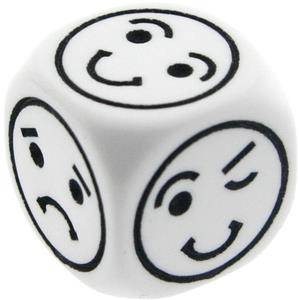
I’ve reached the point now where I’ve grown into a lot of the masks I’ve constructed, to the point where I realize how incomplete they really were as I’ve grown past them. Rather than constructing ever more elaborate ones, however, I’ve lately been trying to see what it’s like to not wear any at all. That itself is a kind of mask, the sort of confident person who ironically doesn’t need a mask. It’s forced me to think of myself not as a collection of masks, but more like a die, with various faces that I present appropriately. I still think it’s valuable to present myself differently based on who I’m talking to or what situation I’m in; I feel like that’s just de rigeur for social interactions, but I think making that my default for interacting with people keeps them further away than I’d like.

CreateProductThumbnail

A lot of this is that I’ve moved from a place that felt really hostile to my personality and interests to one that feels a lot more welcoming and safe. The concept of “safe spaces” is a really important one that isn’t well communicated, I don’t think, especially considering how much of a difference it makes. You don’t need to have suffered trauma or be dealing with fear to benefit from a safe space– you can be perfectly functional and learn to grow further in one.

Safe spaces make me think of Bel. It’s not how he would describe his approach to people, but what he does is create safe spaces for people to relax, be themselves, and grow in. The recurring #BelEffect joke revolves around “Bel’s candy van”, but in reality it’s more like an exclusive club where everyone is nice to one another and the bouncers are huge and strict, but also know you by name. A cruise ship is perhaps also an apt metaphor, especially for a group like Greysky (our FFXIV group). I might be the captain, but Bel is the cruise director, and he creates the safe space while I steer the ship.

It’s a role I don’t even have to put on a mask to do– the behind-the-scenes facilitator. It’s a comfortable role for me, and one that suits my capabilities and preferences. I’ve always been better at the man-behind-the-curtain role.

MSMajestyOfTheSeasEdit1


Source: Digital Initiative
Masks

There Came An Echo (On Glorified Tech Demos)

Aggrochat’s Game of the Month was There Came An Echo, and it’s worth listening to the podcast about it if you’re interested in it at all.

header

The title of this post probably gives away what I think of the game, but it’s something I want to delve into a bit more deeply. I am a great big fan of games that are, essentially, proof-of-concept demonstrations. They’re some of the best things to come out of the indie space, proving out various concepts that might otherwise never see the light of day. There Came An Echo is one of those games with a fascinating technical premise– your voice as the primary input– put into an actual, functional game.

I love these sorts of things because they’re lightweight and spark the imagination. I left There Came An Echo thinking excitedly about all of the possibilities. As I mentioned in the podcast, I think the game itself is a solid B, but the potential and the kinds of things it hints at are worth an A.

It puts me in mind of the multiplayer features of Splinter Cell: Pandora Tomorrow, specifically the spies vs mercs gameplay mode. Voicechat was built into the game, but it was audible not just to your teammates, but to anyone close enough to you location in-game to hear you. It put a twist on the usual types of voice communication, because if you wanted to be really stealthy, you had to go silent and keep both your enemies and your teammates in the dark.

SpiesVsMercs

It’s a little detail, a point of friction, but it makes things feel immersive. A number of people I know hate the word “immersion” as relates to video games; it’s a word that’s thrown around a lot, usually part of the “this breaks my immersion” phrase, and it’s often extremely ill-defined. I think of immersion as a sort of friction– a difficulty that the game presents that makes the experience feel more authentic. It manifests in various ways, but when properly done, it provides the sense that the game will act in the ways you expect, particularly when the game is simulating something, which most games are. If you have trouble controlling the game, or if the interface is needlessly obtuse, you’ll be pulled out of the experience; similarly, if things are too easy and you feel like you’re breezing through things that should be difficult or that the game tells you are difficult with ease, that will also pull you out of the experience.

The concept of communicating what needs to be done to a team is a really interesting one, and in a lot of cases there’s an existing friction inherent in getting that message out– either through the complexities of voicechat and ensuring your background noise isn’t affecting things or typing in a text box on the fly. As that technology becomes more and more ubiquitous, such as when it’s integrated into every Xbox Live and PSN game such that your existing communications hardware (that comes with the console!) is a part of every game, you can start to come up with interesting implementations.

PS4-vs-Xbox-One-3

The sort of friction you get from more immersive experiences allows you to make encounters less complex and more varied. If I had a game where my team had to navigate a dark space with flashlights and could only hear each other while within range, that would create a scenario in which even a simple enemy encounter would be very intense and very exciting, when it might be boring or run-of-the-mill in a well-lit space with omnipresent communications.

I’m really interested in the idea of nonstandard features making experiences more interesting. A lot of games, particularly MMOs, have to continually ratchet up the complexity and lower the margin of error in order to provide challenging experiences, because they have relatively few axes on which to create challenges. If they could introduce more interesting, more varied encounters through environmental effects or other limitations, there’s a lot of potential for interesting gameplay without creating what feels like an impossible complexity wall, both easing the burden on scripting as well as allowing players to come up with more varied solutions than the single path many high-end encounters demand you follow.

eLEH28y

There Came An Echo is a really interesting demonstration of a different way to look at controlling a game. I think the next step is a game where you’re giving voice commands to AI-controlled teammates while playing a direct role in the game yourself (as opposed to the eye-in-the-sky role), but that’s the sort of thing that needs a lot of support and potentially a triple-A budget to pull off appropriately. It’s why proof-of-concept tech demos like There Came An Echo are so important and so interesting, because they’re the things that pave the way for the bigger, slower-moving games who are necessarily more risk averse, but are always looking for a strong new concept.


Source: Digital Initiative
There Came An Echo (On Glorified Tech Demos)

Live and Let Live

It’s a pretty great day today, if you’re into human rights and equality. If you’re not, I think it’s a very good opportunity to evaluate for yourself why that is. There may be any number of reasons, but it’s worth understanding them for yourself and being consistent in your behavior. Rather than hiding behind a wall of rhetoric, it’s worth considering why today’s events make you happy, angry, or whatever else.

Rainbow_flag_breeze-665x443

I used to find it frustrating when people didn’t like media that I loved. It’s easy to associate your emotions regarding a particular thing with your sense of self, and then view any criticism of that thing as a criticism of yourself. I love Thief– I think it’s a brilliant game that changes the dynamic of so many video games and focuses on movement and exploration instead of violence– outright punishing use of force in a way that other games don’t. It’s important, though, that I don’t take the extra step and say that because Thief is a nonviolent game, that it’s somehow better in some absolute (moral/philosophical/whatever) way than other games that aren’t nonviolent. It’s easy to take that step into pushing that view onto others– trying to portray something as objectively good rather that subjectively good imposes that viewpoint on the people hearing you, which I think is problematic.

We seek to validate our opinions, and one of the things that’s come from the Information Age is a shift from validating our opinions through the acceptance of those around us to achieving validation from “facts”. We’ve become masters of rhetoric and debate in the last decade, with an endless wealth of information and education at our fingertips. We can justify any opinion with some piece of information that cements our validity. Sometimes this is worthwhile– certain particularly complicated things are worth researching and developing opinions on based on fact. However, note the timing there– the opinion is based on fact, not supported by them. When we then take these opinions and push them on others, we’re forcing our knee-jerk reactions on people and trying to mask that in some way.

brain-diagram-labeled-124

A lot of times, we get some kind of input and have an immediate reaction to it, deep in our hindbrain, before it reaches our consciousness and becomes subject to rational thought. When we’ve already had our reaction, it’s easy to use our (powerful, effective) rational thought processes to justify, rather than evaluate. Frankly, we’re wired to do so– doing differently is difficult for us. The complexity and nuance of our world has grown faster than our brains’ ability to process it as effectively as it could. I think that we can often gain insights into ourselves and a better appreciation for our own opinions when we try to break that cycle and honestly evaluate why we hold the opinions we hold, rather than justifying them. Our opinions may or may not change, but we’ll understand them better and (I think) be more secure in them.

I like Thief. Externally, I like that it represents a nonviolent approach to games through a lens that’s normally violent, and I applaud the creativity there, but that’s not why I like it. I like Thief because I have spent much of my life not believing myself physically competent enough to handle a conflict, should one arise. My mind has always been my refuge, and any advantages I gain and any problems I solve are done with my mind rather than my body. Thief lets me express that– it’s a game about being smarter and more observant than your foes, who are all stronger and hardier than you are. It’s a space in which it’s okay to be smaller than those around you (I am) and rewards planning and observation (which I’m good at) rather than necessarily requiring quick-thinking and twitchy reflexes (which I lack). It’s a game that makes me feel okay about being the kind of person I am, rather than creating a person wholly unlike me that I can use as an escape for a while before inevitably returning to the real world, in which I lack the qualities of the protagonist I just finished experiencing.

background-9250ce1d96dd10604ccfed99a78dc989

I dislike The Witcher. It’s a game that makes me uncomfortable with its setting and characters, and while I recognize its quality, I don’t have much of a desire to spend time in that world doing the things that exist in that space. There are a lot of things I could say about the Witcher– how it treats women, how it exacerbates certain societal issues, but the reality is that those are justifications– I don’t like the game because, regardless of its quality, it makes me uncomfortable to play.

I don’t need to justify my opinions on Thief or The Witcher with some kind of moral or statistical high ground– I’m not trying to tell people they should or shouldn’t like either game. I often recommend against people playing Thief, because it’s a game that doesn’t appeal to a lot of people, and in a similar vein, I’ve suggested The Witcher to people despite personally disliking it.

Sitting down and evaluating why I like or dislike something often makes me realize things about myself, helps me better decide what new things I want to try, or simply makes me feel secure in my opinions. On occasion, I will run across something that is genuinely important, something bigger than my opinions, and that needs evaluation with data and facts… or that barely affects me in any way, and requires that I just step back and let the people who have a genuine stake in the issue weigh in.

6a011168668cad970c01538f251cd5970b

I love Thief, but it would be unreasonable for me to demand that everyone love it. I dislike the Witcher, but my opinions on it shouldn’t impact the enjoyment of people who love that game for entirely legitimate reasons. I am largely unaffected by gay marriage at a personal level, and my opinions on it are best summed up as “it’s a good thing, because it makes people happy and more free in a way that doesn’t significantly affect others”. I’m in favor of increased happiness and freedom, and I’m in favor of people playing the games they like.

Today is a good day for issues that are bigger than just opinion, and it’s a good day to play a game you love.


Source: Digital Initiative
Live and Let Live