Playing Games I Don’t Like

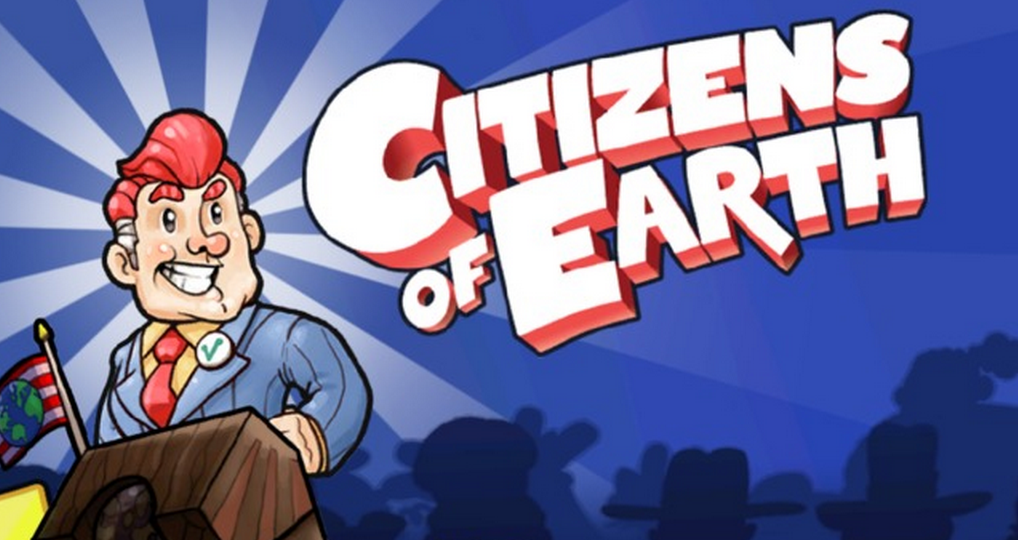
I got a few comments after the Citizens of Earth Aggrochat episode about my ability to play a game I didn’t like to completion.

It’s something I honed while working as a game designer– forcing myself to play something I don’t think I like lets me turn on the analysis and really look at what’s bothering me about it. In game design, feedback of “this sucks” or “I don’t like X” is effectively worthless feedback; it pretty much gets ignored by default (other than, occasionally, “we need to change this”) because it doesn’t offer any useful information.

On the other hand, feedback that’s specific and focused gives a team a lot to work with, and lets us make informed changes based on things people don’t like. Spending a lot of time in that environment leads you to change the way you present your own feedback– “I didn’t enjoy this” stops being something you say, and instead “I have no idea what I’m supposed to do here”, or “this segment is too easy” or “this NPC’s dialogue doesn’t make sense” all provide comments that offer something useful to work from.

That being said, feedback is important. In college, I had a PSP that was gathering dust, hadn’t been used in years and wasn’t about to see any use. Someone on the college mailing list wanted a PSP really badly, and was willing to trade a brand new Xbox 360 for it, along with a couple of games. I was, at this point, deep in my “PC Master Race” mindset, but it wasn’t like I was using the PSP and I thought it would be cool to have a shiny new console, if only so my roommate and visitors could use it. I basically decided to swap something I didn’t care about for something new and shiny.

The games that came with it were Forza and Gears of War, the two (at the time) most stereotypical possible games to have for the console. Being a broke college student, I couldn’t afford any others, so it was those or nothing. I booted up Gears of War, figuring I’d hate it and that I could maybe trade it in. What I found instead was a game that did some things I’d never seen before (this was the dawn of the cover shooter, so it wasn’t old hat yet) and provided me challenges that I wasn’t getting on the PC side of things. It was different, and totally out of my usual wheelhouse, but I found some interesting things in there nevertheless.

The cover was nonsense to me, the epitome of meathead space marine nonsense that I thought myself intellectually superior to. It was an arrogance I had to choke back down later, because I genuinely enjoyed myself.

Since then, I make it a point to put time into games I don’t think I’ll like. While I was working in the industry, I was a lot better at this, just because I made sure I kept up on every single major release. Now I’m slightly less invested, though I still play the really big-ticket games (haven’t played Bloodborne yet, though).

It’s showed me stuff that I never expected to like, and has informed my design choices, seeing what works and what doesn’t in different games. There’s some stuff you can do in a first-person military shooter that you just can’t in your standard fantasy MMO, and those things are worth experiencing. I force myself to play some games all the way through because I’ve found that even the biggest travesties of video games have some redeeming moment somewhere that’s worth seeing.

Games are diverse and a lot of fun. Try a game you might never have touched before– try a game in a genre you’d never have touched before. You might be surprised, and if you find an unexpected gem of a genre, you might suddenly realize there’re a whole bunch of games you can play that you’d never have considered before.


Source: Digital Initiative
Playing Games I Don’t Like

Pillars of Eternity, again

Short post today, I’ve got a lot of work to do.

I promised I’d return to Pillars of Eternity, and I have. I spent a bit of time in it this weekend and got through the first bit of tutorial. It’s a game that will probably be good, but still hasn’t quite hooked me. Wrong game at the wrong time for me.

What I can say is that the storytelling is already quite good, much as I expected from Obsidian. The actual gameplay is a bit slow, with a lot of time spent watching my characters run from place to place. Movement isn’t interesting outside of combat, so it winds up being a lot of clicking and a lot of awkwardly moving the camera around.

I realize these are standard features of the genre, but they’re grating on me as I try to play, which is why I think it’s a game I’ll need to come back to later, when I’m in the right mood for it. It does feel like a really good classic PC RPG, though.

EDIT: Sorry this post is late. I hit the wrong day for it to publish! D:


Source: Digital Initiative
Pillars of Eternity, again

Soft Skills

I’ve been transitioning over the past six months from a game designer to a team lead/project manager. Specifically, the kind of person whose job it is to ensure that everyone working on their team has the resources and shielding they need to do excellent work, or, for the cynical, meddle and ruin everything.

There’s a similarity in both fields that I’ve found interesting. Most people don’t tend to believe that either game design or management are “skills”, in the classic sense of the term. There isn’t the same view as people take when talking about mathematics, or programming, or mechanical engineering– those things involve skills, and there’s a deference given to people who can have them. You’re unlikely to, as a non-programmer, suggest to a programmer that you could whip up a secure peer-to-peer networking solution if you felt like it.

As a game designer, however, it was interesting to me how often people would say one of three things to me:

1.) “Oh, I thought about making games for a living, but decided not to.”

2.) “Hey, I have this cool idea that you haven’t thought of, you should use it!”

3.) “Man, I played [game], those guys/you screwed up some obvious stuff! I can’t believe they were such idiots!”

These aren’t people intending to be disrespectful or crass; most of the time it’s an honest attempt to find common ground or strike up a conversation, but there’s a very real belief underlying the comments– the skills employed by a game designer aren’t “real”, at least in the sense that they’re skills that most people lack. There’s an underlying implication that anyone could be a game designer, just that the people who are doing it either got to it first or couldn’t find something better to do.

There’s a similar train of thought that I see applied to management– it’s very popular to hate on anyone with “manager” in their title, or just the concept of leadership and management in general. From within game development, there was a pervasive, strong distrust of anyone in any sort of leadership position beyond a team’s direct reports.

The distrust is so pervasive, in fact, that finding suitable images for “stupid boss” and similar made finding images for this post trivial, whereas finding suitable images talking about “soft skills” led to very little of use.

I think we distrust soft skills, and by extension the people who use them. The idea that being a good communicator is a skill bothers people at some fundamental level, and it leads to a certain disbelief when it comes to jobs that are more about soft skills than “hard” skills (programming, mathematics, etc). There’s a lot of research that’s been done on the topic, and it’s interesting how constrained to certain circles it is.

I’m fond of saying that people don’t have as much free will as they like to think they do, that conscious thought is consistently and radically affected by subconscious stimuli without our knowing. We are hardwired to be affected by our subconscious and rationalize our behaviors after the fact– you didn’t eat a whole bag of chips in one sitting because the combination of flavors is precisely tuned to drive your brain to crave more, you did it because those chips were delicious. That bit of rationalization says “sure, I made a questionable decision, but it was MY questionable decision, not influenced by someone who knows more than I do about how my brain works”.

I think this is why we distrust soft skills. It’s easier to accept that someone can do something you can’t, that involves a particular skill that you haven’t picked up, than it is to accept that someone can do the same thing you do, but better. In a sense, we’re less intimidated by people with skills we lack entirely than people who have the same skills we do but are better than we are at them. It’s player fantasy, applied to the real world.

If two very similar classes in an MMO have markedly different outputs, the game’s community rages– the game itself is broken, and for many players, the game is fundamentally unsatisfying unless the imbalance is reduced or removed. This has next to nothing to do with how much that difference in output affects their day to day play– the mere suggestion that someone else does the same thing they do, but better is enough to fuel anger. Sometimes this can be rationalized– some classes are “harder to play”, and this will mollify the playerbase. The “hard skill” of playing the class is justifiable, and more accepted.

I think the same thing is true of soft skills– the concept of a really excellent communicator (a marketer, almost by definition) is viewed with distrust and often outright venom by people who value “hard” skills. I’ve had friends tell me to my face that “business types” are poison and the worst people, even knowing that I’m pursuing a business degree.

I often suspect that I’m exempt from this label because I’m still developing my skills, I’m not a “real” businessperson and thus it’s easier to rationalize me away. I wonder how many friendly relationships are sabotaged simply over the divide between the concept of “soft skills” vs “hard skills”. I suspect it’s a very high number.


Source: Digital Initiative
Soft Skills

Dubbing vs Subbing

I was at Sakuracon for a few hours this weekend, and a few overheard conversations reminded me of a longstanding debate within the anime community about subtitled or dubbed shows. Essentially, the debate boils down to whether it’s better to watch a show in the original Japanese, with subtitles, or with English voiceovers.

I came into anime at some weird times. The first was when I was young, too young to really appreciate terribly much nuance in my entertainment, so truly horrendous voice acting was lost on me. I then stayed out of anime for nearly a decade, coming back to either obviously dated shows or newer shows with higher budgets and quality English voice acting.

As a result, the debate is somewhat lost on me. Terrible voiceovers are going to grate on me whether they’re in Japanese or English, and subtitling is going to annoy me. I feel like, in a lot of higher-budget anime, the voice acting and translation have long since gotten good enough that subtle nuances of tone and wit are able to be expressed.

I’d much rather watch a show with good voice acting in a language I can understand (because I don’t speak Japanese) than try to imagine the spoken tone matching up with the text I’m reading. In a show I’ve been watching recently, a major plot point centered around a character’s continual use of a particular phrase, one that I didn’t pick up on at all over the entire preceding 15-20 episodes of the show because the linguistic nuance in Japanese was utterly lost on me.

Yakitate Japan — it’s an anime about baking bread done in the style of a tournament fighting show. Yes, I’m serious. It’s amazing.

In the meantime, I’ve also watched some of the Persona 4 anime, with English dubbing, and I’ve found the voice actors do a fantastic job both nailing the characters and hitting clever nuance and jokes where they’d otherwise fall flat. A few characters pull off some deadpan humor that I think works really well if you speak the language but would be really hard to pick up on otherwise.

The whole subbed vs dubbed debate seems like a relic of a largely bygone era to me. Perhaps I’m wrong, and that poor dubbing is still rampant, but most of the anime I’ve seen that’s from the last five years or so has really excellent English voiceovers. Maybe it’s because I only watch high-production-value anime, I don’t know.

I feel like there’s a healthy contingent of anime fans who got into it when dubbing was really bad, because it was most low-budget imports, and that as dubbing has improved there’s been a shift from subtitles being the only way to get a coherent story and overall experience to a general belief that subtitles are the only “authentic” way to view anime.

I do know a number of people, mostly those with some background in Japanese (whether they speak it or not), who prefer the subtitles for various reasons, which I think is fine. It does bother me somewhat to see anime fans at conventions criticizing one another for their choice in viewing options, though. I’m not sure when being a nerd became so divisive. Maybe it was always this way.

Either way, there’s some good anime out there, that’s probably worth your time. It’s an incredibly diverse medium, I keep finding, with both creative plays on existing concepts and new, really bizarre ideas. The nice part about animation as a medium is that it allows you to do really high-concept stuff without breaking the bank, budget-wise, for things like special effects and scenery. There’s a lot of really neat genre fiction and explorations of topics I would never have thought would make a good show. Apparently one of the big shows lately has something to do with soccer players? It’s fascinating.


Source: Digital Initiative
Dubbing vs Subbing