No post today; I am Heavenswarding.

Enjoy your weekend! I’ll see you on Monday!
Source: Digital Initiative
HEAVENSWARD

Content by Tamrielo

No post today; I am Heavenswarding.
Enjoy your weekend! I’ll see you on Monday!
Source: Digital Initiative
HEAVENSWARD

The MMO subscription model is dead, or so they say. So they say despite the two largest MMOs in the world, both of which dwarf their closest competition by 100% or more, being subscription-based games.

$60 is too much to pay for a video game. It’s a catch-22; we demand ever higher quality and ever lower prices, despite games being one of the few entertainment media whose cost doesn’t rise noticeably with inflation. The “standard” was $50, up until the release of the Xbox 360, when new console games more or less centered on $60. That was in 2005. As a point of reference, going to see a movie was, on average in the US, $6.41 in 2005. Now, it averages $8.17 (http://natoonline.org/data/ticket-price/). To be entirely frank, I can’t think of a single theatre in my area that sells tickets for eight bucks– try twelve or more.
But, people still buy games, which means that there’s a particular point at which a game (or, really, any kind of entertainment) is worth spending money on. Barring the reductive philosophy that fuels piracy, the “I wasn’t going to pay money for it anyway so it’s okay if I steal it” flawed premise, there’s a certain amount of logic and evaluation that goes into spending money on a game. Everyone has some kind of system that helps them determine whether they’re going to spend money on entertainment or not.

I think having a system is important; it puts things in perspective and helps avoid buyer’s remorse and helps you evaluate whether the purchases you made were worthwhile. This almost certainly changes over time– nearly everyone I know has changed how they determine when something is worth plunking down cash to buy.
My own system takes into account two things: the money I have to buy games and the time I have to play them. I usually have a lot of one and relatively little of the other. When I have a lot of time to play, I tend to look at entertainment purchases from a cost per hour standpoint. Any purchase I make is based on the dollar value per hour I’m getting out of whatever it is. Movies are pretty bad for this sort of thing: $12+ for two hours of entertainment average six dollars an hour. Going out to a bar is even worse: one drink an hour at $3-12 a drink (plus anything I might eat) puts me above even the six dollar standard. A book is okay– I read at about 150-200 pages an hour, so most books take me about three to four hours to read– at about $8-10 for a book, that’s in the two to three dollar per hour range.

Isolated open book
Games are all over the place. $60 for a game that takes me 8 hours to beat doesn’t feel worth it, running $7.50/hour, but a game that takes me 12 hours is looking a lot better. A game like Skyrim, Dragon Age, or Persona, which suck away 100+ hours look great, at pennies per hour of play. The only games that look better are MMOs, where as long as I play 30 hours in the first month and 6 hours every month thereafter are absolutely worth the initial box price and the $15/month thereafter. Any more time I spend on them (and usually, I spend rather more time on them) just drops the price. This weekend is Heavensward, which I spent $60 on, a cost I’m going to recoup in about three days, possibly less.
On the flip side, when I have more money and less time, I want experiences that don’t take too much time to complete. I don’t have the time to spend a hundred hours playing one game; I’d rather play four shorter games in that same window. I’ll be honest, I haven’t devoted the time to come up with a system for this, because to be entirely frank I haven’t been in a situation where I have more money than time in quite a while. I have, however, seen a lot of friends come up with systems for this, and they tend to look for the highest quality experiences they can get for their limited time. It needs to be good, it needs to be polished, and it needs to work out of the box.

I’ve spent more time in the middle, where I have a decent amount of money and a decent amount of time, but not a ton of either. Perhaps bizarrely, this is when I often find myself buying minis and getting into new minis games. Minis, despite being individually expensive, are surprisingly good from a cost-to-time perspective. It takes me some amount of time for assembly, call it an hour to clean, fit, and glue, and then anywhere from two to six hours to paint. Even at the low end, a single mini ($10) is right in the book range, and that’s before I’ve ever put it on the table to play a game. Games take 1-2 hours, so each one of those I play is making the mini more and more worthwhile. There are minis in my collection that have cost me less than a penny per hour that I’ve played them; I have a group of Infinity minis where the entire faction has cost me about fifty cents per hour of entertainment; a really, really good deal.
All of these things help me evaluate whether some piece of entertainment is worth my time. It’s become a sort of instinct, I can tell when I feel like a game is worth me spending money on and when I don’t. It makes price fluctuations affect me a lot less than they otherwise might– there’s occasionally a game in a Steam Sale that goes down to a point where I’m interested, but that’s exceedingly rare. It’s when this instinct fails me, or when I can’t adequately predict if something is going to be worthwhile that I regret my purchases. I honestly have a hard time thinking of many of these– they’re almost all games i literally couldn’t play for one reason or another, or that I bought on someone else’s recommendation and didn’t end up liking.
What kind of systems do you use to determine if a game is worth buying? Are you a price-per-hour sort, or a quality-per-hour sort? Something else entirely?
Source: Digital Initiative
Entertainment Economics

I played a quest in Archeage yesterday that really stuck with me. I ran across a traveling minstrel at a crossroads. To the east was the faction’s capital city, to the south was a small port town. As the quest went, he was on business towards the city, but wanted me to deliver a message to the port town. He’d been through that town years back, loved a girl while he was there, but hadn’t been in the area since then. He wanted to deliver his best wishes to her, and asked for my help in doing so.
It’s a simple delivery quest. Walk over to the girl in the port town, talk to her to deliver the message. Simple. What stuck with me was her reaction, her quest complete text. She has to struggle to remember the minstrel’s name, then recalls it and wistfully recalls some good times, commenting that her now-husband and the minstrel had gotten into some fights, and the minstrel always won. She ends with a loving comment about her husband and a thank-you for delivering the minstrel’s message. Bam, done.
The formula is incredibly basic. Talk to one NPC, run somewhere, talk to another NPC. It’s the story that kept me paying attention. There wasn’t anything to resolve, it was an errand to run and was presented as such. In return, I got a little slice-of-life snapshot into the virtual lives of some NPCs. They’ll forget me as soon as I leave the area and I may or may not forget them, but this is okay. It’s a very simple, human interaction that makes me feel like the world is bigger than just me. For someone who’s done a lot of research into the differences between Eastern and Western narrative styles, it cleaves much closer to the former than the latter. I feel good about having performed a small task, and the world does not unduly react to the small task I’ve performed.

As a bit of perspective, this is what that same quest might look like in another MMO. If we keep the exact same structure, I’ll run into a minstrel, who wants me to deliver a message to a former lover, who he doesn’t think remembers him. I’ll run the message to his former lover, whose whole life will light up; s/he’s been pining for said minstrel since he left years ago, and this delivery has changed her life. She’ll pack up her things and go find him in the big city, and they’re going to live happily ever after. Thanks so much, kind adventurer! Without you, we would never have found one another again! We owe everything to you, have 2 silver 36 copper and 107 xp!
It would be a story, delivered in media res, with a happy ending where all of the characters we know are together. It wouldn’t be a moment, a snapshot in time; it would be an Event that requires our intercession to be resolved.
I’ve talked before about the frustrations I have with making the player into a Big Damn Hero at every turn, to the point where they can’t walk down the street without saving six people’s lives, reuniting three long lost loves, restoring a faltering business, and mending a broken family, all while saving the world from yet another evil plot. What I’ve noticed more recently is a trend in games from elsewhere, which don’t try to turn everything into a story, and let events unfold without necessarily resolving in a neat and tidy package.

I spoke to a friend from India recently, who was having a hard time taking a certain American MMO seriously. Her comment was that it felt to her like she was being singled out and made fun of, because the game was asking her to do simple things then lavishing praise on her. In talking to her, it was clear that there was a cultural divide between the kinds of stories that made sense to her and the kind I’ve come to expect from my own games. I’d love to play a game that features her kind of stories, where the subtle things that motivate and satisfy are shaped by a culture that isn’t my own.
I’ve felt for a long time like one of the best ways to get a pulse on a culture is through its entertainment. There are very few things that are quite so effective at revealing subtle ideas and cultural differences than seeing what kinds of things resonate with different people, what they watch and listen to for fun. I hope that as globalization continues, I can start to play games that put me not just in the shoes of someone whose life has been wholly unlike mine, but that has been designed from the ground up from a perspective I don’t instantly recognize.
Source: Digital Initiative
Diversity

Why does a game from 1997 still matter, almost two decades later?

One of the least expected bombs dropped at E3 this year was the up-and-coming Final Fantasy VII “remake”. The darling of Internet speculation since at least the launch of the PS3, there’s been a persistent rumor of a modern version of the game for an incredibly long time. Two good questions come up when watching the E3 trailer:
— “Why does anyone care still?”
— “What is Square-Enix’s position here; why are they doing this *now*?”
The first answer is easy, though will be unpopular if FF7 wasn’t your thing: Final Fantasy 7 is the most popular Final Fantasy full stop. It has sold, over its lifetime, a bit over ten million copies… for just the base game. There are two spinoffs, pushing the FF7 franchise’s sales up to right around 15 million. None of the games in the setting are newer than 8 years old. There’s also a ton of non-game side content that I’m not counting in that number, but are immensely popular.
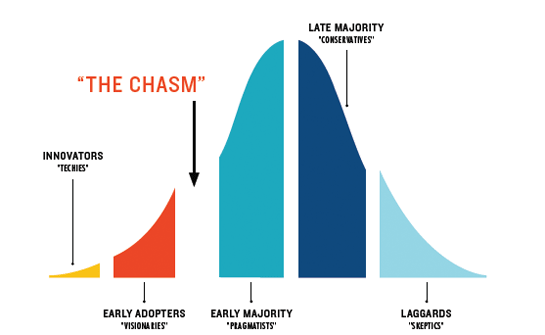
There’s a fairly common marketing standard that says that something is “mainstream” when it breaks 10 million sales. At the point at which that many copies have been sold, enough people have experienced [whatever] for it to be a cultural touchstone. FF7 is the only Final Fantasy game to break that number.
Here’s the other thing: there are not a lot of games from the 1990s that are still relevant today. A lot of the stories being told back then were extremely limited, for a variety of reasons, and have been outdated since then. Final Fantasy has been trying to push the storytelling envelope for most of its run, and as a result the overall arc of FF7 (and a lot of its side content) is still pretty reasonable with a facelift. The stuff that wouldn’t pass muster today can be easily removed or updated, and the high points the game couldn’t quite hit (due to technological or space or time limitations) can be fully addressed.
So, what’s Squeenix’s angle? Why now?
The common theory I’ve seen floating around is that Square is worried because its flagship series has been faltering, so dropping a new FF7 is a way to give itself a monetary shot in the arm. Let me dispel that one real fast. A remake of FF7 is an entire new game. The parts that you can port over to a graphical update are the EASY parts; new visuals, new engine, new models, new animations– all of that is expensive, and it’s what a remake needs. Even if the story is kept entirely as-is, and they don’t add voices (both of which are laughable), that’s just text, and text is cheap.

Don’t do this.
We haven’t seen an FF7 remake because doing so is *incredibly* expensive. The game is brutally dated at this point, being a PS1 title with some of the blockiest character models this side of Minecraft. There’s been a lot of work in updating character art and models for things like Advent Children and the other spinoffs, but nothing near the scope of redoing the entire game. Again, the most recent of these games was a PSP release in 2007– even that’s dated by now, if it wasn’t when it originally launched.
The FF7 remake isn’t a sign of money-grabbing on Square-Enix’s part. It’s not a sign of uncertainty or insecurity, mining nostalgia for quick bucks. The scope is just too huge for that.
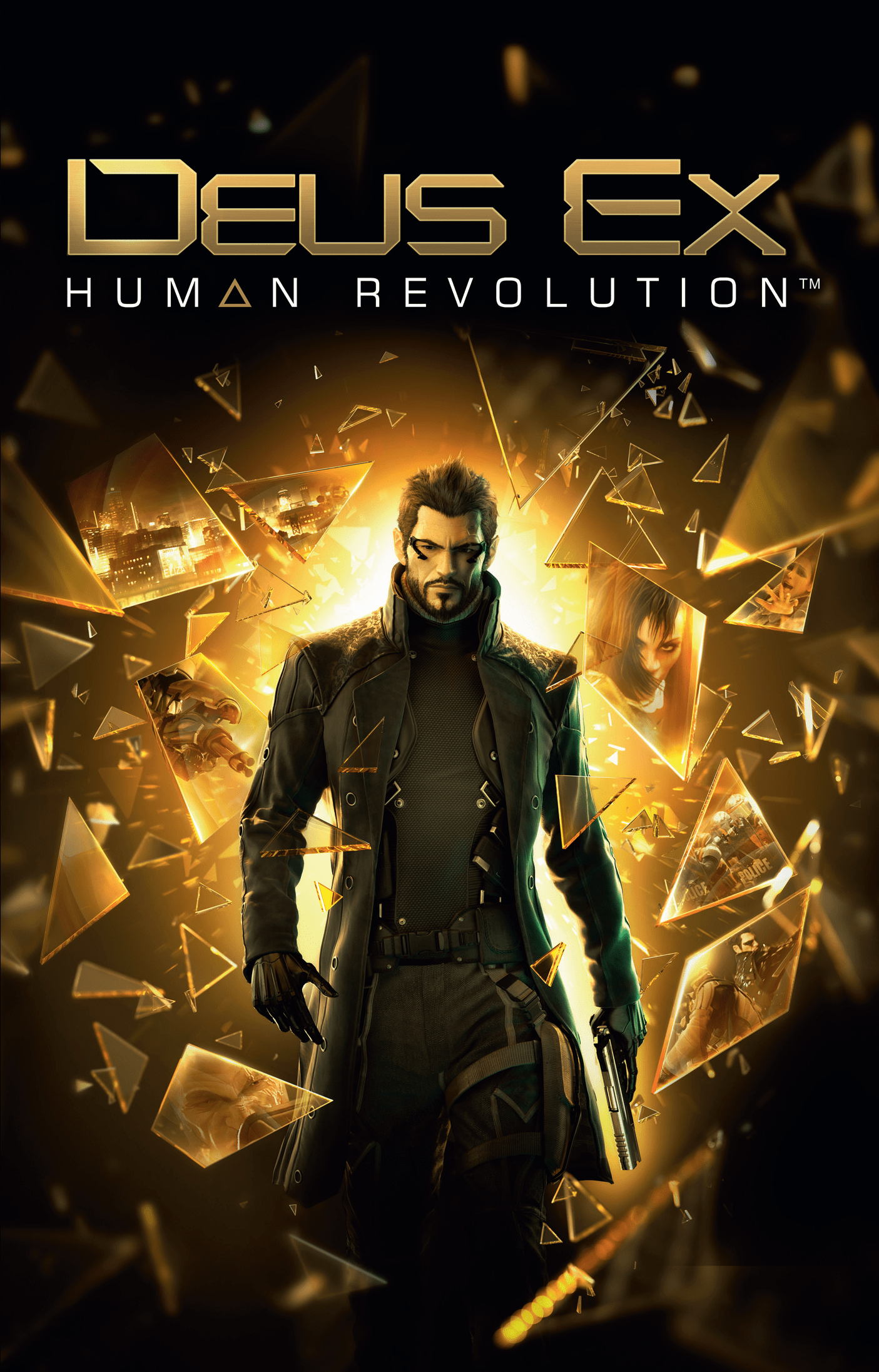
Here’s the way I see it. Square faltered a while back, with some of the more recent FF games (12, 13, first release of 14), and has taken the time to figure out what they’d been doing wrong and how to fix it. We’ve been seeing the shot-in-the-arm re-releases for years now, as they use their old properties to bolster themselves while they work out what to do next. It’s been extremely successful– they’ve partnered up with external studios and made some acquisitions that have been EXTREMELY well-recieved. Lest we forget, the new Deus Ex, the new Thief, the new Tomb Raider, the new Hitman, and Life is Strange are all games developed under the Square-Enix publishing umbrella. These aren’t minor games.
For a closer-to-the-mark example, Final Fantasy 14 is the second-biggest MMO in the world, right behind WoW. It is closer to WoW’s numbers than any other MMO has ever been, and furthermore it’s closer to WoW’s numbers than its nearest competition is to it, and it’s GROWING. We’ll see how the expansion does, but FFXIV is a game that should be dead and is instead the second biggest game in a hyper-competitive, super saturated genre.
Square has been quietly rebuilding its empire for almost a decade now, recovering from missteps in its major franchise. It had difficulty with the transition to high-fidelity open worlds; when it became de rigeur to have a finely detailed game with HD graphics, Final Fantasy, attempting to maintain its reputation for sitting at the forefront of graphics, tried to keep pace, staying ahead of everyone else with stunning graphical fidelity. It’s how we got FF13’s pretty-but-linear corridors; the cost of doing big worlds with that level of detail rises exponentially, so keeping the big worlds and trying to stay graphically on top is an impossible task. Even the open-world games weren’t doing that at the time.

Now, they’ve found their footing. FFXV’s demo was very well received, FFXIV is quietly the most relevant MMO out there, and they have a stable of strong properties, all gunning for sequels, from satellite studios. Despite all of this, possibly BECAUSE of all of this, Square is seen by many to still be faltering. It’s been rebuilding and galvanizing slowly and quietly, so much so that it’s easy to miss if you aren’t paying close attention.
The Final Fantasy VII remake is Square-Enix dropping a bomb, making a big, loud noise to make people sit up and pay attention. They’re here, they’re back, and they’re relevant. FF7 is not a property they take lightly, and they could gently milk it for a long time– they’ve been doing it highly successfully for a while. A full-blown remake is a show of confidence: they believe they can blow you out of the water with it, and that they have all their cards in the right places to do so. It’s finally worth it to them to spend the exorbitant resources necessary to make the game, because they’re confident they can do it right.
It’s going to be different from the FF7 I played nearly 20 years ago, and I’m okay with that. I want to see what Square can do now.
Source: Digital Initiative
Final Fantasy 7