Shadowrun: Dragonfall and Mining Nostalgia

Took a break on Friday to clear my head after all of the MMO nostalgia and get caught up on a backlog of work.
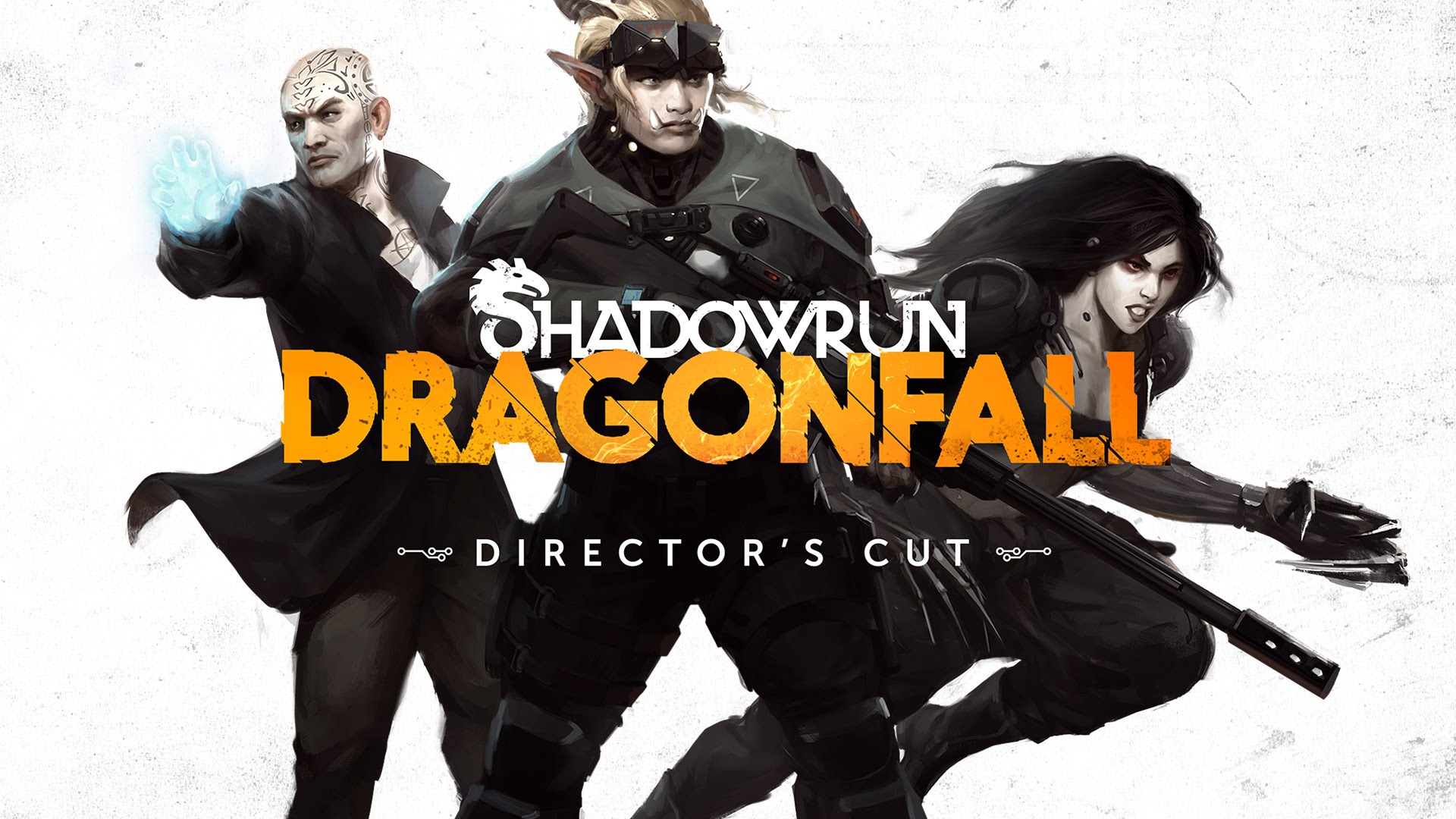
maxresdefault

We had our Game of the Month podcast on Shadowrun: Dragonfall, and I want to talk a little bit more about that game. I’ll rehash some of the stuff I talked about in the podcast, so I apologize in advance for any redundancy.

One of the tangents we (I) got on while talking about Shadowrun was how difficult it is to make a game centered around old nostalgia and make it good. I have a litmus test for this sort of thing, that Ash mentioned in the podcast. A game needs to be good on its own, absent any context outside of its series. The further along a series gets, the more impenetrable it becomes, generally speaking, which is why the third or fourth game in a given series is often a significant reboot. To wit: Grand Theft Auto 3, Bioshock: Infinite, Assassin’s Creed IV, Deus Ex: Human Revolution, the new Thief, Fallout 3, Jedi Outcast AND Jedi Academy– just a short list of games as I scroll down my Steam Library that are the third or fourth game in their series and a significant reboot, sometimes changing the game’s genre entirely.

Shadowrun is a good game in its own right– you can enjoy it without having a decades-long background in the kinds of games it’s inspired by. It’s perhaps why I’ve had so much trouble getting into Pillars of Eternity. There are awkward parts of the gameplay and the user interface that are borne of the game trying very hard to stay close to its roots, without necessarily evaluating if those roots make for a modern-feeling, up-to-date game.

769307-arcnpc0f

Games are experiences that are meant to evoke certain feelings; they create a particular scenario in which your brain lights up in a certain way. Unfortunately, the key there isn’t the game itself, but the way the brain lights up, and that changes over time, ESPECIALLY with new experiences. I can play Arcanum: of Steamworks and Magick Obscura, one of my favorite steampunk games, and it lights up my brain in much the same way it did when I played it more than a decade ago. It’s also a deeply flawed game, with a lot of break points and issues. I’ve played similar games since, and they don’t evoke the same feelings. I dearly loved JRPGs growing up, but now it takes a truly spectacular one that approaches the genre differently to get me engaged.

Even if we like the same sorts of games over time, our standards will rise as we get better and better games. The bar goes up, and fewer and fewer games will meet it as time goes on. If we’re not careful, we’ll find that no new games meet our criteria anymore, and nothing new will light our brains up the way the older games do.

Lone Wanderer tweaked wallpaper (FALLOUT 3) by SLiqster

Lone Wanderer tweaked wallpaper (FALLOUT 3) by SLiqster

It’s why I harp so much on trying games you don’t necessarily think you’ll like, in genres you don’t always play. I mentioned Fallout 3 as an example in the podcast– the old Fallout games with isometric turn-based RPGs, and lent a strong sense of wandering through a vast world on your own and having many options for dealing with whatever problems or opportunities came up. The new Fallout games are first-person shooters, but importantly they’re still pursuing that sense of wandering through a vast world. Our bar for that sort of experience has risen, and for the most part an isometric game makes you feel detached and makes the world feel constrained to what you can see on screen. In a first-person shooter, you can pull out binoculars or a scope and look out over a vast landscape, which contributes to that sense of detachment and tunnelvision when playing an isometric RPG when put in direct comparison.

As games get better, the kinds of things we can express in them as a medium get broader, and certain genres will lend themselves to certain types of games more readily. This will change over time, as genres mature and the gaming landscape changes. The point-and-click adventure game that gave you chills as a child (7th Guest anyone?) has become a first-person thriller (Call of Cthulu/Amnesia) and eventually morphed into an MMO (The Secret World), all focusing on a very similar set of experiences and lighting your brain up in similar ways, but coming at it from very different angles.
http://joshflores.net/

http://joshflores.net/

With a game that’s about nostalgia, about triggering those old feelings, it’s important to pay attention not just to what those games did, but how the medium has evolved in the meantime. Slavishly recreating an old game isn’t going to have the same impact as a brand new game that evokes those same feelings in a newer, tighter package. This can even transcend IP– Shadowrun Returns and Dragonfall have little to nothing in common with older Shadowrun games, but it expertly pulls in references to older Shadowrun content as well as evoking the feel of old Black Isle and similar games, all without becoming inaccessible to a player unfamiliar with any of those things.

Coming off of the MMO nostalgia train of the last couple of weeks, I’ve been thinking a lot about why I haven’t felt like an MMO has captured the feeling of the old games. For me, it’s because a lot of those memories are inextricably tied to the joy of discovering a new technology– the Internet, and the idea that I could play games with real people in a huge world without the constraints of a team vs team match was thrilling. That same earthshaking, intoxicating excitement isn’t likely to happen again until another major technological breakthrough that not only changes the way I play my games, but also changes the way I live my life. That confluence of events is what gave those older MMOs the spark that seared into my brain, and is (I think) why the genre has stumbled once internet multiplayer became a core feature of every video game. Certain games are trying to mine that nostalgia for older MMOs, but they’re missing the key factor; recreating the games and their features, not recreating the experience.

Infinity___Citizens_by_elpinoy

I hope that in my lifetime I see another technological leap that makes me sit forward, jump into a game, meet a new person in that game, and have us both get excited because, holy shit, we live in the future and we can’t believe playing this game in this way is an actual thing we can do. That’s how I’ll get my MMO nostalgia, and that’s why I’m excited about the new Shadowrun– it’ll make me remember all of the good times I had with old isometric RPGs without also reminding me that they now feel old.


Source: Digital Initiative
Shadowrun: Dragonfall and Mining Nostalgia

AggroChat #59 – The Shadowrun: Dragonfall Show

Dragonfall 2015-05-31 00-44-06-23

Tonight we get the folks together to record the fourth AggroChat game club show, this time devoted to Tamrielo’s pick.  Shadowrun: Dragonfall is the second game in the Shadowrun: Returns series from the wildly successful kickstarter process.  While the first game focused mostly on getting the engine correct, this game focuses more on weaving an interesting narrative in the Shadowrun setting.  In tonights show we delve deep into the game and talk about the various choices we made while playing it.  Please be warned this is a full spoiler show, and we will talk about some of the plot twists and the alternate choice paths that you can make in the game.  I highly suggest that if you intend to play this game,  that you revisit this show after doing so as not to spoil any of the content.

This title is auspicious for various reasons, primarily because it is the first title that everyone joining in the show either beat or came extremely close to beating it.  Kodra and I started recording tonight and during the course of the show actually defeated it.  Ash however is in the final stretch making him only about thirty minutes away.  The other extremely unique thing about this game is it is quite literally the first game we have played that we all were able to give a big thumbs up to.  Join us next month for Kodra’s title as well called There Came an Echo, which is a voice controlled real time strategy game… that is certain to lead to some strange conversations.  Additionally if you played Shadowrun: Dragonfall along with us, please drop us a line below to let us know what you thought.

Interlude: Breaking the MMO Paradigm, Part 2

I talked a bit before about a different kind of MMO system, with only two roles: Frontline and Flanking. Actual abilities while in these roles would vary based on player choices, but the core concept revolves around the idea of a front-and-center player and up to two flanking players, who aren’t in the direct line of fire.

A structure like this would have a number of ramifications on encounter design and group content. I’ll split things up by working my way up in encounter size.

2625-arcade-one-player-button

Solo Encounters

A player playing solo is going to still have a Frontline and a Flanking setup, and is mostly going to be using these to change up their tactics mid-combat. The enemy is going to be attacking them no matter which they’re using, so it’ll be more akin to stances than role-swapping. There’s a lot of possibility here for creative solo builds, though it’ll be instantly familiar to a lot of players because it’ll look like the games where you can weapon-swap easily, like Guild Wars 2, WoW’s stance-swapping, and similar.

Design of solo encounters isn’t going to change much, although the variance in how effective players are at fighting enemies on their own should even out a bit. What’s most likely is that players will build a particular ‘stance’ to be their primary, and then put utility and other functions on the secondary, to fill in gaps and reduce downtime.

bds-10

Duo and Trio Encounters

Players playing in pairs will start to see the system take shape (yes, that sentence was fun to write). It’s at this point that the Switch mechanic will enter play, and in theory combo chains can start rolling, giving two players large benefits for playing together as soon as they have a duo. Mostly, it won’t require anyone to change their solo builds much, although some players may set up Switch combos and start to fall into preferred roles at this point.

With a third person added into the mix, we’ll start to see group dynamics form. There may be two players who switch frequently, and a third who spends most of their time flanking and supporting, or all three players may switch frequently. It’d be important to playtest various ways of Switching in a trio, whether a player calls a specific other player to Switch or if they simply call for a Switch and the first player to respond is the one who switches. Normally I’d be against that kind of imprecise design, but with a small number of players it can stay organized pretty easily.

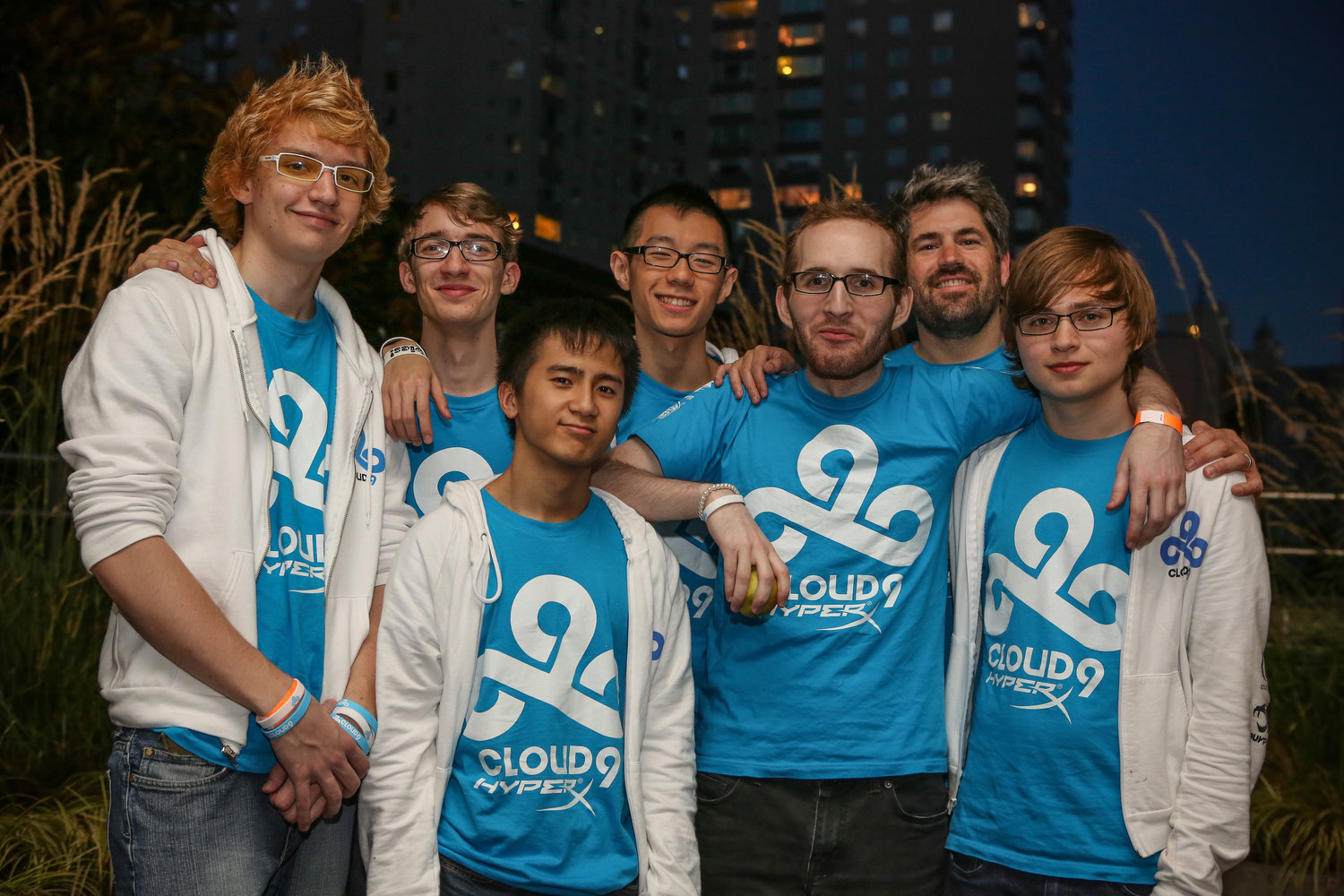
9338-cloud-9

‘Standard’ Groups (4-9 players)

At this size group, we’re looking at dungeons, the kind of everyday delves that you get into with a group, do some exploring, fight a few bosses, collect loot. For standard dungeons, I would tune them for 6 or so players, but allow players to enter with as few as 4 or as many as 9 players. Keep the rewards static, but split them among the party, so the fewer players you bring, the more rewarding the dungeon is for each individual.

In this sort of setup, you’re looking at 2-3 trios, and I think the trio would be the basic group unit of the game, because that’s where the Switch mechanic works best. As a result, encounters are going to need to think more about supporting multiple groups and splitting groups up, with fewer single large bosses and more “controlled chaos” fights. I generally think this will be fine, especially because it allows us to introduce tank-swapping mechanics (in which a boss will overwhelm a single tank, so two or more tanks take turns, usually a much more advanced skill) at a very early stage.

Groups will quickly learn to work together in both their trios and in the party as a whole, which makes the overall transition to larger-sized groups a lot smoother and more natural.

sao__the_skull_reaper_by_moojakok-d5ljyu5

‘Large’ Groups (12-24 players)

This size of group fits solidly in the “raid” encounter size, and it’s here where the difficulty comes in, because these fights are going to need to scale to the player number for them to make any sense. One possibility here is to have a “vanguard” group that gets further bonuses based on the players’ choices and can Switch with other whole groups, a sort of second-tier advanced mechanic that sets one team as the ‘heroes’ of the encounter until swapping out for another group.

There’s a certain amount of appeal to this structure, just because it adds an extra layer of strategy to fights based around juggling Vanguard bonuses, but also because it creates a situation in which different groups can play to different strengths. A group with a very strong core group can focus skilled members in one group and have them be the Vanguard, whereas a group where skill is spread out a lot more might perform Vanguard Switches more often, spreading the punishment (and heroism!) around. A particularly skilled and coordinated group might set up a strong combo, in which they perform rotating Switches in their group to chain combos, while also Vanguard Switching to the next group for them to continue the chain, until everyone in the entire raid has participated.

It wouldn’t be unreasonable to have the Vanguard buff scale based on the number of group members, though I wouldn’t make that the only scaling mechanic for encounters.

nw02campfiregroup

Encounter Design

One of the things that would go away fairly quickly is the idea of the basic tank-and-spank fight, where one tank holds a boss in place while a healer keeps them alive and the rest of the party burns it down. When even a ‘basic’ group is likely to have two tanks, there’s going to need to be a lot more variety in encounter design.

I’d likely move away from single large bosses as the exclusive “major” encounters in a dungeon, and would quite likely change the way dungeons worked in general. With scaling in place, I’d consider freezing most resource regeneration, so players would need to be much more careful about how they played– being less wanton with their health and more careful about throwing around big spells. With that kind of design, every encounter becomes interesting, because it stops being about blowing everything to win, then recovering, then moving on– efficiency of combat becomes a significant factor. A dungeon might have a number of rest points, acting as checkpoints and letting players restore resources once per run, but keeping even minor encounters relevant.

It would also naturally make it valuable to bring more players into a dungeon, to swap in as resources dwindled. A smaller party might get more rewards, but would be much less likely to be able to complete the dungeon. It would also encourage Switching, particularly if Switching could be used to restore some resources. This would conflict with the idea of having resource regeneration be a core boost to slot, but could be used as a “switching restores more”. If Switch was only usable in combat, with the first party member to gain aggro being the default Frontline player, it would prevent spamming Switch out of combat to restore skills, but potentially open up interesting group dynamics wherein combat is prolonged as a resource faucet.


Source: Digital Initiative
Interlude: Breaking the MMO Paradigm, Part 2

Teambuilding from Scratch

I left WoW in late spring of 2007, burned out from the stress of trying to hold together a fragmenting group. A lot of the raid had left to join other friends on other servers for the expansion, and others were taking the expansion slow. Some of the core group had pushed quickly to the new level cap and were raring to get raids in, causing tension. They wanted deadlines set for people to hit max level, something I staunchly opposed. When it became clear I wouldn’t push people faster than they wanted to go, most of the gung-ho raiders left.

Fragmentation_study_by_hameed

What remained was disorganized and, in many cases, bitter from the infighting that had characterized the last few months of raids pre-expansion and the post-expansion disagreements. The heart and soul of the group was gone, so I did what I could to make sure people would land on their feet elsewhere and, burned out myself, moved on.

A few months later, I was pulled back into WoW by a new group of friends. I’d moved across the country for my job and while they’d all played WoW before, they’d never raided and in some cases had never reached max level. It seemed like a nice way to relax, and I missed the game, so I came back, fully expecting that I could avoid my old haunts. This was easier, because we rerolled on the opposite faction, so I had a lot of content I’d never seen and could leisurely play through.

Old habits die hard. Without even trying, I was experimenting and optimizing, and had a newly max-level character in appreciable gear in a couple of months. I’d passed by people who had 60-level head starts on me and gotten the attention of the leader of the guild I was in, who’d already heard stories about me and saw me as a way to get to see top-end raid content that he’d never seen before.

Mary-Poppins-in-Sky-400x401

It’s worth noting at this point that the guild’s leader was, to put it politely, incompetent. Capricious and thoughtless, he would demand that the guild come together to do some activity or another, most of which he wanted to brand with his own ‘creative’ twist. It wasn’t enough simply to run a dungeon, we would run it without a tank, or without DPS, “for an element of fun”. Prior to my joining, these efforts were doomed to failure– because I was geared and familiar with playing the game at high levels, I could often push through these nonsense restrictions, which only fueled more.

It got bad enough that several of us created our own channel to get away from the guild leader, calling it “element of fun” as a jab at his scattered whims. It was through this back-channel communication line that we started having fun with the game again, free to talk and have fun without worrying about the constant reactions of the guild leader, who was insecure enough to feel threatened whenever anyone had an idea other than him. It was here that we started talking about raiding again, and where I started building a new team.

I’d had some friends who I’d left behind when I played WoW previously, particularly from college, who I’d kept in touch with but had never played with. I rolled a new character, different from my rogue, and offered to level up with them, and we could all be a group. None of them had formed any particular ties to where they were before, and so were happy to level up something new and different.

4_05_06_09_9_35_06_5

We also pulled in people from elsewhere on the server that we’d met, slowly forming a core. A few of my former LNR raiding buddies had left and missed having contact, so I pulled them in as well. We had a motley crew of players of vastly differing skill levels, but I had a good handle on how to run a group, and the 10 or so of us were a lot easier to manage than the 80 or so I’d been managing before.

The biggest issue I had was timidity. Most of these players had never played the game at a high tier before, so there was a tendency to wait, heal up to full, wait for full mana, ask three or four times if everyone was ready, and so on before a pull would happen. It was polite and thoughtful, which I appreciated, but it wasn’t conducive to exciting runs or holding everyone’s attention. A dungeon run that could be completed in 25 minutes could take more than an hour, and people who could only be on for 30-45 minutes were twitchy about committing to something that might take that long.

I gently encouraged faster pulling, but it didn’t take. I had flashbacks to old LNR days, when a hunter would pull mobs well before people were ready and we’d all come together once danger was imminent. I had a pack of throwing knives on my rogue, and could easily pull the next pack and force the tanks and healers to react lest we all die. Stealing a comment from our old raiding days, I’d throw a knife at some nearby idle enemies, declare “hlep!” as they attacked, and see how the group handled it.

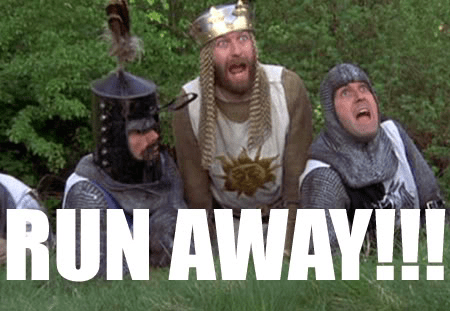
run-away_monty-python

As it turned out, the group figured it out pretty damn quick, and we went from slow progress to aggressive powerpulling in short order. Our tanks would start pulling on their own, just to stop me from creating chaos, and one of our healers started being able to heal through truly ridiculous situations largely, I think, from not realizing that he shouldn’t have been able to do so. I’d started with a group of timid, inexperienced players and quickly had a successful crew. We never raided in Burning Crusade, but by the time Wrath hit, we were a well-organized, high-functioning group, working our way through all of the content in Wrath from start to finish, very close to keeping pace with content releases.

This group has stuck with me for more than half a decade at this point, and while the precise makeup of the group has changed a bit over time, it’s been these folks that have jumped games with me for years. Even when we’re not playing the same games, we’re in communication and we’re talking about what we like and don’t like. It’s this group that fumbled our way through Karazhan once or twice and it’s this group that will be working at and taking down Turn 9 this weekend.

I could tell more MMO stories, but they’d all center around this group, so this is about the point at which I leave off on the game progression. Since they’re probably reading this: Thanks for sticking around, y’all. It’s been awesome, and I wouldn’t be looking forward to Heavensward (and every other game we play) anywhere near as much were it not for this crew.


Source: Digital Initiative
Teambuilding from Scratch