Organizational Failure (and Passing the Torch)

Probably a few WoW posts this week, as old MMO memories continue.

Late Night Raiders (LNR for short) hummed along for about two years, from not long after launch to slightly after the release of the first expansion. It taught me a lot about large-scale organization and how to manage teams, and its eventual implosion only added to that. It was also one of the hardest decisions I had to make.

pvw2802

Organizationally, LNR broke down fairly neatly. A raid group at the time was comprised of 40 members, spread across 8 classes. In the ideal case, this meant five players of each class filled a raid. Perfect attendance across 40 people was laughably impossible, so we drew from a fairly significant pool of people for our raid. At any given time, LNR had about 20-25 members with very high (80%+) attendance, and so on any given night we were “filling” the last 15-20 members from the pool. This pool, at the peak of LNR, was somewhere in the range of 100 people, give or take a few.

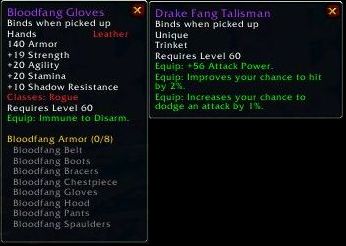
LNR was further subdivided by class. Each class had a separate channel that was used for that class’ organization, and which usually wound up fostering unique subcultures for each class. This also helped us disseminate information by class, rather than having long discussions across raid chat about specific class tasks, most of which weren’t relevant to anyone listening. As a result, a standard LNR boss fight explanation would start with a very basic and quick overview of the fight, and discussion of the details would happen through class channels. This had the secondary benefit of allowing class groups to set up larger-scale decisions (like attendance and loot distribution) amongst themselves– some classes had extremely well planned structures for deciding who would attend a given raid and who would get specific pieces of loot, sometimes worked out months in advance.
ebonroc9

The game also allowed filtering through party chat, as the game’s raid structure broke people out into 8 groups of 5. These channels were used for any cross-disciplinary discussion, and we would frequently rearrange groups to fulfill particular strategic needs.

Owing to people having fairly regular habits, we had a very broad categorization of people, though it was never fully codified. We had people who were reliable with high performance, who could be relied on to show up for the vast majority of raid nights, perform well at all of them, and on whom we could rely for the overall success of the raid. There were people who had high performance and who could often make raid nights, but weren’t around quite often enough to be relied upon. Then there were people who were either very reliable but had mediocre or unreliable performance or who had excellent performance but were around rarely. Finally, there was a pool of people whose performance was unreliable and who were relatively rarely around, or who had not run with the group often.

At first, we prioritized based on performance and reliability, always inviting those players first and working our way down the list. It was a functional but ultimately problematic setup; people who were performant but didn’t often get invites would look for other groups, leaving us with a strong core that could do very well when all of our best players were around at once, but that would deteriorate quickly if a few key people were missing or if we needed a lot of stand-ins. This led to one of the major recurring issues that LNR had to deal with: morale.
WoWRaids

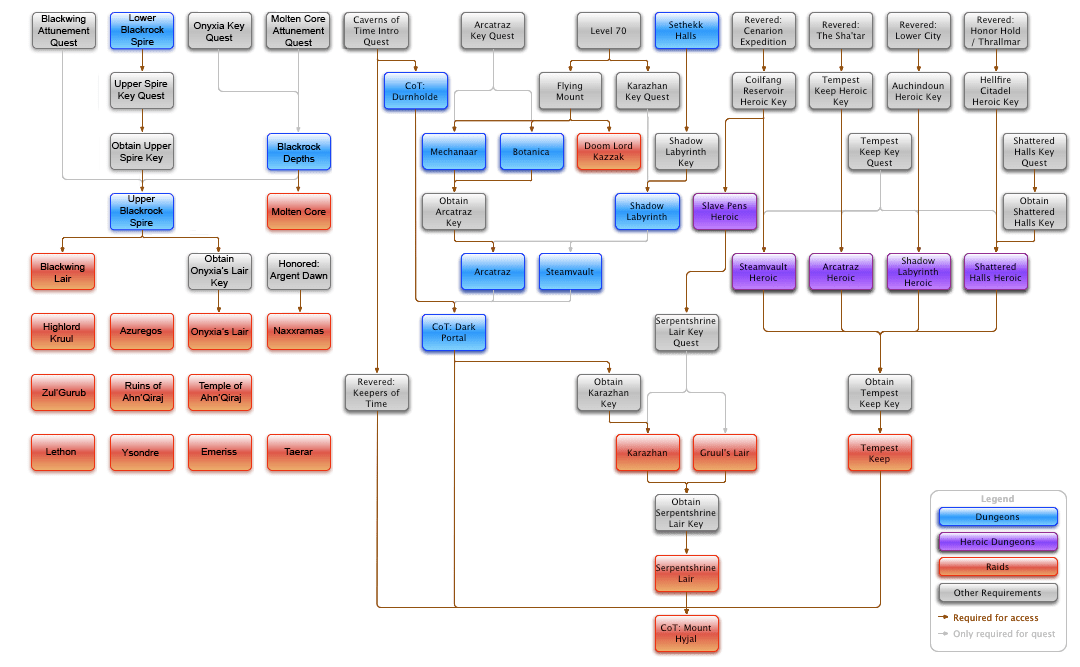
Raid structure in WoW, as in most MMOs since, has focused around a group working their way through a dungeon, learning and ultimately defeating various boss encounters. Each boss encounter would then be practiced until it could reliably be defeated and loot claimed from it, called “farm” status. A dungeon might continue to be worth running for months after the last boss of it was defeated, thanks to the slow trickle of loot, so by the time a group was fully finished with a dungeon, everything within it would solidly be on “farm” status, in theory. In LNR, due to the high variability in our team, we often found ourselves backsliding, particularly on difficult encounters. Too many stand-ins or too few key players and a boss that had been farmed the previous week was suddenly unbeatable, either due to a deficit in power, performance, or simply a lack of teamwork.

About a year into LNR’s life, I suggested we restructure a few key raid constructs, having watched the above play out on multiple occasions, and the strife and finger-pointing it would inevitably cause. I suggested that we mandate class channels for all classes and assign class or role leads to run those groups. Instead of 5 key players and 7-8 potential stand-ins, as we’d been doing before, each class would have 7-8 key players and a smaller number (2-3) of stand-ins. At the time, I’d already been testing the concept with my own class, and we’d not only set up an amiable loot system, cutting arguments over rewards out almost entirely, but we had a more-than-regular core of strong rogues, and we determined on our own who would get to attend any given raid night, in advance. Sitting out every third or fourth night but knowing you were guaranteed a slot otherwise was significantly better than waiting weeks or months in the hopes that you might get a slot, then knowing you were too far behind and too disconnected from the group’s teamwork to contribute as effectively as you otherwise might– which would lead to you getting invited less frequently.

It wasn’t a popular decision, because at the time LNR had a very bloated group of potential players. Many knew they wouldn’t be able to get into the ‘core’ rotation and rejected the suggestion as unfairly exclusive and too cliquish. It was both cliquish and exclusive, but I’d seen the same arguments put forth when the rogue team had made the same transition  few months prior, and while we did lose a number of potential players, we also significantly improved our team’s reliability and performance, as everyone was getting time in with the group to both gear up, get more skilled, and get used to working with the raid.

The jump in LNR’s performance was visible within a few weeks. We went from being stuck on a particular halfway-mark boss to blasting through the entire rest of that dungeon in less than two months, propelling ourselves from a largely unknown raid group to competing for top three on the server. We were one of the very few groups capable of taking on the highest-tier content in the game at the time, and morale, at least as it regarded performance, was way up.

Ragnaros_in_WoW

The big problem we ran into after that was one I place squarely on the game design side. In WoW, many pieces of gear were divided up into “sets”, and wearing more pieces of a set gave you often significant bonuses. Unfortunately, these sets were divided up in an extremely unhelpful way. The final boss of the first raid dungeon had one piece of the set, an unrelated solo boss elsewhere had another piece, and the rest of the pieces were available in the second raid dungeon. While inconvenient, once we had things properly farmed, we could blast through the first raid dungeon and the solo boss in about 3 hours, but this required the entire raid to be on their toes the whole time and offered only two bosses’ worth of relevant rewards. That same 3 hours could be spent on nearly ten times as much in the way of relevant rewards elsewhere, making the time spent hoping for two rare drops feel much less worthwhile. This got worse when the third raid dungeon was released, which offered a lot of difficulty in exchange for relatively little in the way of appealing rewards… except for a certain subset of players who couldn’t get relevant gear from anywhere else, thanks to poor itemization. Finally, where things began to break down, a fourth raid dungeon was released that offered vastly superior rewards for everyone except those people who were still trying to complete their sets (from the FIRST dungeon) and those who couldn’t get relevant gear from anywhere except the third dungeon.

All of this led to a logistical nightmare as far as deciding where we were going to go on a given night. There simply weren’t enough raiding hours in a week to hit all of the possible goals. Initially, we tried to message out beforehand where we would be going, but we discovered sharp dropoffs in attendance from people who had little or nothing to gain from going to those places. We wound up having to avoid communicating where we were planning on going until moments before the raid started, which slowed down our startup time but kept raids full, though it didn’t cut down on grumbling when we went somewhere people didn’t want to go– and there was no way to keep everyone happy.

Naxxramas-1

The fourth raid dungeon was problematic in its own way as well. While appealing to everyone and rewarding enough to the players who preferred raid dungeon 3 to be worthwhile for them, it was punishing difficult and extremely frustrating. Very difficult mechanics had to be practiced, and to save time and everyone’s repair bills, we started having smaller teams practice to get used to the mechanics without sacrificing the whole raid to failures. Among the rogues group, who were largely unnecessary for a lot of this practice, we’d all download a poker addon and play poker while sitting around. Progress in that dungeon was slow, and while each victory was extremely satisfying and caused a surge of excitement, they were few and far between for a while.

The beginning of the end was the ramp-up for the game’s first expansion. We expected that the gear we were working very hard for would be outdated almost immediately in the expansion (while not true in our case, it was for a majority of players), and it became a bit of a question as to why we were bothering beating our heads against this content. People wanted to finish their goals before the expansion dropped, and everyone had different goals. Furthermore, the expansion announced that raid groups would be changing sizes, from 40 members to 25 members. This became a brutal problem for LNR– our reorganization had left us with enough players to reliably run a 40-person raid, but not enough to reliably run two 25-person raids, and there was immediate bickering over who would be part of the “A” team and who would be relegated to the “B” team.
pic

By the time the expansion had hit, keeping the raid together had become extremely stressful, to the point where the raid’s primary leadership was fragmenting. The raid’s founder and primary leader needed a break, and passed raid leadership to me. I kept the raid going for as long as I could, but at the time I was dealing with my final year of college and couldn’t devote enough time to the group. Furthermore, some of the group had already pushed extremely hard to clear through the expansion and start raiding, leaving most of the rest of the group behind and quickly becoming exclusive, forming their own group and breaking off from the main raid. Unable to reconcile the work required with the other demands on my time and feeling extremely stressed and burned out from the previous few months, I also withdrew from LNR and left the game. My understanding is that the group fell apart to infighting shortly thereafter.

I took a short hiatus from WoW and focused more on my local, physical friends, many of whom I’d gotten into the game and would be leaving when I graduated college. I wanted to keep in touch with them, and while I’d sworn I wasn’t going to lead another raid group, I ultimately came back to it later, rebuilding a team on my own terms.


Source: Digital Initiative
Organizational Failure (and Passing the Torch)

Interlude: Breaking the MMO Paradigm, Part 1

This week continues with more MMO stories, but I want to take a break to talk a bit about mechanics and teamwork, why they’re important, and what the design space for that can look like.

death-by-chocolatecovered-broccoli-a-case-where-gamification-killed-gaming-practice-27-638

In a majority of MMOs, there is the “holy trinity” of tanks, heals, and DPS. It’s a construct that a goodly number of people are fervently opposed to (often claiming it’s little different from the mechanics in old MUDs, as if age were a salient point against a functional system) but the vast majority of players have bought into and are more than happy to operate in. The way the construct works is as follows: a significant number of enemies in the game cannot be defeated by a single, solo player. Groups of players are thus required to bring down these (groups of) enemies. To create synergy and allow groups of players to be more effective than a set of individual players all standing near one another, games generally offer “classes” or otherwise sort players into particular roles in the party. Tanks are resilient and are good at both holding the attention of enemies and minimizing the effect of the enemies’ attacks. While enemies are thus occupied, DPS (short for damage-per-second) role players do the job of killing the enemy, reducing its health at a rather more significant rate than the tank can. Healers, for their part, primarily keep tanks alive in the face of the enemy’s incoming damage and secondarily keep the rest of the party alive if there’s any incidental damage (there is).

As a result, a party is vastly more effective when it contains the right balance of roles. This balance is determined almost immediately as players start to figure out how the game works, and in some cases is proscribed directly by the game itself, not allowing parties to form unless they have the requisite types of players. Herein lies the crux of the argument against the mechanic– rigid party structures don’t allow players to get creative with their strategies, and tend to lock players into a certain playstyle. I’m ignoring, for the time being, the argument that MMOs should allow solo players to experience whatever game content they want, because I feel like it’s fundamentally invalid for the same reason that not every singleplayer game needs must include a multiplayer component.

tomb-raider-5

That having been said, there’s no real reason the “trinity” construct needs to be the sole mechanic governing MMO parties, other than it’s very well established and easily recognizable and usable by players. It does, however, bring along with it a number of important benefits that are worth paying attention to if we want to explore that design space:

–A group is greater than the sum of its parts. In games that allow more freeform roles or allow players to switch roles easily, there’s little incentive to group and when groups do form, it’s mostly groups of individuals fighting in the same place, rather than a team working together.

–Having well-defined roles helps communication between players and goes a long way towards setting expectations. Classes double down on this, allowing players to explicitly know both their own capabilities and those of their team. It ALSO allows players to have a certain level of expectation in terms of enemy behavior, so that fights can be overcome and controlled with skill rather than devolving into every-player-for-themselves chaos.

–Role-based systems allow for much more robust enemies with significantly more depth and strategic/tactical complexity. This is because they allow players to subdivide the enemy’s attacks and mechanics among the group, each handling different parts of the encounter and allowing more parts to form.

–Because of the first and third points, enemies can be more powerful and more intense, demanding a higher tier of skill from players because the capabilities of a given group of players at a given level is better known and can be planned for when designing encounters.

fKmNXiT

Any system that doesn’t contain these core concepts is going to have a lower ceiling than a system that does. Any system we create that doesn’t use classes (or whose classes don’t correspond with particular roles) needs to address these concepts, or it’s going to offer a subpar grouping experience. There are, however, a few things that the role-based system DOESN’T provide that are worth looking into as a way of improving the construct:

–Player variety. Players who choose a role are often stuck in that role with no way of diversifying their play experience, which may cause them to get bored quickly. A high amount of hybridization within class options has a tendency to exponentially increase the number of balance issues in the game.

–Scalability. In role-based MMOs, party sizes are fixed, and are either notably suboptimal at smaller sizes than “recommended” or simply unable to bring more players than “recommended”. This puts a hard numerical barrier on players playing with their friends which is antithetical to the MMO concept.

These aren’t easy problems to solve, and there aren’t very many successful models that take them into account. I’ve been watching a few other games and other teamwork inspirations (The Avengers, Sword Art Online, Persona as examples), however, and there are some interesting things we can take away from that in trying to break the MMO paradigm without sacrificing the experience.

ttt-logo-big

First, a great many fighting games use a “tag out” mechanic. There’s a primary fighter and at certain points on command, they can tag out with another, secondary fighter who takes center stage. Sword Art Online’s fictional game world is clearly inspired by the same sort of concept. It’s not well defined, but frequently parties of players call for a “Switch”, either to enable a powerful attack or to get a breather from front-line fighting. It’s a neat concept, and one we can do some interesting things with. At the very least, it allows players to have two roles in combat that they switch between; something front-line and something supportive. We also see this sort of thing in the Avengers movies, as various characters tag out and swap roles to let, say, Captain America’s shield defense hold the line when Iron Man’s all-out offense doesn’t do the trick, and vice-versa.

We can start to construct some mechanics from here. Let’s say we have a Switch mechanic, which puts one player directly in front of an enemy and a second player off to the side, either flanking or out of harm’s way. These players can Switch, swapping positions in the fight and changing tactics, or simply recharging. There are some immediately interesting possibilities here. A pair of players might both go for defensive styles, Switching to give each other breathing room, wearing powerful enemies down. A different pair of players might go for all-out offense, Switching to set up devastating attack chains, defeating enemies quickly and efficiently. Yet another pair of players might focus on supporting one another, with the front-line player healing themselves while the secondary weaves in debilitating effects and increases the potency of the front-line player. Any of these concepts can be blended, allowing a very wide set of tactics that are still relatively effective. A flat set of game-wide effects for being the front-line or flanking player would help cement this system.

sao21_10_cs1w1_960x540

As an example, a player may be able to pick a certain set of buffs to gain while in each role, standardized across players. Say we have “reduced incoming damage”, “increased ability potency”, “faster resource regeneration”, “faster skill/spell speed”, “shortened cooldown rate”, “increased mobility” and “increased enemy attention (threat)”. Players then split these among front-line and flanking bonuses, and may even map different abilities to each. With a limit set on how many bonuses can be set at once, players are then made to choose what they value.

You can create specific roles if desired without altering player fantasy– one player who favors heavy armor and a sword+shield might have a “reduced incoming damage”+”increased threat”+”faster resource regeneration” front-line build, allowing them to be up in enemy faces longer. Another character might take “reduced incoming damage”+”shortened cooldown rate”+”increased ability potency” in their flanking build, allowing them to stay right beside the first character with their own sword and shield and stay in the enemy’s face, creating a tanking duo team. Similarly, those players might focus on something more standard– “reduced incoming damage”+”increased threat”+”faster skill/spell speed” in the front-line builds and “increased ability potency”+”shortened cooldowns”+”faster resource regeneration” in the flanking builds, allowing them to use Switch to continually switch off.

I can only imagine the kind of person who would focus on tanking at all times forever.

I can only imagine the kind of person who would focus on tanking at all times forever.

With more than two people in a group, builds get more interesting. Another pair of players might join with the first pair, creating a symbiotic duo that meshes with the original pair. It could also be possible to form trios, where two people are in a flanking role (possibly/likely doing different things) while one is in the front-line role. When Switch is called, either player could then switch in, either creating longer potential Switch chains or allowing a player with a particularly potent flanking build to remain flanking for a longer period of time while the other two party members focus on Switching. It creates a space for players who want to focus on doing a single thing and doing it extremely well without breaking the construct.

Any given party can be broken down into duos or triads, allowing parties to scale up organically, possibly even rearranging the duos/triads in between encounters. Using Switch as a combo function (as in some fighting games) would also allow the duos and triads to use the mechanic offensively rather than defensively, making it a versatile mechanic that still allows for a wide variety of options.

Note here that this mechanic, as designed, does away with classes and gives players a lot of freedom while retaining the concept of roles. While these roles are very fluid, they still exist, giving us the benefits of role-based systems without the rigid structure.

More possibilities with this sort of thing later– how it might affect encounter design, large-group battles, etc.


Source: Digital Initiative
Interlude: Breaking the MMO Paradigm, Part 1

AggroChat #58 – Eight is Enough?

ffxiv 2015-05-19 19-04-12-406

This week we explore the age old question of podcasting.. just how many hosts can you have before a show descends into madness? As the title suggests we ended up with eight hosts on this weeks AggroChat and I think for the most part we exited on the other side with our sanity still in place… or what little we actually had of it to start. This week Ashgar and Kodra are both travelling, and as such I made plans to cover for them if they were unable to make it for the show. However because they are the consumate professionals that they are… they figured out a way to podcast remotely. This left me with the choice of either backing out on the folks I had arranged or just push forward into madness. Like usual I chose the path of madness.

This week we have quite possibly our longest show to date as we aske the question if Eight is Enough? This week we talk about Kodra’s trip to Canada, and his descent into Pathfinder Online. This spurs a discussion about the recent crop of MMO nostalgia titles and how they all somehow miss the boat on what made those early MMOs so interesting. Since all of us literally are playing Final Fantasy XIV we spend a good deal talking about our two groups working on turn nine of the Second Coil of Bahamut, as well as contrasting WoW and Final Fantasy raiding experiences. Grace talks about her experience leveling a ninja and how this game causes us to play things we didn’t think we would ever like playing. I talk about my complete and total embrace of the black hole that is the crafting system and how I have managed to push all classes to fifteen this week.

On top of this we talk Sword Art Online in both the Anime and Game forms. We talk a bit about how each of us is trying to wrap up our time in Shadowrun in preparation for next weeks show. We talk Mad Max Fury Road and to a lesser extent Orphan Black. Ashgar talks about his continued experiences with Radiant Historia, and Thalen ventures into Broken Age. Dallian and I talk about our experiences this week playing Witcher 3, and how the Hearthstone mobile app doesn’t work nearly as well as we would have hoped it would. Finally we wrap things up with some discussion about Moonrise and the impending steam early access. It was without a doubt one of the biggest shows we have recorded but also extremely enjoyable to participate in. It seems we somehow were able to juggle eight people on a show without complete chaos.

Teambuilding and Internet Dragons

In 2004, for the launch of World of Warcraft, I was in college, enjoying the benefits of a lightning-fast internet connection. When WoW came along, I was burned out of MMOs, having had a string of intense experiences paired with my classwork. I wanted something light and casual, and while everyone was talking about how awesome WoW looked, I was in the camp deriding its cartoony graphics and lack of player-controlled features– I’d just come from games where I could build entire cities, and the idea of “questing” to level up brought back memories of Everquest’s somewhat laughable chat-to-NPCs system.

2364671-world-of-warcraft-logo

I got into WoW’s beta and immediately fell into my old tricks, because I knew it was ephemeral and would get wiped. I rolled on a PvP server, burned through levels, and became immediately disappointed with the lack of PvP features. I could fight and kill other players, but there didn’t seem to be much of a point other than bragging rights. It was fun for a little while, because I played a class (warlock) that, in beta, was an unstoppable PvP machine and could feasibly take on parties of players by themselves, but outside of the fun of getting into fights I shouldn’t be able to win and coming out on top, there wasn’t a lot going on for someone who’d just come from multiple PvP games. I decided this wasn’t going to be a game to test my skill in, but it had some very cool stories so it would make for a good roleplaying game.

Come the game’s actual launch, I jumped in very casually, testing out a few characters I thought might be fun to play before settling on one, the rogue that a lot of people are familiar with. I started up a small but close roleplaying guild (themed around my old PvP class choice from Shadowbane), would write and play out stories with the group and with other people I met, and mostly had a leisurely route up to max level. As I got close to the level cap, my old instincts kicked in because I had a guildmate who was already max level and wanted more people to group with. I burned through the last 10 levels and immediately started running dungeons. It quickly became apparent that this was the skill focus I’d been looking for, and I started making a name for myself as a group organizer, putting dungeon parties together and running the groups.

c5bb7d07a107a0815c2407fd8265621a

I spent enough time in those dungeons that I was able to pick up rare gear– I never got the pieces I *actually* wanted, but I picked up things that were just as good and that forced me to look at stats in the game differently, which would give me an edge later on.

Flash forward a few months. The rest of my guild and friends had caught up to the level cap and we’d fallen into a pattern of running things together. We were in pretty good gear and had gotten used to working with one another, so when we saw an open invitation in a major city’s general chat for a raid team, we signed up. We kept chatting in our little group, since we suspected that it was going to be a tragic failure (we’d had enough bad pick-up group experiences that we were pretty jaded about players we didn’t personally know), but we jumped into this raid as a full group and rapidly all died… to the first pull. For an hour or so, before enough people had dropped that the group disbanded.

We had our laughs and called it a night, but when the call came out again for a probably-doomed run, we laughed again and jumped in. The cost of repairs was worth the laughs, and we weren’t doing anything else.

Molten_Core_Giants

Within a couple of weeks, we’d stopped dying to the first set of monsters in the raid and had started (slowly) moving forward. Success begat stability, and people hung around because maybe this was going somewhere. We got to know regulars, individuals who’d joined the group. We were slightly more outspoken than others, because we had our own little group as a support structure. We became anchors in the group very quickly.

I fell into old patterns, analyzing the groups and making quiet suggestions to the person in charge. Raiding in WoW was like a mix of raiding in EQ and keep sieges in DAoC, so I had some idea of what I was talking about and my suggestions were successful enough that they started getting listened to more. I also got to know more of the people in the group, and started adjusting my suggestions to fit.

Our raid was a late-night group, well past the usual primetime hours, which meant we had a lot of west coast players and Australians in our group, complete with lag issues. This healer isn’t necessarily as strong as that other healer, but has faster reaction times. This tank is geared really well but is bad at stance dancing. This DPS is really competent but has an ego, this other one could be just as good with a bit of encouragement, without the ego problems. These people are totally awake and functional at 1AM and are raring to keep going; these other people aren’t. I took all of these observations in from my position as a participant but not a leader and passed them onto the group’s leader.

never got that 200g.

never got that 200g.

I quickly became the “personnel manager” for the raid, and started getting pulled into “officer” conversations, until I had an important say in a lot of various things. The group’s leader was extremely organized and very structured, but hated confrontation and had a hard time dealing with people whose personalities he liked but who weren’t performing well. Filling a need, I wound up being the person who’d talk to people behind the scenes and make sure they were okay, and help them get up to snuff if needed. I wound up learning a lot of other class’ mechanics than my own to help with this, and it gave me an edge in working out strategies.

I didn’t realize it at the time, but the need to coordinate and motivate people without any tangible, reliable reward structure was a non-trivial problem. The only thing anyone was assured of in a given night’s raiding was a potentially fun time and an increasingly-expensive repair bill. Really exciting loot was a possibility, but a given boss might drop one or two items, and a raid had 40 people. Even assuming a full clear of the first raid (which took us months to accomplish), that’s 10-15 drops total per week split among a group of 40 people, and that’s the ideal case where there’s no repeated drops that no one needs (very rare). Keeping people motivated in that kind of environment was my job, and I took to it because it needed to be done.

Most of my strategy for this revolved around being personable and cheerful. I knew that pushing people too hard would drive them away; there wasn’t much tangible motivation to be had, and while someone could slack off and not be noticed, if too many people were doing it we’d fail, which often happened. I was one of the first to download and install performance-tracking addons, running them behind the scenes so I could check on people. In one particularly notable case, I had another raid member set as my focus target so I could watch their resource bar. Every attack in WoW consumed some of a given resource, so watching resource bars could often be an indicator of performance and attention. In this case, I would watch the resource bar dip slightly at the start of a fight, refill, and never move again in the next 5-10 minutes of combat– a clear indicator that the person was doing next to nothing.

hunter-damage-meter

When I brought this up to that player privately, I got some apparently-genuine contrition and a marked performance improvement the next night, followed by an identical dropoff the night after that. It became apparent to me that this person was only going to put work in if they were directly being watched, and with 40 people to monitor, they weren’t worth the energy. I slowly upped the stakes. I’d spoken to them privately and that proved to be ineffective. I suggested replacing them to the group’s leader, who was averse to the idea of booting anyone. They were clearly holding us back, but I was limited in my tools to deal with them. I took a slightly different tack, and called them out in the raid, while they were slacking off. There had been an ongoing chat conversation that the underperforming player had been a part of while not actually participating in combat, and I called them out for spending time chatting rather than actually helping us.

The defensive denial response was immediate, which I’d suspected would be the case. Being called out directly was a lot different from being spoken to privately, and the player in question hoped to trade on their popularity with the group to make up for poor performance. I knew it was likely to escalate quickly, so I immediately followed up with collected stats– the player’s entire damage-output contribution to the raid for the night amounted to less than one of our healers, who had thrown in a handful of damage spells between keeping people alive.

The raid leader was angry with me for turning it into a confrontation, but I stood by the fact that I’d done everything I could to improve performance short of that, and that the direct approach had become necessary. In what I think was intended to be an implicit punishment, I was made to find that player’s replacement– if I was going to make us kick people from the group, I’d be responsible for recruiting as well.

King_Laloriaran_Dynar

I already had someone in mind. By the next raid, I’d found someone who I’d already vetted at some length and who I knew could perform. His gear was significantly behind the old player’s gear, because the old player had soaked up a lot of drops while not contributing. Despite this, his performance was instantly better than the person he’d replaced, and it was clear he was really *trying*, because he could see immediately that he was behind the curve. The same stat tracking I’d used to indict the previous player was used to praise the new player, and I discovered a secondary benefit.

In kicking an underperforming player, a number of other people who’d been less invested suddenly became moreso, and this was amplified when a new, undergeared player started quickly outperforming some of the group who’d been there for a while previously and had significantly better gear. Within a few nights of kicking and replacing an underperforming player, three things happened: First, the overall performance of the group shot up, and we started winning where we previously weren’t. Second, the morale of the group improved, as did confidence in its leadership– it became clear that we were committed to the group’s success and willing to make even severe changes if needed, and it put everyone on the same page as far as the group’s goals. Third, a number of people started coming to me to ask for help in improving; many weren’t very good, but wanted to become better for the sake of the team.

It was the first time I’d been directly involved in managing people on an individual level. I’d worked with groups and directed big-picture strategies, but actually getting into specifics with individual people was a very different experience. I grew to appreciate the people who genuinely wanted to try and improve, versus those who were already skilled but weren’t inclined to listen to directions. When vetting potential new recruits, I had a fairly simple ethos: I’d rather bring in someone with a good attitude who can improve and learn than someone who already has the skills but doesn’t have a good attitude about it. We turned down many high-performing candidates because they had clear issues with ego, excessive demands, or other attitude problems, and brought in a goodly number of people who blossomed as part of the team.

More MMO stories next week, probably. It turns out I can’t tell all of my stories in a week.


Source: Digital Initiative
Teambuilding and Internet Dragons