Pretentious

Pretentious. I just used the word and you thought of one or two or a handful of things– people, speeches, movies, games, books… it’s a term thrown around for a lot of things.

It has a very simple dictionary meaning: attempting to impress by affecting greater importance, talent, culture, etc., than is actually possessed. It’s not how it’s used, mainly. It’s mainly used an an attack, a way of saying “this thing isn’t as smart as it thinks it is”. It’s barely a critique; it’s a meta-critique, that attacks the thing for daring to try to be more than the attacker has decided it is “allowed” to be. We see it elsewhere, when someone is “trying too hard”.

There is another meaning, one people don’t want to admit. A thing is pretentious when I am afraid I am not enough for it. Not smart enough, not fashionable enough, not witty enough, not attractive enough– not enough of something. It is the crowning attack of the anti-intellectual, the denial that something can push our limits, be beyond our grasp.

We’re hardwired to do this. We fight against anything we don’t understand, and our first reaction is to deny it any validation. We weld our understanding to our beliefs, and we fight for both. That something might be valid but beyond our comprehension is anathema– we instead fight against it and seek to validate ourselves in so doing.

It’s possible to be genuinely pretentious. Creators often do this, when they’re afraid their audience is catching up with them. Works will be made obtuse, defy explanation, and hint at a bigger picture than is actually there. To actually be pretentious, something has to pretend.

I remember playing The Stanley Parable, and Braid, and the rallying cry of the detractors for both games was that those games were pretentious. They are not. What they don’t do is fully explain themselves, but that isn’t the same thing. It just sounds better to say something is pretentious than “I didn’t get it”, or “I did get it, but it didn’t move me”. It’s okay not to be moved by a powerful work. It’s not okay to try to say a work isn’t powerful just because it wasn’t powerful for you.

I’ve written before about how it’s okay to not like things. This is the same concept. It’s okay to have a different reaction to things than other people. In fact, it’s pretty much inevitable. I don’t think we talk about this enough. I feel like we have culturally moved to a place where, in our little circles, it’s not okay not to like the things everyone else likes. You have to have a reason WHY, and if you do, you have to be willing to listen and try all the suggestions people have to make it better. If someone likes something and you do not, something is wrong and must be fixed.

I just finished a game, one that’s already being blasted as “pretentious”. It’s about a lot of things, about game design, about relationships, about fixing broken things. It’s about being pretentious, and about being heartfelt and genuine. It’s powerful, and a lot of people won’t get it. A lot of people won’t be able to get it; they’ll simply lack the experience and understanding to have it resonate. They’ll have different experiences and understandings, and other things will resonate with them.

I keep typing this paragraph over and over again, because I can’t quite get the thoughts in my head to coalesce. Maybe it’s late, maybe I’m tired, but I don’t want to sleep and have these thoughts get lost, paved over by the new day. I lose a lot of thoughts that way, because I’ve convinced myself that I’m creative and can just come up with more. I’m fond of saying that ideas are worth very little until you make something with them. I still believe that, but I think I’ve started to conflate ideas with thoughts, and I think I’ve started discarding thoughts, even important ones, because I believe I can just come up with more.

I can, I always will, but perhaps sometimes it’s worth holding onto a thought. I just finished a game that felt like a front row seat to a cry of anguish, and in experiencing it I felt like I could have perfectly mimicked that cry. It cut deeply, and I’m still reeling. This whole post, all of it, I’m writing so that I can make sense of my own thoughts, because they were a mess. They’re better now, I’ve made sense of them while talking around them for ten paragraphs.

I’m very reticent of recommending games to people, especially ones that affect me personally. I see myself as something of a curator of media, and I try to only make recommendations to specific people for specific things. I don’t want to recommend The Beginner’s Guide, because it’s a work that’s powerful for me and I have no way of knowing if it would be powerful for anyone else, and I don’t want to waste anyone’s time.

I think I’ve come to an end, here. This post rambles, and doesn’t really go anywhere, but I think it has to be that way. Like many such posts of mine, I’m leaving out images as a bit of a flag; my half-baked thoughts are distinctive as half-baked blog posts. I could clean it up, put a polish on it, and make things look more like I meant them, like I’ve got a point to make in saying all of this, but that would be, well. Pretentious.

Thank you for reading.


AggroChat 77 – Undertale Feels

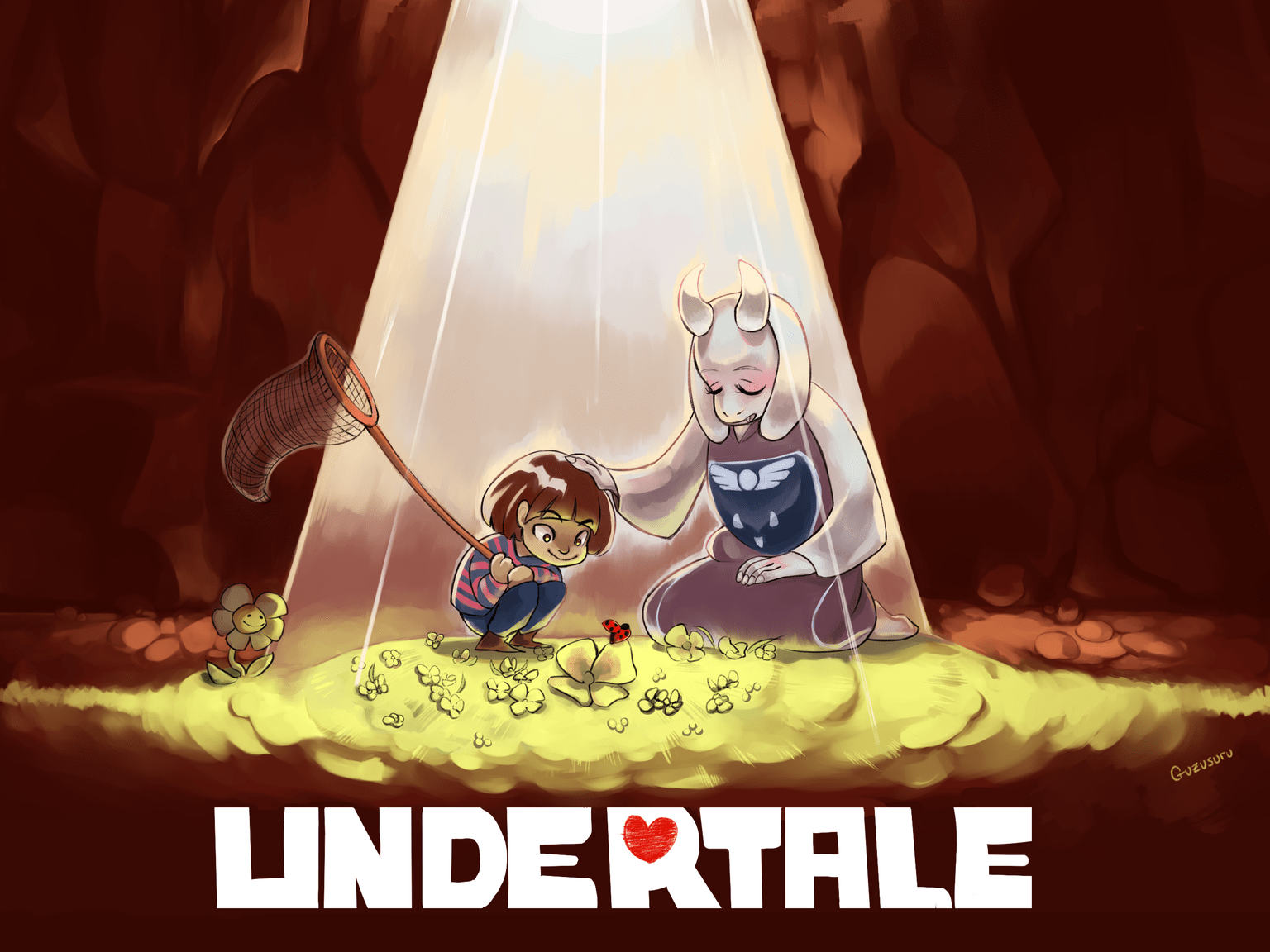
Undertale

This week we talk about some strange stuff, but I guess in the grand scheme that is par for the course.  This was the birthday week of our very own Tam, and we wish him a happy belated birthday.  Grace on the other hand had a week full of travel, and while she showed up to give it the good college try…. sounded like just about the tiredest human being I have ever heard.  As such we shuffled her off to bed and said we would be ready to talk about Wildstar next week.  As far as what we actually did talk about this week…

  • Tommy Westphall Universe Theory
  • Star Wars the Old Republic
  • Star Wars X-Wing Minatures
  • Undertale
  • Bringing out Emotions While Playing Games
  • Fallout New Vegas
  • Star Wars the Old Republic
  • Wildstar
  • Star Wars Galaxies
  • Megaman Battle Network
  • Steredenn
  • Magic the Gathering – Battle for Zendikar
  • Destiny

X-Wing and Tactics Games

Kodra and I have been diving into the X-Wing minis game lately. I love playing tactics games with Kodra because he’ll dive into it as deep as I do but takes a wildly different approach than I do, so I learn a lot from his ideas (hopefully the same is true in reverse). It’s hard to get him into minis games, though, because the assembly/painting part of the hobby doesn’t interest him and the concept of eyeballing distances frustrates him as an unnecessary skill check to an otherwise compelling tactical experience. I tend to agree with him on the “no premeasuring” thing, as I feel like it’s a bit of minis gaming elitism that doesn’t add a lot to the game experience other than “gotcha!” moments when you misjudge a range. That being said, I’m good at eyeballing distances so I can live with it without being frustrated by it.

X-Wing and Tactics Games

X-Wing hits a nice middle ground, because it skips the assembly and painting and offers really high quality prepainted miniatures. I think I’d like prepainted minis games a lot more if they had the quality of X-Wing, frankly– the ships look great and there’s a ton of detail without the cost being outrageous. From a purchasing standpoint, it’s a pretty decent deal. A given ship is roughly $15, or half again what a standard mini of that size would be, and comes painted with nearly all of the game pieces necessary to use it (more on that in a moment). It also comes with a variety of pilot cards, so a single ship purchase can represent a pretty wide variety of units in the game. Finally, each ship comes with a selection of equipment and upgrade cards, which is where the cleverness of the system comes in.

In X-Wing, each ship has a selection of upgrade slots, things like torpedoes, missiles, bombs, and more technical things like crew, system upgrades, and modifications. These can take a mediocre pilot and bump it up to respectable levels, or turn a powerful pilot into a devastating powerhouse. They also let you set up interesting combos. More importantly, however, the upgrade slots are standardized, so there’s no reason that a copilot for your Milennium Falcon can’t help you out in a B-Wing. It means that even purchases for ships you aren’t necessarily interested in flying may still be worth your while if the pack contains useful upgrades, and it’s a very clever way to get people to buy into more than one faction, if only to get the upgrades.

X-Wing and Tactics Games

Outside of the marketing angle, though, it adds a lot to the game. Regular releases often add new equipment slots that older ships have, and can take older ships that aren’t as popular or interesting and breathe new life into them. As an example, the Rebel A-Wing started off as a fast, agile counterpart to the TIE Fighter/TIE Interceptor, but was more expensive without necessarily adding a lot– Imperial players were taking barebones TIEs in larger numbers, and the more expensive A-Wing couldn’t pull off the same trick. In a later release, which included an A-Wing with a fancy paint scheme and several new pilots, a card was added that lowered the cost of A-Wings. Essentially, you could take an upgrade for your ship that did nothing but made it cost less, which evened the playing field.

Watching the arc of the game, it’s very clear they’ve been using new releases to balance things out. I originally started playing this game with a friend a few years back, right at the launch, and it felt very one-sided, with swarms of TIE Fighters crushing the X-Wings and Y-Wings that were available. I wound up losing interest because I much prefer to play smaller, more elite forces over large swarms and it felt like the game didn’t support that. Flash forward a few releases and some of the killer lists focused on one great big ship with a support wingman or two, and swarms were a lot less popular. More releases have evened that out, and at this point there are enough options for everyone that (it seems) like there are a lot of viable ways to play.

X-Wing and Tactics Games

I really like games where I can take my favorite units and give them more stuff to make them awesome. It was a huge frustration for me with Warhammer 40k (one of many, honestly) that optimal play was more about bringing lots of dudes and mostly ignoring the upgrades rather than heavily upgrading a smaller number of powerful units. Infinity also gives me this to some extent, where I can have a unit I particularly love and use different loadouts depending on my needs; it’s not the same as adding lots of upgrades, but it’s got a similar feel. With all of this, you’d think I’d like Battletech a lot, though I’ve never really gotten into it. I like it in concept, but I found playing it somewhat unwieldy.

X-Wing offers me a nice blend of tactics and lets me come up with lots of different interesting strategies. I can fiddle with the list building tool for hours and come up with a ton of different, interesting options. In a lot of ways, it’s the same thing that got me hooked on Infinity: the ability to easily come up with a bunch of different lists and then pick the one I’m most interested in trying out on the table. There’s room to refine the list but I can also scrap it entirely and change tactics without a massive investment in new stuff.

There’s an interesting pair of philosophies that come up with this kind of game, one that I find compelling and that triggers the game design part of my brain to start analyzing. I very much like minis games, especially ones with spatial reasoning and tactics taking the fore. Kodra prefers games like Magic: the Gathering and more contained board games, particularly ones that involve decks of cards as a randomizer rather than dice. We each find the other kind of game frustrating, often.

X-Wing and Tactics Games

I’ve been mulling over it for months, and my current working theory is that it’s a difference in agency. Kodra likes games where when he takes an action, he can be assured that that action is going to do what it says it’s going to do with no uncertainty. Having an unreliable set of actions doesn’t bother him, provided the actions he does take are reliable. I’m the opposite: I want as broad a selection of actions as possible at any given time, but I don’t require that they be reliable– I would much rather have a chance to pull an unlikely victory from the jaws of defeat than know that if I pull off my combo I win, every time. It’s an interesting dichotomy, and it bears out in how we approach customization. I like versatility and giving myself lots of angles to win from, Kodra tends to prefer a very focused approach: “I only do this one thing, but that thing will win.”

I suspect a lot of it has to do with our gaming backgrounds. I’ve learned by being, generally, the lesser player in a group of skilled players, and have honed my skill and won games by achieving victory through avenues that my opponents are unprepared for, rather than facing them head-on. Kodra, to my understanding, has mostly been one of the best if not the best player in his local metas, and has taken the tack of refining very powerful strategies to be more efficient and win more/keep winning, rather than having to find alternate avenues to victory. When we played Warmachine against each other, this was extremely apparent– he would create unstoppable legions and march forward, making no bones about his tactics, whereas I would bob and weave and strike where I could find an opening, rarely engaging and simply waiting for the single perfect strike.

X-Wing and Tactics Games

This picture included exclusively to troll Kodra.

He’s won the games we’ve played, but they’ve been close. I credit his speed at building interesting and functional combo engines for his wins, while I think and adapt quickly enough with inferior forces to stay in the game a lot longer than I probably should. We’ll see what happens as we refine our skills and play more.

MMOs on the Brain

I’m following a lot of MMOs right now. Elder Scrolls Online had a great update with The Imperial City, The Old Republic I’ve been talking about, Wildstar’s F2P conversion went live, Destiny’s Taken King expansion has been very well received, Final Fantasy 14 has a major update coming, but not until November… there’s a lot going on in the existing space.

MMOs on the Brain

These established MMOs have some room to experiment, and in a lot of cases build further towards the vision they were going for, or refine a vision that didn’t quite work out. In a lot of cases, it’s highly successful, and for all the wailing and gnashing of teeth that goes on around the internet about “failed” MMOs, there are very few that actually shut down. Even SWTOR, after suffering from brutal layoffs and being left with a skeleton crew for a while, has managed to come back and launch some honestly excellent content, as well as make a bunch of needed changes to the game itself.

I keep coming back to this, but the trend I see is that these games push more and more towards the singleplayer aspects, making it easier or more convenient to play alone rather than with the rest of the server. I can’t help but wonder if some of these games would have benefitted from a different model– rather than the server-full-of-people model, having characters saved on a server (see: Borderlands) and have drop-in small group multiplayer. It’s what Destiny did, and with its latest update that brought story more forward than it’d previously been, there’s a lot of love for the new stuff.

Much as I wish there were a more “world”-like MMO to play, I’m also just a fan of good games where all the design pieces come together elegantly. Several of the games I’ve mentioned would, I think, have worked better as smaller, more intimate affairs with more leeway for high fidelity content (because making content that works when 30 people are all doing it at once is tricky at best).

MMOs on the Brain

It’s honestly something I expect to see. Destiny carved the path, but I’ve noticed that after being quiet for a while, The Division has been distancing itself from the “MMO” side of things and focused more on the small group play; I wouldn’t be surprised if it’s made a similar shift. There are very, very few MMOs on the horizon that fit the bill of the “classic” style– I’ve talked about Pokemon Go here as the future of the genre, but otherwise you’re looking at a pretty short list of mostly Kickstarter or other small projects and larger projects that are distancing themselves from “MMO”.

I don’t necessarily think that’s a bad thing from a “fun games to play” perspective. That being said, I keep looking for an MMO that scratches that “world to hang out in” itch. A lot of people will hand-wave that by saying that what I’m looking for is a sandbox MMO, but that’s not actually true (at least, not with the current offerings). The concepts of “sandbox” and “pvp playground” get conflated a lot, and it’s somewhat striking to me that there hasn’t been a large-scale sandbox PvE game. If there were, I’d be very interested.

Consider: a game where the world, not other players, is the most dangerous thing out there. You can build and fortify cities and structures, but the world will try to reclaim them, actively in some cases. Cities would be well-defended, and ultimately able to handle their own upkeeps with enough players moving through them. You could pretty reasonably create a game economy that’s relatively stable, without the spiralling inflation of most MMO game worlds. As an adventurer, you’d have plenty of stuff to do keeping cities and villages safe or going treasure hunting out in the wilderness– it’s the same kind of gameplay that some people thrive on in Minecraft, and seeding the world with treasure and resources would make things very interesting. You could play as a guard captain or a city coordinator, keeping things going at a macro level. You could be a crafter or merchant, with people constantly needing your goods and services to make things or repair things. There’d be space for socialites, bringing players to cities for everyone’s benefit. You could make it your goal to go out into the world and bring back new skills and knowledge, or find new resources, or what-have-you.

MMOs on the Brain

Found on google image search, couldn’t find original artist to credit :

It all hinges on the world being genuinely dangerous and scary. I’m not saying Dark Souls level of dangerous (though, maybe if you get far away from civilization), but scary enough that you’re happy to see another person out fighting enemies, rather than worrying if they’re going to “steal your kill”. I imagine seeing a campfire in the distance and being happy to find other players there, who are taking some time to rest while out in the field. There would need to be a lot of different forms of progression, so there’s something valuable you can do while sitting around a campfire and not-fighting. Crafting comes to mind, learning/practicing new skills, repairing/upgrading gear, as long as these things are interesting gameplay, you could create these kinds of situations.

Really, what it comes down to is having more interesting verbs. We currently have “fight” as our sole interesting verb in most MMOs, with the occasional “craft” in certain games. “Move” isn’t generally all that interesting, and we could do a lot of things to make that more fun, and pretty much everything else is just a click on a UI pane or in the world– these could be much more interesting.

The difficulty is that it’d take a serious commitment to make something VERY different from what we’ve seen. Exploring the world to find hidden libraries, ruined cities, caches of treasure, all relatively unknown and often in very scary places would be fascinating, and having teams of elite players coordinating to raid a ruined city and take it as a new hub for players would be exciting, possibly a lot more exciting than simply beating a raid boss. Being the first player to discover a new skill, or the first one to open a school to teach rare skills would be compelling, I think, and there are enough systems that have already been experimented with that allowing NPCs to do a lot of automated work while you go off and do other things would be entirely possible.

Napkin-designing a bit here, but it’s been on my mind for a while.