Daily Chores

I hate dailies. My tolerance for the extends exactly as far as is required for me to access whatever content I’d like to get into and basically no further. It’s the fastest way for me to burn out on a game. The obligation to log in every day and do [whatever] loses me instantly.

Calendar Image-1524x975

At the same time, I understand the need to pace out progression in some sane way. FFXIV has a great system in its daily leve allowances, and I wish that would extend to other things. Let me run a week’s worth of expert roulette on Saturday, rather than needing to log in every single day to max out my currency income.

I haven’t logged in much to FFXIV this week because I’d been grinding every day to reach i170 on my Summoner. I know I can get higher than that, but it’s just not enticing to me. I’ve come to lack the overriding desire to make all of my numbers as high as possible, I’m more than happy with “high enough”, because there’s other stuff I want to do. I appreciate how lightweight the Law grind was in FF, especially right after the levelling process, but I’m not terribly motivated to jump right back into it to chase the gear treadmill a little further, especially because I know my current state is sufficient for what I’m doing and, furthermore, the investment required to move forward to the current “best” tier will drop here relatively shortly. I’ve chased the cutting edge of content before, and I don’t have the interest in doing it again that would motivate me to grind dungeons until I achieve the absolute best [numbers] I possibly can.
41

What motivates me is interesting new stuff to do. I am, at my core, an Explorer-type, though I don’t fall into the category of Explorer that people tend to think of. Wandering around geography isn’t interesting to me; I want to explore the story and the gameworld and see how everything plays out. I don’t care about finding the secret hidden treasure chest in a cave on a mountainside, but I will jump through nearly any hoops to get all of the possible endings to something. I’ve only played one Kingdom Hearts game, but I did get the ‘true’ ending for it, and I played through enough Chrono Trigger to see every way that game ends (it’s a lot).

Exploration for its own sake doesn’t interest me– I want something to find. In the same vein, progression for its own sake rarely excites me: I want to be progressing in order to see something I haven’t previously seen. It’s something I miss from older MMOs– current games want to make sure you don’t miss anything, so there’s rarely anything to find by wandering off the beaten path. You might get some cool screenshots or something (which other people really love, and I appreciate, but don’t care to chase after for myself), but by and large you’re not going to find anything meaningful at the top of that mountain if the game didn’t expressly tell you to go there.

55675468

It was my biggest disappointment with Wildstar– for all it claimed to encourage exploration, I still felt like it was taking me on hikes along well-trodden paths, not rewarding me for forging across the wilderness. The coolest part of the Explorer subclass was finding hidden quest areas that weren’t apparent to other people, but they felt thin; I didn’t really find exciting stuff in there, just a challenge and maybe a single quick quest. It wasn’t the life-changing revolution that was expected.

That being said, I continue to feel like we’re on the cusp of a big sea change in MMOs, but of the various directions it could go, I’m not sure yet which one I think is likely. I hope we get away from games and back towards experiences that feel like worlds. I find I miss the sense of being a denizen of a vast digital world, versus a player in a multiplayer game. The difference is, as always, progression. In worlds, you can make progress in a variety of ways and they’ll all benefit you. In games, if you’re not spending your time progressing in one of a relatively set number of ways, you’re kind of wasting your time. I miss feeling like I could spend my time doing whatever and still be productive.


Source: Digital Initiative
Daily Chores

Tam Tries: SAO RE: Hollow Fragment (PS4)

Good translation makes a huge difference. Honestly, it can make or break the experience, and it’s genuinely hard to do.

sao_eng_title_00_thumb

I picked up Hollow Fragment a few months back on the Vita. It was a really, really interesting game mechanically set in a world that I find really compelling. I can’t talk much about the story because if you haven’t seen any of SAO it drops enormous spoilers within the first five minutes or so of the game, but the game’s concept is a sort of extended “what-if” sequence, which is really interesting and something I haven’t seen in game tie-ins.

I put a solid 15-20 hours into the game before quitting– as much as I loved the gameplay, the translation for the Vita version was atrocious, so much so that I didn’t really have a clear picture as to what I was doing wrong in particular sections nor did I have any idea what was happening in the story. I was fighting exceptionally difficult enemies and dying frequently, and didn’t have a lot of intelligible feedback on what I could do to improve. At the same time, the dialogue was garbled to the point of being incomprehensible, so I could get a vague emotional tone but very little else. It made it difficult to figure out where to go and what to do.

Don't do this.

Don’t do this.

Loading up the new (retranslated) PS4 version was stark. I had a clear picture of what was going on almost immediately, and I suddenly understood how a bunch of game mechanics worked before even leaving the tutorial. One of the big things that the retranslated version did was clarify how the game is structured. There are two separate areas that you can progress through, and it wasn’t clear to me which the right one was. On the Vita, I had this helpful hint:

“For ready players, advance through floors of Aincrad. If still collecting loot and exp, try the Hollow Area.”

Based on that, I jumped into the Hollow Area straightaway. Why not collect loot and exp until I feel “ready”? The PS4 version translates that line a little differently:

“If you’re still getting used to the game, try some of the early floors of Aincrad. If you’re an advanced player and want to test your skill and get rewarded with loot and lots of exp, try the Hollow Area.”

SLIGHTLY different. It explained why I was getting pummeled in my entire Vita playthrough– I was basically trying to advance through the special advanced bonus dungeon right from the start. This playthrough, I started playing through the ‘appropriate’ sections first, and wound up basically crushing my way through the first few sections, largely thanks to the skills I’d honed fighting things way out of my weight class on the Vita.

sword-art-online-hollow-fragment-boss-fight

What I’ve discovered is that the game is much, much more nuanced than I’d realized, mechanically. I can’t talk much about the story, but it does a really good job of interspersing the ensemble cast and keeping all of the characters at the forefront (which the show didn’t do quite as much) and keeping the story relevant– there are a ton of events that occur in between going out and beating up monsters, but you can spend quite a bit of time just doing that if you like, and you have a ton of characters you can level up.

Because the game drops you in the middle of the action, you start at a pretty advanced level with quite a few skills and resources– it’s a little odd to start a game at level 97, but it works pretty well in this context. You’ve got enough abilities to start to make things interesting and you can slowly explore them, but because you’re so overleveled for the starting point (a thematic staple of the series), you can ease into things. It also doesn’t waste any time with introducing things you’ve already covered in the series– the only catch-up it does is letting you know how the game diverges. This probably isn’t great for anyone who hasn’t seen the series, but it’s kind of an obscure title to pick up if you haven’t watched Sword Art Online. Cutting to the chase as far as establishing story and characters lets them get detailed and personal with interactions very quickly, as well as occasionally very silly.

20140401_214033

Overall, I’m having a lot of fun with it, especially with a translation that lets me make sense of the story. Because the game’s story diverges hugely from a major plot point in the series, I’m interested to see where they go with things. I like the idea of the game building out into conceptual space rather than simply retreading the ground covered by the series, and I’d like to see more of that in game tie-ins. It makes me think of KOTOR, which created a whole new space for Star Wars that’s proven to be incredibly fertile ground.


Source: Digital Initiative
Tam Tries: SAO RE: Hollow Fragment (PS4)

Value

If something provides value, it’s worth paying for. I’ve talked before about follow-the-money problems, and one of the key things to remember is that nothing is free to create. If you’re not paying any money for something, there’s a reason. If something costs more than you think it should, it’s worth looking into why that is. Sometimes there’s a very good reason.

dsc_1234

Possibly it’s cynical, but TANSTAAFL is one of those resonant concepts for me. It stands for “There Ain’t No Such Thing As A Free Lunch”, and comes from Heinlein, as a sci-fi slang word. If you’re getting something for free, it’s because the cost is being taken from somewhere other than your wallet. Sometimes it’s some other obligation you have (buying lunch next time), sometimes it’s some other inconvenience (sitting through ads), sometimes it’s coming out of someone else’s wallet. The one that always gets me is “free to play” games. Yep, you can absolutely install and play in some capacity for free. Pretty much every monetization effectiveness study out there shows that players who do actually pay money wind up paying rather more on average in a free-to-play game than in an equivalent game that uses a box sale, or a subscription, or what have you.

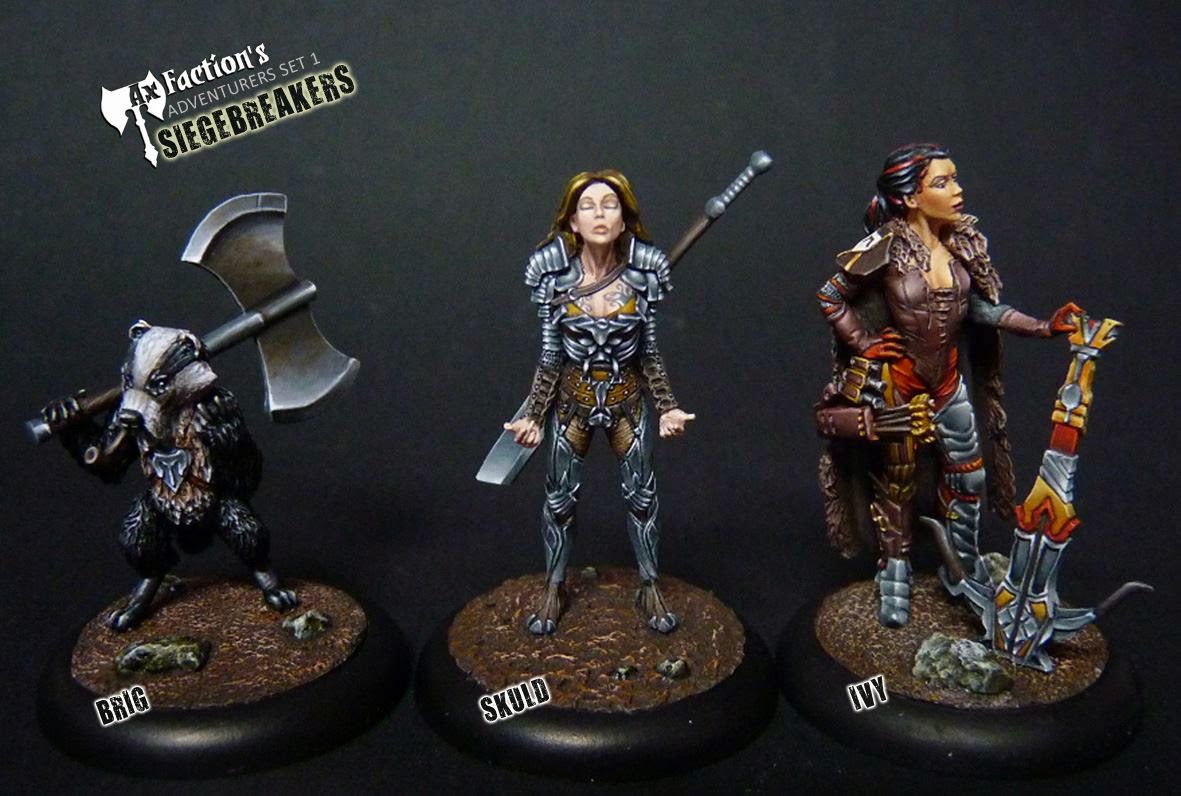
At the opposite end of the spectrum, there are a ton of creators who sell their goods for a pittance, way less than they’re worth, and that skews the system rather badly. The rise of predatory free-to-play games came from the slew of early indie game devs who gave their work out for free just for “exposure”, and you can see the same kind of thing in other creative industries. By undercharging for a good or service, the overall availability and quality of that good or service drops– people who paint minis for a dollar or two per model work out to usually less than a dollar an hour of work, making professional services that charge a more reasonable amount (even at a minimum wage of $7.50/hour, an individual mini can take 2-5 hours of work; $15-30/mini is entirely reasonable, cost-wise) look outrageous by comparison.

AxeFactionSiegebreakers

I’d actually be interested in chasing down studies on how the hobbyist market that’s arisen in the last 5-10 years impacts traditional economics models– I suspect it’s incredibly disruptive to the usual models and throws everything off. It’s certainly the case with a lot of creative industries where independent creators can get a foothold– the increased volatility and wildly changing pricing schemes for video games showcases that quite nicely, even as hobbyist shop centers like Etsy put items on the market that probably wouldn’t have existed before.

We’ve shifted from a society where value is dictated by the seller to one where value is negotiable, like the barter systems of old. It creates a situation where value is a moving target, and different people put different values on things. At the same time, we’re so accustomed to the idea of “fairness” that the idea of different people being charged differently based on how much they value the good or service is anathema. The idea that one person might play a video game for five dollars while someone else pays a hundred to play it at the same time would make a lot of people angry, but it’s a reality of the negotiable value proposition. The only difference is we’re very good at masking it– we look at games that are “free”, but behind the scenes people are looking at the ‘whales’ and seeing how best to keep them around. Who is willing to pay more for something and how are they convinced to stick around?

mobile-game-asia-2015-bangkok-monetization-trends-and-challenges-in-2015-6-638

We can’t have it both ways, though. If you’re willing to accept that you can talk a price down when commissioning an artist, you have to be willing to accept that a chef might talk your meal price up for your favorite dish. In the meantime, if you’ve gotten some fun out of a game that you didn’t pay for, kick a few bucks to the developers. Try to pay what something is worth to you, not just the cheapest amount you can get away with. It’ll make the stuff you’re able to get that much better in the long run.


Source: Digital Initiative
Value

Aggrochat Game of the Month: Astebreed

We talked about Astebreed over the weekend on the podcast, but as per usual I wanted to put a few more thoughts here.

Astebreed-Free-Download

I’m awful at memorizing things, which I’ve talked about a bit before. It’s kept me out of a lot of bullet hell shooters, because those are entire games around memorizing patterns and executing the right evasive maneuvers to match the patterns. I don’t really have the patience or interest to play the same level tens or hundreds of times just to get the pattern down. I like Astebreed because, for the most part, it lets me come up with my own solutions for each boss pattern without forcing me to memorize a specific set of “the right” moves.

Playing Astebreed, however, got me thinking about raid bosses in MMOs. They’re often pattern-driven, and almost always require that I memorize the associated attacks and the appropriate (highly specific) reactions to them. I like them, though, whereas I tend not to like the memorization-heavy bullet hell genre. The conceptual gap there bothered me, and I’ve spent a few days mulling over why I like one but not the other.

18adc0429bbf01d8e769394c892dbb8c

The two obvious answers are that MMOs involve other people and that they also are much less demanding and punitive than bullet hell shooters. Both of these lessen the impact, but don’t change the core concept. That being said, there are a lot of things where I don’t like the ‘pure’ version but dearly love the dilutions– the JRPG is a really good example of this. Similarly, I never really liked Forza, but I enjoy both Burnout and Mariokart, both pretty heavy dilutions of the racing mechanic. Having other people playing along with me also makes the experience more fun, because I’m both able to help out my friends and get help from their cues– it isn’t always a binary fail state, and the experience itself is shared.

Another angle I looked at it from is my own approach to the game vis a vis classes. Avoiding deadly attack patterns is only half the boss fight; the other half is actually fighting the boss. I tend to play healers and specific types of damage classes. In the former case, there’s no set rotation; I’m reacting to the fight on the fly and (ideally) proactively inserting abilities as the situation changes. In the latter case, I tend to avoid rotation-based classes in favor of ones that focus more on reacting to the situation. A lot of my favorite classes have been ones that lean on situational adaptation (often priority systems) rather than straight rotations.

Summoner_FFXIV_Art_2

Astebreed also separates itself from other shooters I’ve played by focusing a lot more on offense than evasion. I’ve played a number of games where evasion is the key (Touhou, Ikaruga, etc) and where actually attacking enemies is something you kind of do on the side in between avoiding shots. In some cases, the primary attack is simply always on, further emphasizing how incidental actually attacking is. It’s not something I like a lot, even in the other bullet hell shooter I’ve played recently– Sine Mora. Sine Mora is a Vita title that gives you a slow time effect, letting you slow everything down while moving at the same rate. It’s great for getting out of tight places or figuring out how to evade, and let me get away with less memorization throughout the game (probably why I beat it), but it didn’t really let me focus on offense over defense the way I like.

I’ll admit I’m tempted to pick up Astebreed on PS4 despite playing it already– a lot of my frustration with the game (as you likely heard or will hear in the podcast) was from a feeling that I was fighting the controls. Without that, I probably would have done a lot better, and there’s likely a whole rant about intuitive control schemes with the PC version of Astebreed as a catalyst, but that’s not for today.

Hope you enjoyed the podcast! At some point today the PS4 release of Sword Art Online: RE: Hollow Fragment is dropping, which I’m really excited about. I talked about it a bit before, as I played the Vita version, but honestly the retranslation is a huge draw for me. We’ll see!


Source: Digital Initiative
Aggrochat Game of the Month: Astebreed