Mystara Monday: Expert Rules

I had originally intended to continue on to the next of the B modules this week with a look at Module B6: The Veiled Society. As I worked on the post, however, it became clear that I was going to be talking about a very important step in the creation of Mystara out of order, and that we really needed to start moving chronologically if things are going to make sense. So instead we'll be looking at the Expert Rules Set this week, and the establishment of Karameikos as the core of the Known World setting that would become Mystara.

Mystara Monday: Expert Rules

We've already seen that the Basic Rules went through three major revisions in its history. The Expert Rules similarly have two distinct versions; the differences between them are mostly minor, though very important when it comes to the history of Mystara. The original Expert Rules were written by David "Zeb" Cook as an extension of Tom Moldvay's revision of the Basic Rules in 1981. In 1983, Frank Mentzer revised both rules sets and then continued into the Companion, Master, and Immortal rules (all of which we'll get to eventually). As with the Basic Rules, the Mentzer revision is what I have.

Mystara Monday: Expert Rules
With more beautiful Elmore art.

Instead of separate player and DM books, the Expert Rulebook is a single 64 page book. The first 20 pages are the player's section, including character advancement information up to level 14, new spells, and some new information related to wilderness adventures. The remainder of the book is the Dungeon Master's Section, and that's where the real magic is. The Expert rulebook is where rules for wilderness travel were introduced, along with rules for player strongholds and more in depth guidelines for running an ongoing campaign.

Strongholds were a major fascination for me when I got my hands on this book. Each class could build a stronghold of an appropriate type once they could afford it (and in most cases once they were a high enough level.) Fighters and clerics could build a castle, mages could build a tower, and thieves could build a hideout. Rules for construction times and costs were included in the DMs section, and I spent hours sketching out strongholds and figuring the costs involved in building them. Yes, even in the early days of tabletop gaming, player housing was absolutely a thing.

Wilderness travel was a huge addition to the rules, as the Basic Set and B module adventures tended to gloss over how the party went about getting to the dungeon they were invading. The Expert Rules introduce detailed rules for travel times, random encounters in the wilderness, and two and a half pages focused entirely on ocean travel. The X series modules took great advantage of that, as we'll see in coming weeks.

Most importantly, however, at least where Mystara is concerned is the map of the Grand Duchy of Karameikos and associated 'Sample Wilderness and Human Town' section. This section, added in the Mentzer revision, gives us our first look at Karameikos and a basic rundown of its towns and important persons. It's here that we first learn of Duke Stefan Karameikos, ruler of the Grand Duchy. It's here that we are introduced to the evil Baron Ludwig von Hendriks and his Black Eagle Barony (though it's not yet explained why Duke Stefan allows such a villain to prosper). And it's here that we are given details about the small town of Threshold, where adventurers come from.

Mystara Monday: Expert Rules
Also, it's ruled by a name level cleric. Don't mess with Threshold.

Among other things, the information about Threshold reveals that Bargle the Infamous took control of the ruins from the adventure in the Basic Rules while spying for the Black Eagle Barony. A page and a half of various interesting adventure hooks are also provided. For example, Ian, the blacksmith's son, has opened a museum where he displays taxidermied monster heads. "Many interesting bits of information can be found at the Museum of the Smith's son, Ian."

Along with the Expert Rulebook, the Expert Rules set also came with another set of dice (again, stolen from me twenty years ago) and a copy of the other contender for best known D&D adventure of all time, X1: The Isle of Dread. That's what we'll be looking at next week, where we'll visit the D&D equivalent of Skull Island and encounter so many dinosaurs. Also, evil mind control salamander guys. Seriously, they're the worst.

Mystara Monday: Expert Rules

I had originally intended to continue on to the next of the B modules this week with a look at Module B6: The Veiled Society. As I worked on the post, however, it became clear that I was going to be talking about a very important step in the creation of Mystara out of order, and that we really needed to start moving chronologically if things are going to make sense. So instead we'll be looking at the Expert Rules Set this week, and the establishment of Karameikos as the core of the Known World setting that would become Mystara.


We've already seen that the Basic Rules went through three major revisions in its history. The Expert Rules similarly have two distinct versions; the differences between them are mostly minor, though very important when it comes to the history of Mystara. The original Expert Rules were written by David "Zeb" Cook as an extension of Tom Moldvay's revision of the Basic Rules in 1981. In 1983, Frank Mentzer revised both rules sets and then continued into the Companion, Master, and Immortal rules (all of which we'll get to eventually). As with the Basic Rules, the Mentzer revision is what I have.

With more beautiful Elmore art.

Instead of separate player and DM books, the Expert Rulebook is a single 64 page book. The first 20 pages are the player's section, including character advancement information up to level 14, new spells, and some new information related to wilderness adventures. The remainder of the book is the Dungeon Master's Section, and that's where the real magic is. The Expert rulebook is where rules for wilderness travel were introduced, along with rules for player strongholds and more in depth guidelines for running an ongoing campaign.

Strongholds were a major fascination for me when I got my hands on this book. Each class could build a stronghold of an appropriate type once they could afford it (and in most cases once they were a high enough level.) Fighters and clerics could build a castle, mages could build a tower, and thieves could build a hideout. Rules for construction times and costs were included in the DMs section, and I spent hours sketching out strongholds and figuring the costs involved in building them. Yes, even in the early days of tabletop gaming, player housing was absolutely a thing.

Wilderness travel was a huge addition to the rules, as the Basic Set and B module adventures tended to gloss over how the party went about getting to the dungeon they were invading. The Expert Rules introduce detailed rules for travel times, random encounters in the wilderness, and two and a half pages focused entirely on ocean travel. The X series modules took great advantage of that, as we'll see in coming weeks.

Most importantly, however, at least where Mystara is concerned is the map of the Grand Duchy of Karameikos and associated 'Sample Wilderness and Human Town' section. This section, added in the Mentzer revision, gives us our first look at Karameikos and a basic rundown of its towns and important persons. It's here that we first learn of Duke Stefan Karameikos, ruler of the Grand Duchy. It's here that we are introduced to the evil Baron Ludwig von Hendriks and his Black Eagle Barony (though it's not yet explained why Duke Stefan allows such a villain to prosper). And it's here that we are given details about the small town of Threshold, where adventurers come from.

Also, it's ruled by a name level cleric. Don't mess with Threshold.

Among other things, the information about Threshold reveals that Bargle the Infamous took control of the ruins from the adventure in the Basic Rules while spying for the Black Eagle Barony. A page and a half of various interesting adventure hooks are also provided. For example, Ian, the blacksmith's son, has opened a museum where he displays taxidermied monster heads. "Many interesting bits of information can be found at the Museum of the Smith's son, Ian."

Along with the Expert Rulebook, the Expert Rules set also came with another set of dice (again, stolen from me twenty years ago) and a copy of the other contender for best known D&D adventure of all time, X1: The Isle of Dread. That's what we'll be looking at next week, where we'll visit the D&D equivalent of Skull Island and encounter so many dinosaurs. Also, evil mind control salamander guys. Seriously, they're the worst.

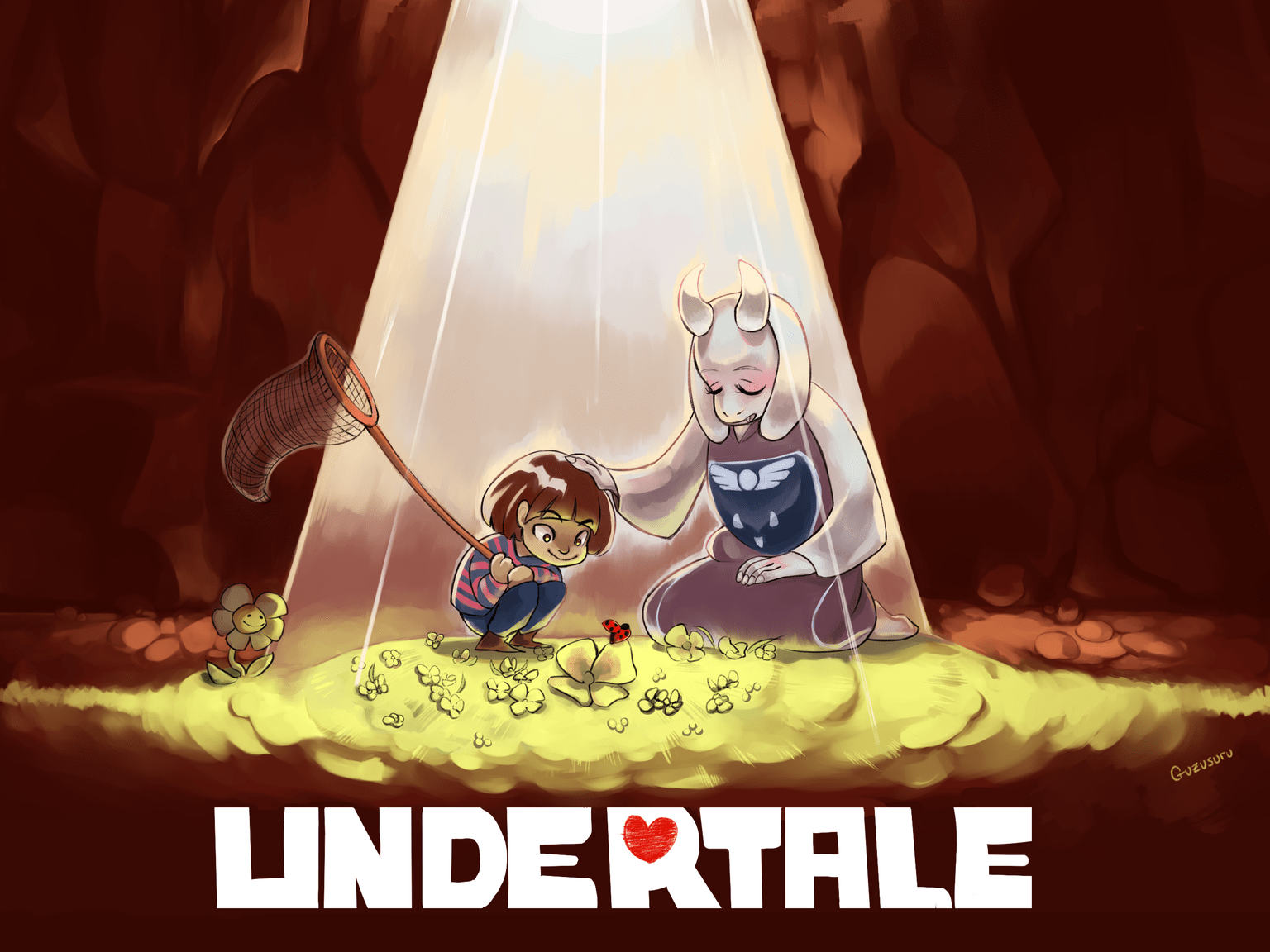
AggroChat 77 – Undertale Feels

Undertale

This week we talk about some strange stuff, but I guess in the grand scheme that is par for the course.  This was the birthday week of our very own Tam, and we wish him a happy belated birthday.  Grace on the other hand had a week full of travel, and while she showed up to give it the good college try…. sounded like just about the tiredest human being I have ever heard.  As such we shuffled her off to bed and said we would be ready to talk about Wildstar next week.  As far as what we actually did talk about this week…

  • Tommy Westphall Universe Theory
  • Star Wars the Old Republic
  • Star Wars X-Wing Minatures
  • Undertale
  • Bringing out Emotions While Playing Games
  • Fallout New Vegas
  • Star Wars the Old Republic
  • Wildstar
  • Star Wars Galaxies
  • Megaman Battle Network
  • Steredenn
  • Magic the Gathering – Battle for Zendikar
  • Destiny

Thalen Reads Little Fuzzy

Because if the Fuzzies are sapient beings, the Company's charter is automatically void. - Gerd Van Riebeek
This week we're having a look at a science fiction classic from 1962, H. Beam Piper's Hugo nominated novel Little Fuzzy. Far from the high tech starship filled fare that some fans seem to think science fiction used to entirely consist of, Little Fuzzy is a story of corporate overreach, legal maneuvering, and the question of just what defines sapience.

Thalen Reads Little Fuzzy

The story of Little Fuzzy takes place on the planet Zarathustra, a Class III uninhabited planet wholly owned for some years now by the Zarathustra Company, a corporation which has profited greatly from the riches of the frontier planet. Prospector Jack Holloway returns home from a days work to find a small furry humanoid creature has wandered into his hut. Befriending it, Jack takes to calling it 'Little Fuzzy' and adopts it as a sort of pet. It quickly becomes apparent, however, that Little Fuzzy is much more intelligent than a dog or cat. He and his family show many signs of being sapient, and the question of their sapience is central to the story.

If Fuzzies are sapient, that means that Zarathustra is not a Class III uninhabited planet at all, but a Class IV inhabited planet. This would make the Zarathustra Company's charter null and void. Unsurprisingly, the higher-ups in the Zarathustra Company are horrified by this thought and decide to do their utmost to suppress and discredit any evidence of Fuzzy sapience.

Little Fuzzy is a book with hardly any physical conflict whatsoever; apart from one extremely important moment, all of the fighting over the fate of the Fuzzies and of the Company's charter takes place through legal maneuvering and sneakiness. At times I thought the Company was being overly sloppy, but when you consider the degree of effective omnipotence they've enjoyed in Zarathustra it becomes more believable that they would underestimate the abilities of a septuagenarian prospector and his friends.

Although the concept of space colonization is integral to the story, advanced technology is hardly in evidence at all. Apart from the veridicator, a high-tech lie detector, future tech is mentioned in passing if at all. Jack's rifle, for instance is not described as any more advanced than a typical real-life hunting rifle. Character interaction is what matters here, not fancy imaginary thingamajigs.

I can't recommend Little Fuzzy enough; this was a great book with enjoyable characters, a couple of clever twists, and some fascinating philosophical questions at its heart. You should absolutely read it, especially as it's in the public domain. See for yourself the fate of the Fuzzies, and the planet Zarathustra.