We’re back! Thanks for putting up with my week off; I’m feeling a lot better and more functional now.

I had a discussion with a friend recently about games as a social outlet. She had some trouble wrapping her mind around the concept of a video game being a social event; she viewed them as largely solitary activities. The idea that you might meet someone through the internet and have that feel “real” was confusing, because (as she put it), “In the end, you’re just interacting with your keyboard and computer screen.”
There’s a layer of abstraction that I think we often take for granted and is hard to explain to someone who doesn’t see it. To connect with someone through a game online, you have to view your game avatar as an extension of yourself, and other people’s avatars as themselves– the sprites or pixels you’re seeing on the screen are not only representative of actual people, but the act of moving the mouse or pressing keys is just the background noise for what you’re REALLY doing– interacting with those people.

I used a couple of examples to illustrate the kind of thing I was talking about to my friend. The first was straightforward– a game of catch. I tossed her a frisbee and she, intuitively understanding the game, tossed it back. I asked her why she did that, and how she was thinking about throwing the frisbee. Specifically, I wanted to know what she thought she was interacting with– the frisbee, her own hands, or me. I got a laugh and a “you, obviously”, and pointed out that she didn’t interact with me at all– she used her hands to throw the frisbee at a shape she was looking at that she identified as me. She made the jump pretty quickly about the difference between, essentially, user interface (hands, frisbee) and the game itself (playing catch with me).
From there, everything else is just layers, and it’s a pretty quick jump to a game like Mariokart (where you’re shouting at the people on the couch next to you) to an MMO (where you’re typing in chat or chatting over VoIP). Having gotten the connection, she had a followup question that I found insightful: “How do you know who to play with?”
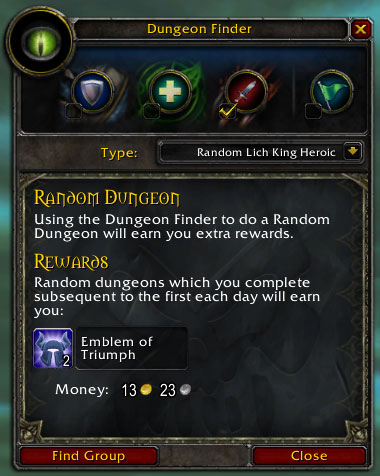
It’s an interesting question, and one I have a hard time adequately answering for myself. A lot of MMOs have group search functions, like FFXIV’s Duty Finder or WoW’s dungeon queues, but I think it’s hard to make a solid argument that those are necessarily social experiences; you often don’t exchange a single word with the people you’re with, and it’s rare to see them after the run. I have my guild/free company mates, who’ve been slowly (for certain definitions of ‘slowly’) recruited over time and who form the core social circle I operate in. Other than seeking out a guild, however, I don’t know how you find a group like mine. There’s also the friends I know personally, the ones I’ve spent time in realspace with, who might be separated geographically but with whom I can still play games. I can’t always play with them, though, because we’re not always playing the same games or even necessarily caught up with one another if we are in the same game.
In the meantime, I’ve watched a number of my friends get into social mobile games, exchanging currencies and helping each other out in a variety of similar-looking-to-me titles. I heard a story recently about a couple who met playing Ingress, because they happened to keep showing up to the same place to score points or capture the location (I’m not really sure how Ingress is played). It makes me wonder if, done right, mobile games could be the new MMOs, bringing disparate people together who otherwise might not meet.

For me, the real appeal to video games is the social outlet– while I play a decent number of singleplayer games, a lot of my motivation to do so is anchored in wanting to talk to other people about them. One of the fondest memories I have is sitting and playing Chrono Trigger with my sister on the couch next to me, asking me questions about the story and what I was doing, and inserting her own thoughts on the matter. It turned a singleplayer game into a social experience, and I’ve talked about games with my friends ever since (and, indeed, have picked up games I would never have played otherwise because people I knew were playing them and would have stuff to say).
I think that a lot of modern games have pushed the social aspects aside to some extent, going for more convenient play with more temporary connections. I don’t think the desire to connect with people through games is likely to go away, though, and I’m interested to see where the next big social game comes from, that connects people like MMOs in the early-to-mid-2000s did, and the arcades of the 80s and 90s.
Source: Digital Initiative
Social Games