PvP and the Value of Investment

I don’t play PvP-heavy MMOs anymore. I haven’t for over a decade now. I have, occasionally, participated in organized PvP battlegrounds, but it’s not a big part of what I spend my time doing, and a lot of people have, over the years, assumed that it was because I simply didn’t like PvP. My previous Dark Age of Camelot and Shadowbane posts wherein I talked about spending a lot of time not just PvPing, but as a straight-up player killer surprised some people, and I’ve had a few people since then ask why I never participated in battlegrounds and whatnot.
Diagram

Straight answer: it’s because it feels artificial to me. PvP flags, organized battlegrounds, it’s more a sports team metaphor than a high-stakes danger metaphor. I’ve never been one for team sports, and organized PvP feels, to me, like a team sport with a slightly different interface. It’s occasionally entertaining, but it doesn’t really thrill me.

It’s probably worth telling a brief story about the first MMO I played, which wasn’t Everquest. I played Ultima Online, one of two games to break my spirit (Star Wars Galaxies was the other). I was excited about a game in which I could be a crafter, and make items for the really skilled heroes. I didn’t have a lot of faith in my own abilities in games at the time– I loved them, but I never considered myself very good. Rather than trying to play something good at combat, that might fight on the front lines (scary!) I decided I would instead be a blacksmith, and make swords for the real heroes.

home-rohead-uo-logo

It took a ton of work, but I eventually was able to save up for a small house with all of the supplies I needed to craft things. I made nice items and stored them in my house, and sold them to other adventurers (keeping the money, of course, in my house). It was a pretty good time, and I enjoyed the brief conversations I had with people, all of whom were much more powerful than I was. Rather than fighting, I’d spent a lot of time working on my sneaking skills, so I could go out and collect ore for blacksmithing without getting into any trouble. Sometimes, if I needed an item that could be pickpocketed from a mob, I did that, rather than fighting– I had effectively no combat skills, but I could make fancy items and I was sneaky.

At one point, I had a window shopper looking at my wares and house. He hung around a bit longer than most people, and while I thought it was strange, I didn’t really think about it. What I didn’t realize was that he’d pickpocketed me while pretending to chat, stealing my house key, going inside, using the key to open my chest of valuables, and claiming the deed within. He made his move while I was standing outside of my own home, and when the deed transferred, the house belonged to him, and he locked me out. It was a pretty effective scam, and I’d (foolishly) put all of my valuables in one easy-to-find place, so he had my stock of items, my gold, and my house, and laughed when I raged at him.

NurseryOut

I was devastated, and angry. I’d worked hard for the house and money, and it seemed monumentally unfair that another player could just rob me of it all in a blink. I alternately whined and raged on forums, getting mild sympathy but mostly responses of “you didn’t use X to protect yourself? what were you thinking?” suggesting common knowledge that I’d somehow missed out on. Angry at the lack of help I was getting, I went after the guy who’d stolen everything from me, hunting him down at my own house and attacking him. In my angry frenzy of button pushing, I hit the pickpocket button, and for a brief moment, I saw his inventory window before he cut me down. It was surprisingly sparse, three teleport stones labelled “home” and some simple other things like potions and a spare weapon. I wondered why he would have three teleport stones that were all the same, and I returned, stealthily this time, stealing one from his pack. I was surprised at how easy it was– he’d spent time working on pickpocketing, but nothing on sneaking, so he never noticed me. As I left, I saw him looking around for the thief, because he must have looked in his inventory, and to hasten my getaway I hid and used his teleport stone without thinking.

I was dropped in a house, not unlike mine, but much more remote, in which there were simply piles of money and items, all stolen (I presumed). On a whim, I grabbed as much as I could quickly (after all, I had no qualms about stealing from a thief) and used my own teleport stone to leave, vanishing just as he got wise, used another teleport stone, and appeared in the same room. Not taking any chances, I deposited my loot in a secure bank and chuckled as he chased me down. In addition to a healthy pile of gold, I’d nabbed a handful of items I didn’t recognized, most of which I couldn’t use but grabbed anyway. It turned out these were incredibly valuable items, some of the best items in his vault, and without a care I sold them to other players. The thief would harass me as I did so, telling people who were buying that I was selling items I’d stolen from him, and every time I’d merely comment “You stole my house, turnabout is fair play!” and eventually simply “maybe you should’ve protected yourself better”, mimicking the jabs I’d gotten from other players on the forums.

UO0369

I was soon flush with cash, and had plenty to buy a new house and set up my blacksmithing shop again, several times over. I set up shop again, but this time spent a huge amount of money buying and preparing elaborate traps, ensuring that anyone who tried the same trick on me wouldn’t have it so easy. After all, I expected a vengeful thief. It wasn’t long before it happened again. I’d become paranoid, and kept my inventory open, so even though I didn’t detect the thief, I saw when my house key vanished. I waited a few moments, then walked in. The same thief that had started this mess was lying dead on my floor, having been variously shot, stabbed, impaled, ignited, and otherwise maimed by my collection of traps. Considering it my just desserts, I looted his body and replaced the traps. He never bothered me again.

I could say that I stopped my PvP-related theft there, but it’d be a lie. I wound up doing to several other people what the original thief had done to me, and ultimately realized what I was doing, felt awful about it, and quit the game while sitting atop a huge pile of ill-gotten gold.

What stuck with me, though, was the sense of weight to my actions. Exerting influence on another player, whether that was making them a weapon, stealing from them, having a nice chat, or brutally murdering them in my deathtrap dungeon, was a choice I made. It wasn’t fighting nameless AI-controlled mobs that were mostly dumb and offered me little in the way of challenge or thought, or wandering around gathering from static nodes with only those same AI-mobs to stand in my way, it was an actual interaction with another person.

Sand_Giant_-_EverQuest_-_1999

When I moved to EverQuest, the same sort of interactions with other players were there– I couldn’t do very much without a group, and so I spent a lot of time either seeking out people to play with or playing with (and getting to know) other players, who were doing the same things by necessity. It made our playtime horrendously inefficient in terms of getting to the highest level, and I often stood around doing nothing, because the penalty for going out on your own and failing was severe– a lengthy corpse run (that you had to do, or your body would disappear with all your items!) and often some severe experience loss. The stakes being high meant that I valued my time with other players.

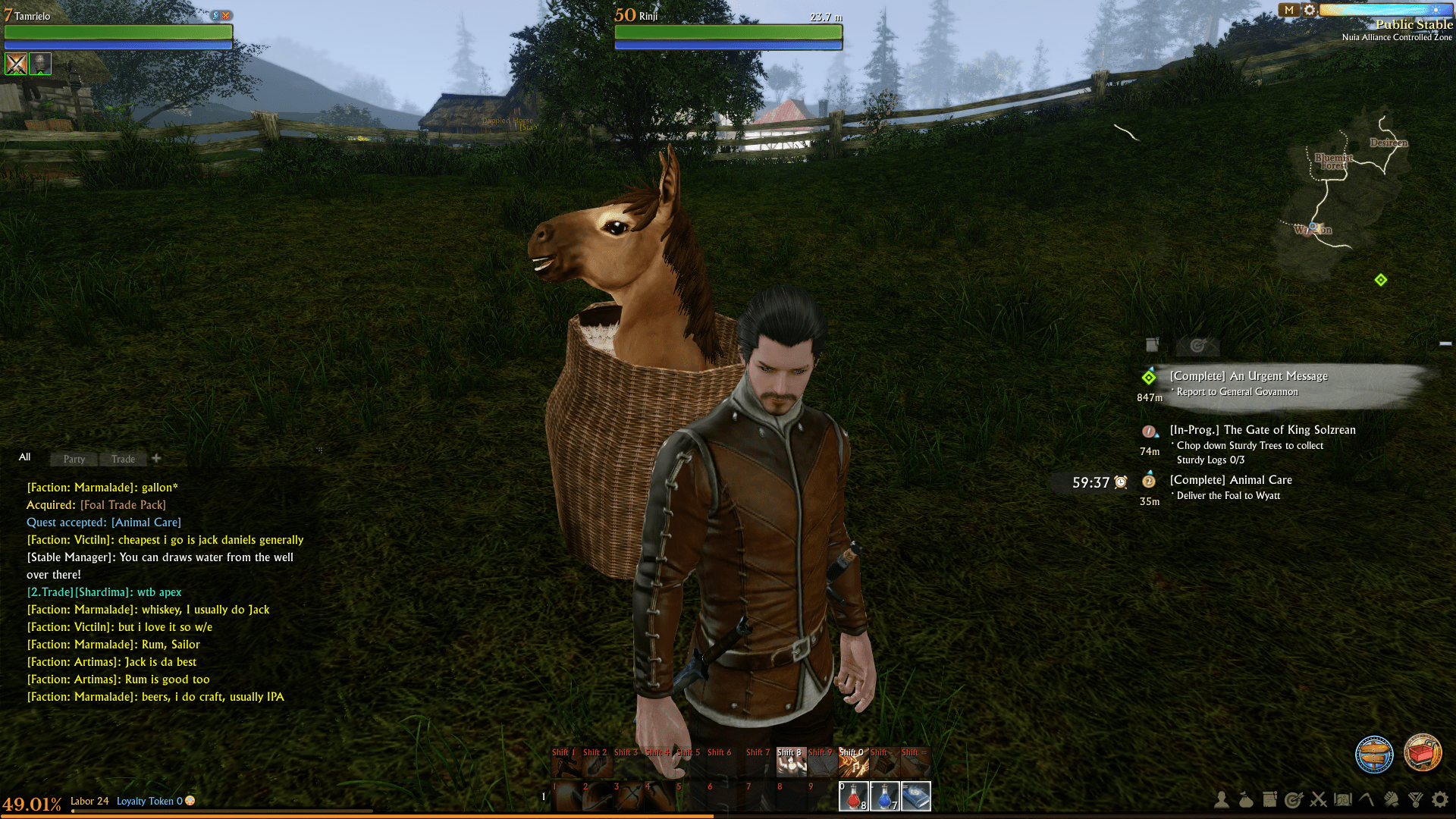
As I’ve talked to people about Archeage, there’s a recurring comment that I hear: “I wish I could play that game without the PvP”. I’ve rolled this around in my head, because at first blush I’d agree. I (think I) want a game where I can better myself and build and have interesting, interlocking systems to explore without the fear of another player coming in and ruining my day. The more I think about it, though, the more I’m not convinced it’s true. I’m put in mind of Minecraft, especially its build-only mode, which some people love but I have no patience for. I can certainly build interesting things, but without anything to threaten my construction, I have little motivation to achieve. It’s the same thing that drives me to succeed in raids– taking something that looks impossible and gradually, over time, building and executing a strategy that overcomes it. Every new boss could be the one that breaks us, which makes every boss we defeat a rush. If we’re not challenged by a boss, there’s little joy in its defeat, only frustration if for whatever reason we fail at it.

In a game where other players might affect your experience, every victory has the weight of achievement. The threat of actual loss makes the world feel more organic and real, because you interact with it in an organic and real way. You don’t simply hop a teleport back to the local bank when your inventory is full, you think about what items you need to carry and you plan your excursions. You don’t throw yourself off a cliff to expedite travel back to a town, and you don’t treat other players like inanimate objects at best, direct opposition at worst. The next player you run across could be the one that saves you from a player-killer or the one who stabs you in the back. In most modern cases, the game doesn’t even let any of this happen to you until you’re fairly familiar with the game’s mechanics, so the bygone days of cheerfully slaughtering newbies are largely gone, outside of periodic exploits.

archeage-2014-09-07-00-29-52-635

I don’t think that PvP is a “better” way of playing MMOs, but it certainly shifts my viewpoint. Even in my short time poking at Archeage, there’s a clear culture and players have actual reputations, something I haven’t seen in ages. I couldn’t tell you who the notable people on my FFXIV server are unless I know them personally, despite playing for a year now, but inside of a week I can rattle off a handful of names that cause a stir in Archeage. There’s weight to your decisions, and the game lets you make your own bed, but forces you to sleep in it.

It’s possible to have the same kind of stakes in PvE MMOs, but the concerns about “forced grouping” become very big in that kind of game, because the “Environment” half of PvE has to be extremely punishing and essentially require multiple players working together at all times.

I’ve said it before, but I look forward to the next technological advancement that gives us MMOs-as-sims instead of MMOs-as-games again. I’ve come to miss the uncertainty of a game world that doesn’t conform to formulas, and that I can’t be assured of succeeding in so long as I follow the dotted lines. It isn’t for everyone, but that uncertainty makes every victory that much sweeter for me. In a weird way, it makes me feel like I’ve earned my place in the world, as opposed to simply putting my time in to accomplish it. Sometimes I do just want a ‘safe’ game to delve into with some friends, but other times I’ve come to realize I miss the uncertain, dangerous ones, too.


Source: Digital Initiative
PvP and the Value of Investment

Tam Tries: Archeage (levels 1-10)

I picked up Archeage (by which I mean, hit “install” on the Steam client) the other day because it came up in conversation. I’d picked it up originally when it launched in the US and quit within fifteen seconds when I realized the game lacked an inverted Y mouse setting. Couldn’t play it, wasn’t going to go to the effort of hacking in some kind of fix, done with the game. Easy.

ArcheAge_Logo

I loaded it up recently, mostly to check to see if they’d added that feature. A Google search suggested they had, so I booted it up, patched, and hopped in. To my very great surprise, I’m having a surprising amount of fun with it, enough so that I want to put the brakes on playing until I have a chance to run around with Kodra and Thalen.

There’s a nasty catch-22 I’ve noticed in MMOs over the past few years. The bar for content and systemic density is so high right now, and people so invested in their existing MMOs (or not playing any at all), that there’s essentially no hope for a new MMO to compete at the same level as existing games when it’s released. On day one, before there’s been any chance for anyone to hit the servers, for kinks and bugs to be worked out, and so on, most MMOs are pretty rocky. Our standards for “acceptable” rockiness have changed over the years, but so has our expectation for a new entry into the genre as well as the skill of the teams creating them. Put simply, we no longer have MMOs that brick your motherboard on day one, but we’re also no longer willing to tolerate that sort of thing, nor would that sort of thing happen in a modern MMO team.

tamrielunlimited

I say all of this to say that, like a good steak, an MMO isn’t quite finished the moment it leaves the pan. It cooks a little bit more after release, and it’s that little bit of extra that turns an okay game into an excellent one. A year after its release, Elder Scrolls Online is getting rave reviews– all of the changes, fixes, and additions in the game have brought people back, not to mention a shift to free-to-play which, far from the herald of doom the internet pundit crowd likes to crow about, is often a new lease on life for an MMO that has stabilized.

So, Archeage. I hopped in, and after confirming that yes, I can in fact turn on inverted Y and actually play the game, I started running around. A few things stood out to me very quickly:

— This game is built like FFXIV; I can master every class, I just can’t use them all at once.

— There’s a pseudo-deckbuilding component, like Rift, in which I combine various classes to form a custom build. Presumably some of these are better than others, but there’s a lot of potential room for experimentation, and it’s easy to move them around.

— The visuals are impressive and not overwrought, especially the animations.

— There is an absolutely insane level of content density, from random interactable activities to hidden quests to standard quests that I can overachieve in, to detailed story quests, to fully integrated climbing and boating systems… all of which I’m not only allowed to do, but the game encourages me to do very early on.

ArcheAge Cleric Build

I like the idea of mastering every class, provided there’s some tangible benefit to me doing so. It’s something that’s stopped me from playing all of the classes up to max level in FFXIV– not just the time involved, but that I already have my favorite classes to play, which fit any role I might want to fill, and there’s very little I would get from leveling up another class. The only thing that gets me really excited about leveling a new class in FFXIV is if it has some really fun gameplay elements or suits a theme I like a lot. I leveled Ninja, and I’ll likely level Dark Knight as a replacement for my Paladin. In Archeage, my “build” is comprised of three classes, so there’s a lot of benefit to me having focused on a few and slowly increasing my repertoire to be more flexible and be able to create more builds. I’ll need to spend more time with it, but at least what I’ve seen is promising. At some point I’ll sit down and start theorycrafting good, functional builds, but I want a better handle on how the game feels before I do so. It feels a lot less contrived and unwieldy than Rift, which is a very good thing in my book. I loved the concept in that game, but not the execution.

The animations are really impressive, and I find them a lot of fun. I have never enjoyed warrior-style classes, because I feel bulky and inelegant, wielding a huge weapon with brute force and no finesse. I’m currently playing a warrior in Archeage, because the dual wielding style is graceful and feels powerful, even though the two-handed weapon animations feel brute-force-focused and smashy. At least as far as I’ve gotten, the game feels like it’s going to let me play the skillful swordsman type of character that I’ve always enjoyed but rarely gotten to play, substituting speed and finesse for brute force, and actually making it feel that way in the character animations. When I hit a mob with a warrior ability, I FEEL it, and that’s incredibly satisfying to me.

archeagetam

I’ve played through the first ten levels of the game thus far, and it’s striking to me how much there seems to be to do. There are entire systems that the game hasn’t introduced to me yet but that I can see portions of as I play. There’s a currency that accrues over time spent in game that I use to access my loot drops, which is a clever system for a variety of reasons but also ties in with crafting and gathering, as far as I can tell. The game is very open, and while I’ve spent a bunch of time simply following the main quests, every time I venture off the beaten path I find something at least somewhat interesting. The game seems tuned to give you key systems early on, then expand them as time goes on. I’ve raised my own horse and can ride around mounted now, but my horse has levels and can get attacked by enemies– I have a follower who benefits from watching me fight but is a potential liability. It’s an interesting trade-off that adds just a bit of interesting flow to gameplay.

Right now I’ve gone the path of the fast, agile swordsman, taking Warrior, Rogue, and a secondary skillset called Auramancy, which seems to be focused on resistances and shedding debuffs but importantly includes a Blink-style teleport spell, one of my favorite tools in any MMO. We’ll see if the content density continues to be compelling, but I get the impression the game hasn’t finished showing me what it’s got to offer.

It may be a bit before I continue updating, but I’ll continue talking about Archeage as long as I continue playing it. I’ve already made it past the point where a lot of people quit in disgust due to the initially toxic community, but a year on, things seem to have settled down. The odds that I’ll be able to ever have my own property seem slim, because space for that sort of thing seems to be in short supply, but we’ll see if that’s something I care about.


Source: Digital Initiative
Tam Tries: Archeage (levels 1-10)

Taking Ownership

There’s a really common business concept that I’ve heard a lot of, mostly through my time making games. It’s often suggested that you should “take ownership” of your work, and that doing so gives you more investment and makes you care about it more.

https://www.etsy.com/listing/229464652/hand-painted-coffee-mug-this-is-my

https://www.etsy.com/listing/229464652/hand-painted-coffee-mug-this-is-my

It’s an effective strategy from a leadership perspective, but it’s not without cost. To truly allow someone to take ownership of something, they need to have the freedom to shape it in their own way. In a lot of endeavors, this is fine, but as nice as it is to have an invested employee building something for you, if you really do need it a specific way there’s a good chance you’ll be robbing them of ownership.

To look at it from a different angle: a big part of my attachment to the minis games I play is the personal touches I give my collection. Even beyond painting them, I do a lot of careful work in assembly, often significantly converting a model, to put my own personal touch on it. I can’t remember the last time I assembled a mini precisely how it appears on the box, and in some cases I’ve done some conversions so extensive that the mini in question is almost totally unrecognizable. I do my best to be careful about the minis being confusing on the table top, but the personal touch is important to me.

SAO's Yui, work in progress

SAO’s Yui, work in progress

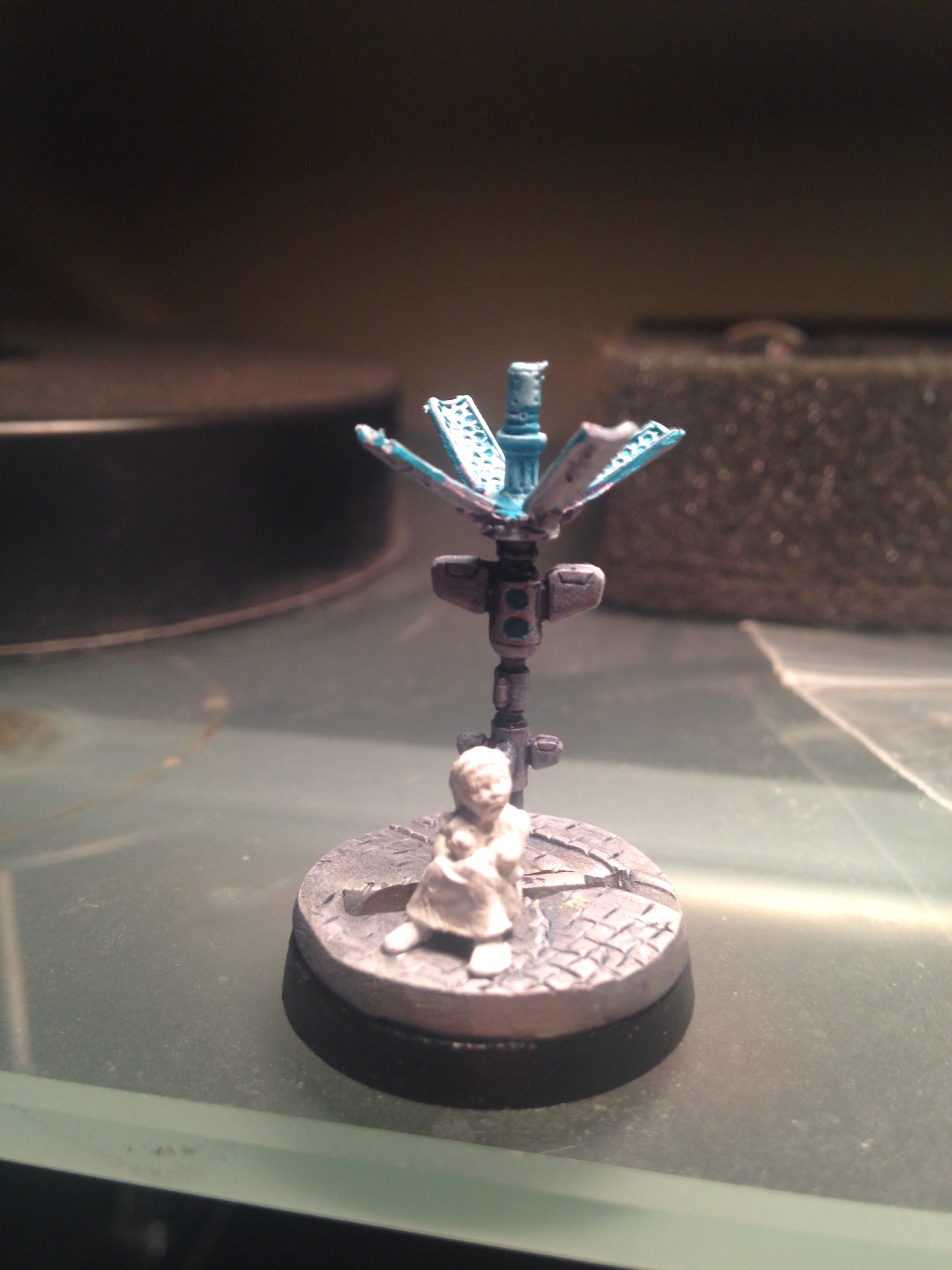
One of my recent projects is an extensive conversion of an ALEPH Steel Phalanx force to SAO characters. I’ve carefully constructed a playable list from the minis I have (and a couple of additions), and am converting the entire group to match the main cast of the show. Prior to this, I’ve never liked Steel Phalanx, it’s a faction made up of characters that don’t really resonate with me. By turning them from characters I couldn’t care less about to characters I’m interested in, I’ve been inspired to do a lot of work converting and painting the entire team, and I suspect I’ll have a lot of fun actually playing them, too.

The Infinity community (as represented on the forums) has been publicly supportive of this project (and others!), but I’ve gotten the occasional bit of criticism– why change the models that are sculpted the way they are for a particular reason, or why make your games more confusing with bizarre proxies or heavily altered pieces? It’s a similar type of criticism I’ve recieved from a recent Ariadna team I put together, which was based on my Shadowrun campaign and is about half-comprised of non-Ariadna minis that fit the Shadowrun characters but aren’t necessarily part of Ariadna as a faction– potentially confusing for someone, even if I’m very consistent about how I use them.

Volt Securities and Interdiction, my (commissioned) Ariadna force.

Volt Securities and Interdiction, my (commissioned) Ariadna force.

The reality is that without my own personal touch on these groups of minis, I wouldn’t own them, or they’d collect dust on a shelf. At any given time, I usually have a handful of minis that I haven’t assembled, sitting around in boxes because I picked them up from a tournament victory, as part of a sale, to round out another order, or just on a whim, and I haven’t made a personal connection with them that gives them value to me beyond game pieces. When I put my own spin on them, they have meaning for me even when I don’t like them. I often go as far as telling myself my own stories about them, determining fictional personalities and stories about the groups I put together, which inspires paint schemes, details, and even extends to list construction.

When I was growing up, I once complained to my dad that the essays I had to write in school were boring and meaningless. He suggested that I use the essay prompts as a way of springboarding into a topic I *was* interested in– his actual phrasing was more like “use the prompt just long enough to lead you into something you actually want to talk about, then talk about that”, which appealed to my teenage subversive side, but the end result was the same. My writing quality jumped immensely after that, partly because the satisfaction of “tricking” the teachers into letting me write about whatever I wanted gave me a smug sort of glee, but also because once I was writing about something I actually cared about, I put more effort in the work. On several assignments, I was told later that I didn’t exactly adhere to the prompt as such, but that it was a good enough essay that the teacher would let it slide. I took ownership of my writing and the improvements were noticeable, though the end result was often not what had originally been envisioned.

265993921711885580_bexvnq4x_c1

The same is true elsewhere as well. My writing, my minis, and my work all get a lot more care and effort put into them when I can take ownership and make them my own, but it also means they’re very likely to be significantly different from the standard set of expectations. As a team leader, I take care to be aware of this double-edged sword. I can give someone a lot of freedom to work out how they want to do things, but if I then come back and “make corrections” or otherwise deny then the freedom to add their personal touch, especially after the fact, I’m both sabotaging my own credibility and damaging the work of my team member. When I delegate a task out to someone on my team, it’s important that I support their efforts, even if they’re not what *I* would choose to do, so long as they’re effective. If I want something done my way, I had better be prepared to do it myself, or I can’t expect to draw upon the additional motivation and value that comes from someone “taking ownership”.


Source: Digital Initiative
Taking Ownership

Tam Suggests: Knights of Pen and Paper

KoPP_1_Packshot_2013-04-10

I’ve been playing a lot of mobile games lately, for a couple of reasons. The big one is that it’s a hugely underappreciated segment of games that’s increasingly the most relevant part of the industry, and the other is that I spend a lot of time away from my computer, and lightweight mobile games are increasingly my go-to.

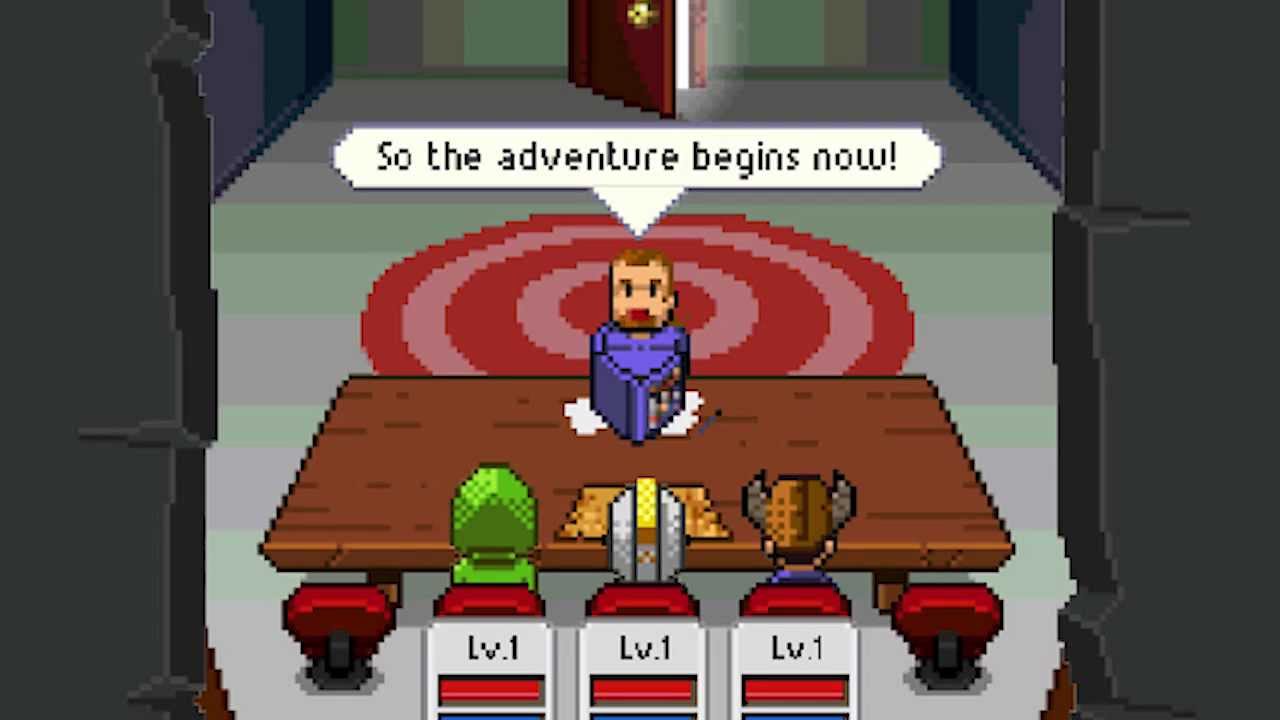
At the recommendation of a few people, I picked up Knights of Pen and Paper, a turn-based RPG in which you play as a bunch of people sitting around a D&D game with a DM. It does the whole pixel art thing, trying to evoke a classic feel in its characters and monsters. It’s hearkening back to NES-era graphics and gives the vibe that it’s a DM running a game with some rough edges while itself being a polished, solid experience.

maxresdefault (1)

It takes a lot to pull off what they’re trying to do, and I think it works really well. The DM sprite narrates quests and adventures to me, and my party is made up of five other characters, all playing particular classes. I get to pick who’s playing, and different people have different special strengths for me to choose– I’ve got the pretty, popular girl who gets discounts at shops, I’ve got the studious, top-of-the-class girl who’s pretty good at everything, I’ve got a guy in a band, I’ve got the pizza guy who dropped in to play a game, and I’ve got an artist girl who’s lucky. Each of these characters is playing a particular class, which I also get to pick– I’ve got the choice of Paladin, Warrior, Cleric, Druid, Rogue, Wizard, and there are other classes I can unlock with quests.

The setup is entirely charming, and the writing is often really funny. I can have random encounters as I travel from place to place, and the DM always sounds vaguely surprised or disappointed when nothing awful happens to me. When I get into an encounter, various players make outraged comments or jokes about cheating. The writing is lighthearted and fun, but still moves things forward. It hits a sweet spot in between telling a coherent story and making nods to the kinds of ad-libbed nonsense that happens in real pen-and-paper games.

Knights-of-Pen-and-Paper-Character-Selection-Screen

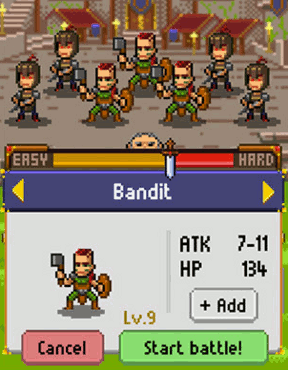
Gameplay is split into two pieces– quests and the overworld. In the overworld, I can choose to go shopping, travel around, take on a new quest, swap my party around, rest, etc, all by talking to the DM. When I take a quest, I have to travel to wherever the quest is located and then fight encounters there, which is where things get interesting. First off, I get to pick how challenging the encounter is. I can customize most quest battles to be as easy or hard as I want, selecting appropriate enemies and adding them to the encounter. More challenging encounters are more rewarding, and certain boss fights and random encounters have a set difficulty. Quests will often ask me to fight a certain number of enemies of a particular type, and I can fight them all at once or take them on more slowly, depending on how my health and mana are doing.

knightsofpenandpaper

Recovering health and mana is done by resting, or through spells. My choice of classes determines what abilities I have to work with, and building a balanced party is important, but the means with which you go about it is entirely up to you– there are a lot of combinations that work, and if you have one that will be strong later but is weak to start, you can still make it work by lowering the difficulty of your encounters early on.

Knights_of_Pen_and_Paper

In combat, every character gets a turn, and you can see initiative order (determined semi-randomly, of course), so you can prepare in advance. Each character gets an action, which can be a basic attack or one of their special abilities, which cost mana. The effect is that I feel like I’m playing a D&D party, each person reacting to the situation at hand and lending their unique skills to the group.

After finishing Hero Emblems, I wanted another fun RPG-style game, and Knights of Pen and Paper absolutely fits the bill. It’s definitely worth your time, and I look forward to playing more of it and exploring what it’s got to offer. It’s got a lot of systems that I haven’t really talked about because I don’t know much about them, but suffice it to say you can equip your characters, you have a party inventory, and you can upgrade your gear and abilities as you level up and get more money, all of which change how you play. There’s a ton of optional content and (apparently) a lot of hidden unlocks, so exploring random quests is entirely worthwhile (and levels up your characters!).

I’m enjoying it a lot, hopefully you will too. There’s even a sequel!


Source: Digital Initiative
Tam Suggests: Knights of Pen and Paper