The Future Is Mobile

So, the Pokemon Go trailer is making the rounds. If you haven’t seen it, it’s here, and I’ve embedded it below.

The Future Is Mobile

Curious about the future of MMOs? I’m going to go ahead and say you’re looking at it, right there. It’s tech and concepts that have been around for a while, but it looks like they’re being polished to a mirror shine, and given a context that’s incredibly compelling. Look at what the video is promising– PvE (catching pokemon out in the world), PvP (trainer battles), and endgame raids (the final scene). It’s the essence of MMOs distilled into a mobile platform, and I have a suspicion it’s going to be massive.

Don’t believe me? That video has been up for less than 24 hours and it’s pushing a million hits. Pokemon has an absolutely enormous audience at a really broad age range– basically if you’re likely to own a smartphone, you’re probably familiar with Pokemon. The smartphone gaming market dwarfs any other gaming market you care to name, and it’s way, way more inclusive than other gaming spheres. You’re looking at an MMO that’s able to tap a market that dwarfs anything else out there.

The trailer is brilliant, too. Take a moment to watch it, if you haven’t:

Check out the people it’s showing. Opening shot of the world. We get some rapid cuts to a huge variety of people– a 20-something businessman, a dad and his kid, a studious looking woman, a bunch of teenagers, then a giant crowd at the end. The only child is the one playing with the dad– note: playing WITH the dad. This is a game where everyone can play together, friends with each other, parents with children, people from all walks of life, and everyone’s having a good time. There’s not a lot of advertising, especially in the game sphere, that promises that.

Just to further push that whole “this is a neo-MMO” concept, the trailer manages to capture that wonder of exploring as a newbie, the excitement of PvP, the fun of meeting new people in-game, and the tension and exultation of raid bosses in a three-minute trailer. The structure is identical to the trailers for a ton of other MMOs, down to the order in which everything is portrayed.

I’m pretty excited to see where this goes. It’s obviously a bit early to throw around words like “wow-killer”, nor is that even a meaningful concept anymore, but I have a suspicion that this is the MMO future we’re going to be looking at. I’m honestly pretty excited about it; it goes back to the roots of what got me into MMOs in the first place. I hope it takes off.

Progression Speed

I’m surprised more cooperative games don’t have variations in their progression systems. A given group of people is going to have a pretty different amount of time to spend in a given game than another group, and especially for self-contained games, it seems like there should be a progression speed slider. I’m mostly looking at tabletop RPGs and multi-session board games here; I’ve been playing the Shadowrun: Crossfire board game with some friends lately, and while I think it’s a great game, it has insanely slow progression.

Progression Speed

Here’s how the game works: You have a character who starts with a basic deck. As a session (a “run”) progresses, your deck is going to increase as you play, and at the end of the session you flush the entire thing, and get a certain amount of XP (Karma) based on how successful the run is. You can then use this Karma to purchase upgrades, which change how you start the game and give you particular special abilities. It’s a neat system, and the ability to add on various means to make the runs harder on yourself for greater rewards is neat.

However, progression is SLOW. With a fresh group starting from scratch, you will have to win two games or lose five to get to your first upgrade; you’ll be playing the same mission each time until then. You’re not going to have the edge you need to go for any of the bonuses, and the game is pretty difficult; you stand a fair chance of losing each run. That first jump isn’t so bad, the first tier karma benefits are 5 karma apiece and you have one free slot to upgrade into. Here’s where it gets silly. To unlock another “slot”, you need to pay 10 karma, twice what you needed to get the first one. You THEN need to buy the upgrade, and upgrades cost anywhere from 5 to 50 karma, in increments of 5-10. You’re looking at a LONG time between your first and second upgrade, and a really long time before you’re looking at a fully kitted out character who can even attempt some of the harder missions.

Progression Speed

The missions have expected karma levels, and some of the higher-tier ones suggest you have 75-100 karma at minimum to attempt them. That is a TON of playing this game just to get to that point– even the higher-tier missions only grant 4-6 karma each, and optional difficulty boosts add 1-2 karma apiece, and will rapidly overwhelm you.

We opted to simply double the experience gain, so that we could purchase fun upgrades after the first session and so that we can actually get to later missions. For our group, we might play this game once or twice a month, which, at 3-6 karma a session, is more than a year to reach the later missions, optimistically. It’s a fun game, but I’m pretty sure that it doesn’t need to have progression quite that slow. We’re speeding things up and should be able to do other interesting variants more quickly (and have more interesting options).

It’s a pretty minor tweak that works well in Shadowrun: Crossfire, and it makes the overall experience for the group a lot better– we can keep it fresh and different without spending a ton of time doing the same missions. It puts me in mind of the way I handle XP when I run tabletop games. I have a standing rule that experience is held constant across the party, so that everyone is always at the same experience level. It makes things better for people who can’t make every single session and it makes it a LOT easier for me to build and tune encounters; I know what kinds of things the party can handle.

Progression Speed

I also give out XP to match the pace of the campaign. I used to make campaigns that were open-ended, but I’d fizzle out at some point and the story would falter. Now I plan a single significant arc and sometimes a few side arcs; the story has a specific end point that marks the conclusion of the story. If that means that I grant players a level every session for a few sessions, just so they can face whatever enemy I’ve got waiting in the wings, that’s fine– if we finish one game we can start another, and I usually start planning the next campaign about 1/3 to 1/2 of the way into my current one, so there’s always something ready to go.

I think that there’s a lot of value in tuning your game experience to the group you’re playing with, and it’s surprising to me that more games don’t have those options built-in. Certainly it’s not hard to just write house rules to suit you, but it’s interesting to me how many of the reviews of Shadowrun: Crossfire slam the game for its slow progression, and how many veteran D&D players mope about starting new level 1 characters, because it “takes so long to get to the good stuff”. Neither of those need be true.

Progression Speed

Having talked to various people about house rules and other things, I’ve noticed that there’s often a moment of shock when I suggest changing the rules as they’re written to something that works better for us. Some people are staunchly opposed to it, other people look at me and have, in some cases, outright asked “wait, you can DO that?” as if there needed to be some permission to make the game more enjoyable.

The answer, really, is yes, yes you can. There are a number of games that I don’t like, but after a few rules tweaks are a lot of fun for me. If it’s a game I’m just playing with my friends who have the same viewpoint, why not change things so we can enjoy it more? It seems like a no-brainer.

Investing in the Experience

There is an old game development philosophy, now considered outdated, that suggests that players should have to ‘earn’ their fun in a game. It’s the source of the “grind”, and it’s where the idea of pitifully weak low-level characters who grow to be powerful comes from. A lot of games have their really fun, exciting levels a little ways in, and in older arcade games, you’d have to be really good or pump in a lot of quarters to reach them.

Investing in the Experience

You can pretty easily see when and where it fell out of favor, and in which genres. RPGs made you work your way through quite a bit of experience before you had interesting abilities and weapons. First-person shooters made you go through several levels with very simple weapons before you got to play with anything really cool. MMORPGs would make you spend weeks or months fighting boars and wolves before getting powerful enough to even fight an enemy of a player race, much less something big like a griffon or dragon.

I’ve seen this elsewhere as well– I’ve talked before about certain TV shows having really slow or confusing opening episodes, which set up significant payoffs later on down the line. It’s something I’ve noticed an incredible amount of in anime, and while I don’t watch as much American TV, quite a few people I know who watch a lot of it tell me the same is true there. Bel commented over the weekend that he doesn’t decide if he likes a show or not until four or five episodes in at least, and it’s a rule I’ve adopted for anime as well.

There’s a flip side to the concept of “earning” enjoyment out of a piece of entertainment. If you’re invested in an experience, you’re a lot more likely to enjoy it, and if you have to work to get that investment, you’re going to value it more. It’s a fairly straightforward bit of psychology that crops up pretty much everywhere, and it’s fairly clear here as well. Things that are easy to get into are also easy to get out of; the games and shows I remember the most about are the ones I had to do some work to get invested in, whereas the easy shows don’t tend to stick with me as much.

Investing in the Experience

As an example, I can’t really remember much about what happens in Azumanga Daioh, despite liking that show quite a bit when I watched it. It was easy to sit down and watch and while I have a vague recollection of it and I know it’s relatively simple, I can’t recall specifics even on rewatching episodes. On the other hand, in rewatching Baccano recently, I realized that I remembered pretty much everything that happened in the show, and with a brief memory jog could name characters and even specific scenes. Baccano is a much more complex, much less accessible show, and I had to put some effort into it. The payoff was fantastic, and it’s one of my favorite shows, but it requires that effort– that investment– to get the most out of it. Its spiritual successor, Durarara, had a similarly slow first episode, but once I got into it I was absolutely hooked, and it’s propelled itself easily into my top list of favorite shows.

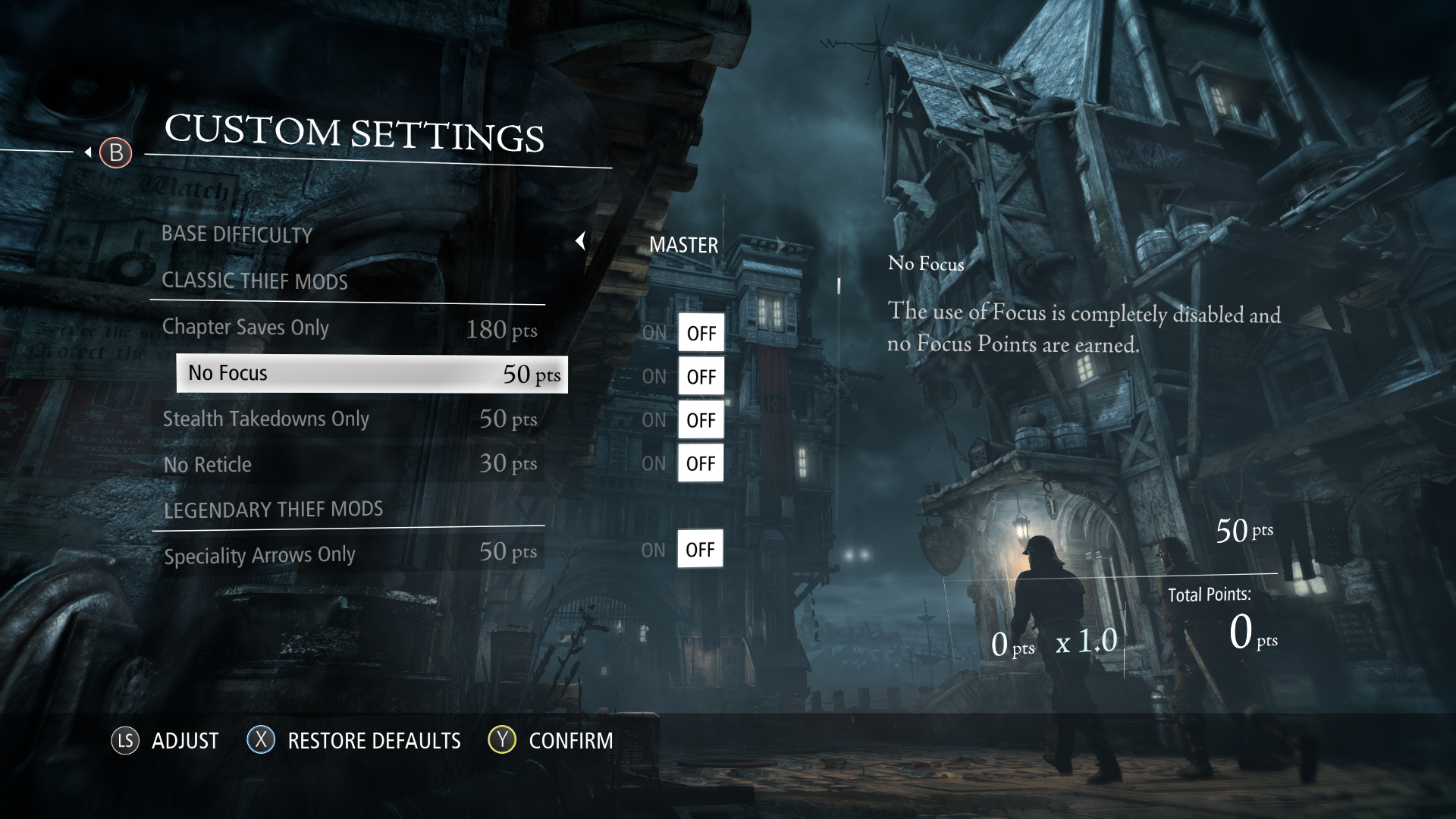
I find myself seeking that investment in my entertainment– I want shows and games that I need to put a bit of effort into before they pay off. It’s something I’ve recently realized drives a lot of my interests; a lot of people like entertainment that they describe as “a way to turn my brain off”, and I’ve very rarely enjoyed that kind of experience. A lot of my friends are playing Diablo again recently, and it’s a game I’ve tried to like but don’t really enjoy most of the time– not because it isn’t fun, but because I don’t find it engaging and I get bored. In a similar vein, when I load up a new stealth game, I tend to crank the difficulty all the way up. I’d wondered why I do this, but it fits nicely into the idea of investing in the experience. It makes the game harder, so I have to work at it, and as a result I enjoy it more, because my victories feel more real. When I play minis games, I’ve put in the effort to acquire, assemble, and often paint the models I have, and in most cases I’ve constructed themes and narratives around them, so they feel weighty and meaningful.

Investing in the Experience

FFXIV has an incredibly slow start compared to other recent MMOs– it’s a LONG time before you’ve got a variety of cool abilities and even have the basic mechanics of the game unlocked– it’s level 30 at least, sometimes later, and your class doesn’t feel like a complete concept until 50 in many cases. There’s a ton of mandatory story and a lot of things you simply have to do in order to progress. One of the criticisms levelled at Heavensward was that you had to play through the entire story of the game, including all of the main story content patches, just to even access the expansion content. For a lot of people, this was a wall that they had to climb to get into the new, cool areas they just paid for. However, the story of FFXIV is so central to the experience that a lot of what happens in Heavensward would be either nonsensical or have no impact if you could skip all of that content. The game forces you to invest some time (and, to be fair, rewards you fairly well if you’d not previously done it) so that you’re in a position to appreciate the new content.

I’m tempted to say I’m torn on this– that on the one hand I really do value the experiences I didn’t instantly love but came to enjoy a lot more than the ones I liked from the start, but that I also despise grinding and doing repetitive, grindy content just to “get to the fun part”. I’m really not torn at all, though. The investment is valuable, it just needs to be applied properly. The show has to be well-written, or the game well-designed, so that there is a satisfying payoff after you put in the investment. It’s got to feel like your time and effort are respected.

Investing in the Experience

There’s a certain amount of trust that goes into it as well. You’ve got to be willing to trust that this thing you’re experiencing that seems like utter crap right now is going to all be worthwhile later. It’s a tall order, because we’re so inundated with quick, thoughtless entertainment experiences that aren’t trying to be thought-provoking or offer any payoff other than the immediate. There’s nothing inherently wrong with this kind of entertainment– it has its time and its place– but it’s very difficult to tell off the bat whether you’re dealing with something shallow or something deep until you’ve put a bit of time into it.

This isn’t to say that all meaningful, thought-provoking entertainment experiences have to be obtuse and inaccessible at first; what I *am* torn about is whether that’s a good idea. While it certainly forces me to put effort in, it’s also really good at losing me. I have to go digging for the hook, and sometimes it doesn’t seem like there’s going to be a hook to find.

Investing in the Experience

That having been said, my track record thus far with shows I haven’t liked at first but have put effort into is really great. Of the shows I’ve watched at least four episodes of this year, there’ve been two that I’m not enthused about watching more of, out of twenty or thirty by now. It’s a really good track record. Games have been starkly less good, though I think a lot of that is because my feelings on playing games has been changing since I stopped working on them, but it’s easy to fall into old “force yourself to play” habits.

Part of me is looking at the new Metal Gear Solid game– a series I haven’t played in a decade by now, and wondering if it’s worth the investment. Certainly I know a lot of people who are very into that series, and while it seems like inaccessible nonsense from the outside, I can’t help but wonder if there’s a solid (ha!) payoff for the invested player. I’ve got other games to play right now, and no disposable income for an MGS game, but still, I wonder.

AggroChat #73 – Pax and Prime Evil

Diablo III 2015-09-05 19-13-38-74

Tonight we are recovering a bit from recording two mega episodes, and end up crafting a relatively short one.  Since the last episode three of our hosts have been to Pax Prime and as you might expect have an awful lot of things to talk about.  Ashgar, Tam and Kodra share their experiences, and some of the interesting games that they got to see.  Additionally there was a pretty awesome meet up of folks from the blogosphere in Seattle and there is some discussion of that.  In the meantime many of us have also managed to get sucked into Diablo 3 for Season 4.  So we have been spending quite a bit of time stalking the Prime Evil, and grouping together to tackle the content.