Organizational Failure (and Passing the Torch)

Probably a few WoW posts this week, as old MMO memories continue.

Late Night Raiders (LNR for short) hummed along for about two years, from not long after launch to slightly after the release of the first expansion. It taught me a lot about large-scale organization and how to manage teams, and its eventual implosion only added to that. It was also one of the hardest decisions I had to make.

pvw2802

Organizationally, LNR broke down fairly neatly. A raid group at the time was comprised of 40 members, spread across 8 classes. In the ideal case, this meant five players of each class filled a raid. Perfect attendance across 40 people was laughably impossible, so we drew from a fairly significant pool of people for our raid. At any given time, LNR had about 20-25 members with very high (80%+) attendance, and so on any given night we were “filling” the last 15-20 members from the pool. This pool, at the peak of LNR, was somewhere in the range of 100 people, give or take a few.

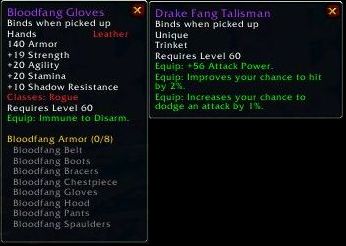
LNR was further subdivided by class. Each class had a separate channel that was used for that class’ organization, and which usually wound up fostering unique subcultures for each class. This also helped us disseminate information by class, rather than having long discussions across raid chat about specific class tasks, most of which weren’t relevant to anyone listening. As a result, a standard LNR boss fight explanation would start with a very basic and quick overview of the fight, and discussion of the details would happen through class channels. This had the secondary benefit of allowing class groups to set up larger-scale decisions (like attendance and loot distribution) amongst themselves– some classes had extremely well planned structures for deciding who would attend a given raid and who would get specific pieces of loot, sometimes worked out months in advance.
ebonroc9

The game also allowed filtering through party chat, as the game’s raid structure broke people out into 8 groups of 5. These channels were used for any cross-disciplinary discussion, and we would frequently rearrange groups to fulfill particular strategic needs.

Owing to people having fairly regular habits, we had a very broad categorization of people, though it was never fully codified. We had people who were reliable with high performance, who could be relied on to show up for the vast majority of raid nights, perform well at all of them, and on whom we could rely for the overall success of the raid. There were people who had high performance and who could often make raid nights, but weren’t around quite often enough to be relied upon. Then there were people who were either very reliable but had mediocre or unreliable performance or who had excellent performance but were around rarely. Finally, there was a pool of people whose performance was unreliable and who were relatively rarely around, or who had not run with the group often.

At first, we prioritized based on performance and reliability, always inviting those players first and working our way down the list. It was a functional but ultimately problematic setup; people who were performant but didn’t often get invites would look for other groups, leaving us with a strong core that could do very well when all of our best players were around at once, but that would deteriorate quickly if a few key people were missing or if we needed a lot of stand-ins. This led to one of the major recurring issues that LNR had to deal with: morale.
WoWRaids

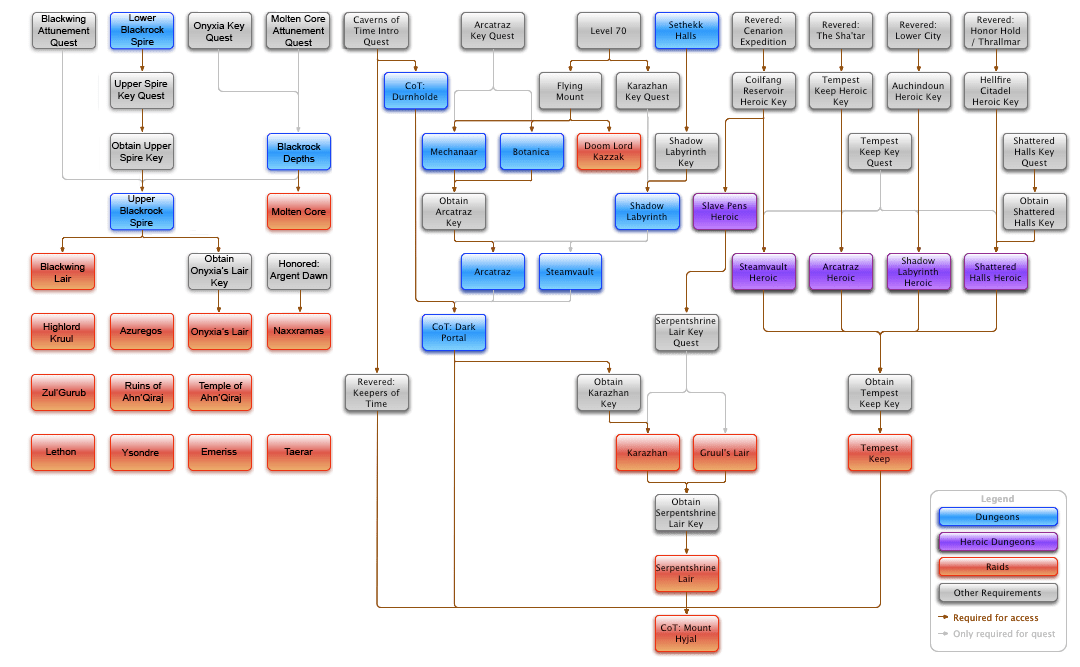
Raid structure in WoW, as in most MMOs since, has focused around a group working their way through a dungeon, learning and ultimately defeating various boss encounters. Each boss encounter would then be practiced until it could reliably be defeated and loot claimed from it, called “farm” status. A dungeon might continue to be worth running for months after the last boss of it was defeated, thanks to the slow trickle of loot, so by the time a group was fully finished with a dungeon, everything within it would solidly be on “farm” status, in theory. In LNR, due to the high variability in our team, we often found ourselves backsliding, particularly on difficult encounters. Too many stand-ins or too few key players and a boss that had been farmed the previous week was suddenly unbeatable, either due to a deficit in power, performance, or simply a lack of teamwork.

About a year into LNR’s life, I suggested we restructure a few key raid constructs, having watched the above play out on multiple occasions, and the strife and finger-pointing it would inevitably cause. I suggested that we mandate class channels for all classes and assign class or role leads to run those groups. Instead of 5 key players and 7-8 potential stand-ins, as we’d been doing before, each class would have 7-8 key players and a smaller number (2-3) of stand-ins. At the time, I’d already been testing the concept with my own class, and we’d not only set up an amiable loot system, cutting arguments over rewards out almost entirely, but we had a more-than-regular core of strong rogues, and we determined on our own who would get to attend any given raid night, in advance. Sitting out every third or fourth night but knowing you were guaranteed a slot otherwise was significantly better than waiting weeks or months in the hopes that you might get a slot, then knowing you were too far behind and too disconnected from the group’s teamwork to contribute as effectively as you otherwise might– which would lead to you getting invited less frequently.

It wasn’t a popular decision, because at the time LNR had a very bloated group of potential players. Many knew they wouldn’t be able to get into the ‘core’ rotation and rejected the suggestion as unfairly exclusive and too cliquish. It was both cliquish and exclusive, but I’d seen the same arguments put forth when the rogue team had made the same transition  few months prior, and while we did lose a number of potential players, we also significantly improved our team’s reliability and performance, as everyone was getting time in with the group to both gear up, get more skilled, and get used to working with the raid.

The jump in LNR’s performance was visible within a few weeks. We went from being stuck on a particular halfway-mark boss to blasting through the entire rest of that dungeon in less than two months, propelling ourselves from a largely unknown raid group to competing for top three on the server. We were one of the very few groups capable of taking on the highest-tier content in the game at the time, and morale, at least as it regarded performance, was way up.

Ragnaros_in_WoW

The big problem we ran into after that was one I place squarely on the game design side. In WoW, many pieces of gear were divided up into “sets”, and wearing more pieces of a set gave you often significant bonuses. Unfortunately, these sets were divided up in an extremely unhelpful way. The final boss of the first raid dungeon had one piece of the set, an unrelated solo boss elsewhere had another piece, and the rest of the pieces were available in the second raid dungeon. While inconvenient, once we had things properly farmed, we could blast through the first raid dungeon and the solo boss in about 3 hours, but this required the entire raid to be on their toes the whole time and offered only two bosses’ worth of relevant rewards. That same 3 hours could be spent on nearly ten times as much in the way of relevant rewards elsewhere, making the time spent hoping for two rare drops feel much less worthwhile. This got worse when the third raid dungeon was released, which offered a lot of difficulty in exchange for relatively little in the way of appealing rewards… except for a certain subset of players who couldn’t get relevant gear from anywhere else, thanks to poor itemization. Finally, where things began to break down, a fourth raid dungeon was released that offered vastly superior rewards for everyone except those people who were still trying to complete their sets (from the FIRST dungeon) and those who couldn’t get relevant gear from anywhere except the third dungeon.

All of this led to a logistical nightmare as far as deciding where we were going to go on a given night. There simply weren’t enough raiding hours in a week to hit all of the possible goals. Initially, we tried to message out beforehand where we would be going, but we discovered sharp dropoffs in attendance from people who had little or nothing to gain from going to those places. We wound up having to avoid communicating where we were planning on going until moments before the raid started, which slowed down our startup time but kept raids full, though it didn’t cut down on grumbling when we went somewhere people didn’t want to go– and there was no way to keep everyone happy.

Naxxramas-1

The fourth raid dungeon was problematic in its own way as well. While appealing to everyone and rewarding enough to the players who preferred raid dungeon 3 to be worthwhile for them, it was punishing difficult and extremely frustrating. Very difficult mechanics had to be practiced, and to save time and everyone’s repair bills, we started having smaller teams practice to get used to the mechanics without sacrificing the whole raid to failures. Among the rogues group, who were largely unnecessary for a lot of this practice, we’d all download a poker addon and play poker while sitting around. Progress in that dungeon was slow, and while each victory was extremely satisfying and caused a surge of excitement, they were few and far between for a while.

The beginning of the end was the ramp-up for the game’s first expansion. We expected that the gear we were working very hard for would be outdated almost immediately in the expansion (while not true in our case, it was for a majority of players), and it became a bit of a question as to why we were bothering beating our heads against this content. People wanted to finish their goals before the expansion dropped, and everyone had different goals. Furthermore, the expansion announced that raid groups would be changing sizes, from 40 members to 25 members. This became a brutal problem for LNR– our reorganization had left us with enough players to reliably run a 40-person raid, but not enough to reliably run two 25-person raids, and there was immediate bickering over who would be part of the “A” team and who would be relegated to the “B” team.
pic

By the time the expansion had hit, keeping the raid together had become extremely stressful, to the point where the raid’s primary leadership was fragmenting. The raid’s founder and primary leader needed a break, and passed raid leadership to me. I kept the raid going for as long as I could, but at the time I was dealing with my final year of college and couldn’t devote enough time to the group. Furthermore, some of the group had already pushed extremely hard to clear through the expansion and start raiding, leaving most of the rest of the group behind and quickly becoming exclusive, forming their own group and breaking off from the main raid. Unable to reconcile the work required with the other demands on my time and feeling extremely stressed and burned out from the previous few months, I also withdrew from LNR and left the game. My understanding is that the group fell apart to infighting shortly thereafter.

I took a short hiatus from WoW and focused more on my local, physical friends, many of whom I’d gotten into the game and would be leaving when I graduated college. I wanted to keep in touch with them, and while I’d sworn I wasn’t going to lead another raid group, I ultimately came back to it later, rebuilding a team on my own terms.


Source: Digital Initiative
Organizational Failure (and Passing the Torch)

Flight is a Double Edged Sword

Skipping Content

WoWScrnShot_061712_000053 Over the last few weeks a topic has sprung back up that I thought was long put to bed.  I guess the lack of flight in World of Warcraft for the Warlords of Draenor expansion is still a divisive topic.  I’ve said before that I support their decision to keep flight out of the expansion.  My current malaise with Warcraft has absolutely nothing to do with whether or not I can fly.  So this morning I thought I would talk for a bit about the inclusion of flight in games and the strange ramifications it has on game play.  Ultimately when you include flight players skip your content as simple as that.  I can say this coming from a perspective of someone who has played several games with and without flight.  Ultimately the first game I played with flight was City of Heroes, and it was both the most powerful “travel power” and also the most frustrating.  Sure you could soar above the battlefield and move around relatively unscathed, but you did so at often times half the speed of any other travel power.  The players that could fly however were able to terrain hack content, and often times find ways to level with absolutely impunity, but they did so giving up the ability to move about “quickly”.

When World of Warcraft first introduced flight it felt very similar.  While you were technically going at 150% speed it felt like you were moving more slowly because in the air you lost your point of reference for how fast you were going.  Additionally the flight masters still moved significantly faster than you were able to go.  Even with the introduction of artisan flying at 280% flight speed you were still slightly slower than a flight master which I believe is roughly 300% speed.  The problem is in both cases it changed the way I played the game.  While I struggled to make the money to fly in  Burning Crusade, by the time Wrath of the Lich King rolled around I had enough cash to spare to be able to outfit all of my alts with even Cold Weather Flying giving me the ability to fly while leveling.  I found myself using the same sort of terrain hacking tricks that players did in City of Heroes.  Instead of fighting my way to the entrance of something I simply swooped down from above and quickly poked into entrance tunnels to avoid fighting any adds.  If I needed to kill a single quest mob, I would zoom straight into the hut they were located in with surgical precision avoiding the experience of clearing my way through a camp.

Flight is a Double Edged Sword

EQ2_000043 While you might be fine with this style of play it does not change the fact that you are ultimately playing the game in a way that was not intended by the developers.  Someone spent a serious amount of time and resources designing the layout of the content you just leapt over the top of with your trust flying mount.  Sure there are ways for developers to put counter measures in place that block you from terrain hacking the content using a flying mount, but that just adds to the problem.  Instead of making new areas of the game they would be reworking areas to make sure that you cannot skip the important bits.  This also destroys the ability to add content along the way like side quests and collectibles because if you are skipping directly to the end you will never actually see it.  By having flight you are really handcuffing the tools that the content providers have to add to the mix, and changing the way they have to approach the content.  The end result is likely a far less vibrant world.

If it were just Worlds of Warcraft I would think that maybe they simply integrated flight in a bad way.  The problem being that I went through the same experience with Everquest II.  Once I got the ability to fly I stopped experiencing content “as intended”.  I started flying up to exactly the spot on my mini-map I needed to be at in order to complete the quests as quick as humanly possible.  I pulled myself out of the game experience and essentially was robbed of the living and breathing world around me.  With flight questing becomes about clearing dots off of your map as quickly as possible without spending any time really engaged in the content itself.  I think in many ways this was why I enjoyed the questing experience of Warlords of Draenor so much more than I did the previous expansions.  It actually forced me to spend time getting to know the layout of the zones, rather than zipping over the top of them.  It is better to see the crags and crevices of the world…  than a monstrosity of super pixilated trees that never quite mesh correctly.

Heavensward and Flight

final_fantasy_14_heavensward_dragon.0 As I look forwards at Heavensward I have to admit I am more than a little concerned that we are seeing the introduction of flying into Final Fantasy XIV.  Firstly I hope they stand firm on the statement that there will be no flight in the original areas of the game.  Secondly I hope they have thought through all of the ramifications that come with introducing a system that lets you skip over content.  There has been a lot of talk about having to explore a region and learn how to harness the winds in that area before being able to fly there, and I am hoping this is actually a fairly drawn out process.  This would mean that the player would need to have spent a significant amount of time in a given region before learning how to fly there.  At one point Yoshi P in an earlier statement said something to the effect of having to completely explore an area before being able to learn flight.  In both cases this sounds like maybe they understand the danger that integrating this system really is to a game.  The problem is that flight is a Pandora’s box that cannot be easily shut after it has been opened.

Blizzard has learned this lesson and is trying to hold shut that lid with all their might.  Other games like Rift have been carefully guarding their own box to make sure that no one opens it.  It is with great reservation that I watch as Square Enix prepares to open their own box and see what happens.  I say reservation, because this is the same development group that has managed to outthink its player base on a regular basis.  They have essentially social engineered a community into treating each other with a modicum of civil decency rather than a race to the bottom to see who can behave the most horrifically.  I have hope that they will be able to solve the problems that no company has to date with flight.  I have hope that they will figure out a way to keep it from cheapening their content experiences.  My hope is that they will make it so we are not completely alone in the sky.  This is an expansion about doing battle with dragons…  and dragons notoriously can fly.  Maybe we will have to avoid encounters in the air just like we try and avoid encounters on the land  as we traverse the world.  We have roughly twenty four days before we find out, but I still stand by my stance that I am fine playing games without flying.  I am even fine when a game decides that flight was a mistake and claws it back out of our grips.


Source: Tales of the Aggronaut
Flight is a Double Edged Sword

Obsession with a Skillet

To Achieve Self Sufficiency

ffxiv 2015-04-07 17-25-17-52

There are a lot of reasons why people craft in online games.  Some start down the path because there is an item that can be created that is better than something that they can get through other means.  Others start down the path to earn money, or be able to play the market.  For me I have always been the type that crafts so that I don’t have to rely on anyone else.  I have the most awesome guild in the world, and in it are a group of individuals that would drop whatever they happened to be doing to craft me anything that I might happen to need.  The problem being I hate asking people for things.  I am the type of person who would give away anything to anyone that might need it, but when it comes to me asking for something… it goes against every bone in my body to impose on someone else.

As a result I tend to level crafting so that I can make my own gems, brew my own potions and enchant my own gear.  In World of Warcraft for example I have one of every single craft at maximum or at least near maximum level.  This has allowed me to basically take care of my own needs and it makes me pretty happy.  In Rift I have the same thing, in fact I spent a large chunk of my bonus currency when they converted to free to play unlocking all of the trade skills available on my main character.  So self sufficiency is an important mission to me, and it is a bit strange that until last week I had not actually touched the crafting system in Final Fantasy XIV.  In part I had watched lots of my friends fall into the black hole that I am now in and wanted to avoid doing so until I had at least leveled one of every combat role I might need.

Obsession with a Skillet

ffxiv 2015-05-25 09-58-53-40

Like I wrote yesterday I have now left the territory of being able to purchase goods from a vendor and craft those up in rapid succession.  You can get to fifteen in a given crafting profession relatively easily.  Sure it takes a lot of time and getting to fifteen in all professions took me roughly two weeks of piddling at leveling off and on to get there.  Now however it seems like the challenge is not the leveling portion but the acquisition of items to use in crafting.  While my friends seem to think I am insane in doing this my strategy falls along the lines of picking a single item and then farming up three for four stacks of materials and mindlessly crafting a given item until I ding.  This worked extremely well for leatherworking in that I simply gathered up enough aldgoat skin and allumen to be able to craft up four stacks of aldgoat leather.  Sure it was pure tedium to craft that many items in a row, but I did so while watching television so it ultimately was not that bad.  The crafting system while more involved than just pressing a button and crafting an entire stack of items, is simple enough that you can pretty much do it through muscle memory.

Last night I spent crafting mortar by combining stacks of limestone and fine sand, both of which I mined up myself.  This pushed me from 15 in Alchemist to 21 over the course of the evening, watching Game of Thrones, Silicon Valley, Veep and Last Week Tonight for a reference in just how long it takes to push a profession.  After that I started work on Culinarian by crafting a bunch of salted fish.  I purchased three stacks of fish from the market place because it was relatively cheap, and the table salt I crafted by combining rock salt and distilled water.  I managed to make it to 16 last night before heading to bed, and as soon as I finish writing this blog post I will begin the journey once again.  Ultimately I decided to push Alchemist and Culinarian first because they are ultimately the professions I like the least.  The strange thing is… that each step I make towards 50 makes me happy because I am that much closer to being self sufficient.  While honestly I am not to the point of being able to make all that many useful things…  I know eventually I will get there.

To Lost Causes

ffxiv 2015-04-16 12-08-19-77 At this point I have 25 days to push eight professions from 15ish to 50, and I don’t feel like there is a way in hell for me to make that work.  Even if I took that month off from work and did nothing but craft full time… I don’t think I would be able to make it.  Even knowing this fact…  I am still going to try.  If I can at least get to 40 by the time Heavensward launches I will be happy enough.  There are so many other competing things that I would like to accomplish but right now I am as my friend put it past the “event horizon” and the only way out is through.  Crafting has dug its hooks into me and I am currently obsessed with getting caught up.  I wish I had not waited so long to make the push, but in the grand scheme of things I tend to only feel the drive to do something… when pushed on from external forces.  The impending launch of Heavensward is the catalyst that makes me want to do this, and for that I guess I am thankful.

Right now I am so thoroughly amped about the launch of this expansion, more so than I have been since potentially the launch of Shadows of Luclin in Everquest.  That was really my “first” expansion launch, and I was so unbelievably excited about what it might hold for me.  Everything I have seen about Heavensward is making me feel that excited about it all.  I think this expansion is going to be just as game changing, because the new content feels so vast.  The scale of everything seems to be amplified, and that makes me so happy.  The world building of Everquest embraced the feeling of everything on a large scale, and my hope is now that the team has proven their mettle with a smaller experience that we will see them branching out and building worlds on a bigger scale.  My hope is that with the introduction of flight that we will see less hard edges in the world.  I admit I am leery about flight because in both World of Warcraft and Everquest 2 it changed the way I played the game potentially for the worse.  In both cases I skipped content because I could simply fly over the top of it…  and I am hoping that Square can approach flight from a slightly different direction.


Source: Tales of the Aggronaut
Obsession with a Skillet

Interlude: Breaking the MMO Paradigm, Part 1

This week continues with more MMO stories, but I want to take a break to talk a bit about mechanics and teamwork, why they’re important, and what the design space for that can look like.

death-by-chocolatecovered-broccoli-a-case-where-gamification-killed-gaming-practice-27-638

In a majority of MMOs, there is the “holy trinity” of tanks, heals, and DPS. It’s a construct that a goodly number of people are fervently opposed to (often claiming it’s little different from the mechanics in old MUDs, as if age were a salient point against a functional system) but the vast majority of players have bought into and are more than happy to operate in. The way the construct works is as follows: a significant number of enemies in the game cannot be defeated by a single, solo player. Groups of players are thus required to bring down these (groups of) enemies. To create synergy and allow groups of players to be more effective than a set of individual players all standing near one another, games generally offer “classes” or otherwise sort players into particular roles in the party. Tanks are resilient and are good at both holding the attention of enemies and minimizing the effect of the enemies’ attacks. While enemies are thus occupied, DPS (short for damage-per-second) role players do the job of killing the enemy, reducing its health at a rather more significant rate than the tank can. Healers, for their part, primarily keep tanks alive in the face of the enemy’s incoming damage and secondarily keep the rest of the party alive if there’s any incidental damage (there is).

As a result, a party is vastly more effective when it contains the right balance of roles. This balance is determined almost immediately as players start to figure out how the game works, and in some cases is proscribed directly by the game itself, not allowing parties to form unless they have the requisite types of players. Herein lies the crux of the argument against the mechanic– rigid party structures don’t allow players to get creative with their strategies, and tend to lock players into a certain playstyle. I’m ignoring, for the time being, the argument that MMOs should allow solo players to experience whatever game content they want, because I feel like it’s fundamentally invalid for the same reason that not every singleplayer game needs must include a multiplayer component.

tomb-raider-5

That having been said, there’s no real reason the “trinity” construct needs to be the sole mechanic governing MMO parties, other than it’s very well established and easily recognizable and usable by players. It does, however, bring along with it a number of important benefits that are worth paying attention to if we want to explore that design space:

–A group is greater than the sum of its parts. In games that allow more freeform roles or allow players to switch roles easily, there’s little incentive to group and when groups do form, it’s mostly groups of individuals fighting in the same place, rather than a team working together.

–Having well-defined roles helps communication between players and goes a long way towards setting expectations. Classes double down on this, allowing players to explicitly know both their own capabilities and those of their team. It ALSO allows players to have a certain level of expectation in terms of enemy behavior, so that fights can be overcome and controlled with skill rather than devolving into every-player-for-themselves chaos.

–Role-based systems allow for much more robust enemies with significantly more depth and strategic/tactical complexity. This is because they allow players to subdivide the enemy’s attacks and mechanics among the group, each handling different parts of the encounter and allowing more parts to form.

–Because of the first and third points, enemies can be more powerful and more intense, demanding a higher tier of skill from players because the capabilities of a given group of players at a given level is better known and can be planned for when designing encounters.

fKmNXiT

Any system that doesn’t contain these core concepts is going to have a lower ceiling than a system that does. Any system we create that doesn’t use classes (or whose classes don’t correspond with particular roles) needs to address these concepts, or it’s going to offer a subpar grouping experience. There are, however, a few things that the role-based system DOESN’T provide that are worth looking into as a way of improving the construct:

–Player variety. Players who choose a role are often stuck in that role with no way of diversifying their play experience, which may cause them to get bored quickly. A high amount of hybridization within class options has a tendency to exponentially increase the number of balance issues in the game.

–Scalability. In role-based MMOs, party sizes are fixed, and are either notably suboptimal at smaller sizes than “recommended” or simply unable to bring more players than “recommended”. This puts a hard numerical barrier on players playing with their friends which is antithetical to the MMO concept.

These aren’t easy problems to solve, and there aren’t very many successful models that take them into account. I’ve been watching a few other games and other teamwork inspirations (The Avengers, Sword Art Online, Persona as examples), however, and there are some interesting things we can take away from that in trying to break the MMO paradigm without sacrificing the experience.

ttt-logo-big

First, a great many fighting games use a “tag out” mechanic. There’s a primary fighter and at certain points on command, they can tag out with another, secondary fighter who takes center stage. Sword Art Online’s fictional game world is clearly inspired by the same sort of concept. It’s not well defined, but frequently parties of players call for a “Switch”, either to enable a powerful attack or to get a breather from front-line fighting. It’s a neat concept, and one we can do some interesting things with. At the very least, it allows players to have two roles in combat that they switch between; something front-line and something supportive. We also see this sort of thing in the Avengers movies, as various characters tag out and swap roles to let, say, Captain America’s shield defense hold the line when Iron Man’s all-out offense doesn’t do the trick, and vice-versa.

We can start to construct some mechanics from here. Let’s say we have a Switch mechanic, which puts one player directly in front of an enemy and a second player off to the side, either flanking or out of harm’s way. These players can Switch, swapping positions in the fight and changing tactics, or simply recharging. There are some immediately interesting possibilities here. A pair of players might both go for defensive styles, Switching to give each other breathing room, wearing powerful enemies down. A different pair of players might go for all-out offense, Switching to set up devastating attack chains, defeating enemies quickly and efficiently. Yet another pair of players might focus on supporting one another, with the front-line player healing themselves while the secondary weaves in debilitating effects and increases the potency of the front-line player. Any of these concepts can be blended, allowing a very wide set of tactics that are still relatively effective. A flat set of game-wide effects for being the front-line or flanking player would help cement this system.

sao21_10_cs1w1_960x540

As an example, a player may be able to pick a certain set of buffs to gain while in each role, standardized across players. Say we have “reduced incoming damage”, “increased ability potency”, “faster resource regeneration”, “faster skill/spell speed”, “shortened cooldown rate”, “increased mobility” and “increased enemy attention (threat)”. Players then split these among front-line and flanking bonuses, and may even map different abilities to each. With a limit set on how many bonuses can be set at once, players are then made to choose what they value.

You can create specific roles if desired without altering player fantasy– one player who favors heavy armor and a sword+shield might have a “reduced incoming damage”+”increased threat”+”faster resource regeneration” front-line build, allowing them to be up in enemy faces longer. Another character might take “reduced incoming damage”+”shortened cooldown rate”+”increased ability potency” in their flanking build, allowing them to stay right beside the first character with their own sword and shield and stay in the enemy’s face, creating a tanking duo team. Similarly, those players might focus on something more standard– “reduced incoming damage”+”increased threat”+”faster skill/spell speed” in the front-line builds and “increased ability potency”+”shortened cooldowns”+”faster resource regeneration” in the flanking builds, allowing them to use Switch to continually switch off.

I can only imagine the kind of person who would focus on tanking at all times forever.

I can only imagine the kind of person who would focus on tanking at all times forever.

With more than two people in a group, builds get more interesting. Another pair of players might join with the first pair, creating a symbiotic duo that meshes with the original pair. It could also be possible to form trios, where two people are in a flanking role (possibly/likely doing different things) while one is in the front-line role. When Switch is called, either player could then switch in, either creating longer potential Switch chains or allowing a player with a particularly potent flanking build to remain flanking for a longer period of time while the other two party members focus on Switching. It creates a space for players who want to focus on doing a single thing and doing it extremely well without breaking the construct.

Any given party can be broken down into duos or triads, allowing parties to scale up organically, possibly even rearranging the duos/triads in between encounters. Using Switch as a combo function (as in some fighting games) would also allow the duos and triads to use the mechanic offensively rather than defensively, making it a versatile mechanic that still allows for a wide variety of options.

Note here that this mechanic, as designed, does away with classes and gives players a lot of freedom while retaining the concept of roles. While these roles are very fluid, they still exist, giving us the benefits of role-based systems without the rigid structure.

More possibilities with this sort of thing later– how it might affect encounter design, large-group battles, etc.


Source: Digital Initiative
Interlude: Breaking the MMO Paradigm, Part 1