On Achievement

One of the things that came up in the podcast is my continuing progress through Final Fantasy 14’s Zodiac Weapon quest. About 2 hours before the podcast, I managed to get to the final stage before the relic weapon turns into something else, Sphairai Nexus. It’s been a long trip, and there’s still a decent amount of work to do before it’s “finished”.

Nexus Get
It’s very shiny.

Because It’s There

At this point in the game, there’s not much point in completing a zodiac weapon to actually use. The advice I give to players in our free company hitting level 60 is that you should get your relic weapon because the quest is kind of cool and because it represents probably the most convenient weapon you can get on hitting 50. Upgrading it once to the “Zenith” stage gives you an i90 weapon, and this is good enough to get you through to the next non-relic weapon upgrade. If you’re sane, it’s better to pretend that the questline doesn’t continue past this point.

After the Zenith stage, the relic quest starts going into the Saga of Zodiac Weapons, and the effort/reward ratio is a bit skewed toward effort. Nearly every patch that introduced a new tier of gear added a stage to the quest, and all of these are quite time-consuming (but mostly not terribly mechanically difficult). Most players doing this quest now (including myself) are doing it just to say that they have. There’s just something satisfying about having a goal and working toward it, regardless of the actual utility of this goal.

If you see this, you've gone too far.
If you see this, you’ve gone too far.

Not the First Time

Even in games that don’t have a real achievement system, I tend to find and make goals for myself. I notable example was in WoW, where I made a point of collecting keys. I played a druid, but I made up for a lack of lockpicking skills by carrying around every key I could get my hand on. This included the key to Tempest Keep, long after it became unnecessary, along with not-key keys like the Medallion of Karabor and the Drakefire Amulet. On a very related note, I was pretty pissed off when one of the Cataclysm patches removed 90% of the keys from the game.

For a while, if a key existed, I had it.

I did other insane things in WoW, although I never got a title for it. I was a holder of the Scepter of the Shifting Sands, even though it had absolutely no purpose to me. I managed to get the entire Feralheart Set, and wore it around town (and then used it as a transmog, once that became a thing that was possible). The relic weapon quest is just really another part of this, one more facet of my desire to achieve things because they’re there. I don’t intend to stop anytime soon.


Source: Ashs Adventures
On Achievement

Remote Teams, the Wrong Way

I talked about Julie yesterday. I never heard from her after her e-mails, but she left me with a bit more than lasting impressions. I kept playing EverQuest, and I was later approached by someone who knew Julie: a guild leader whose raid group was short a healer and who’d heard good things about me from her. He wanted someone unassuming who could take orders and not cause drama; I fit the bill pretty well.

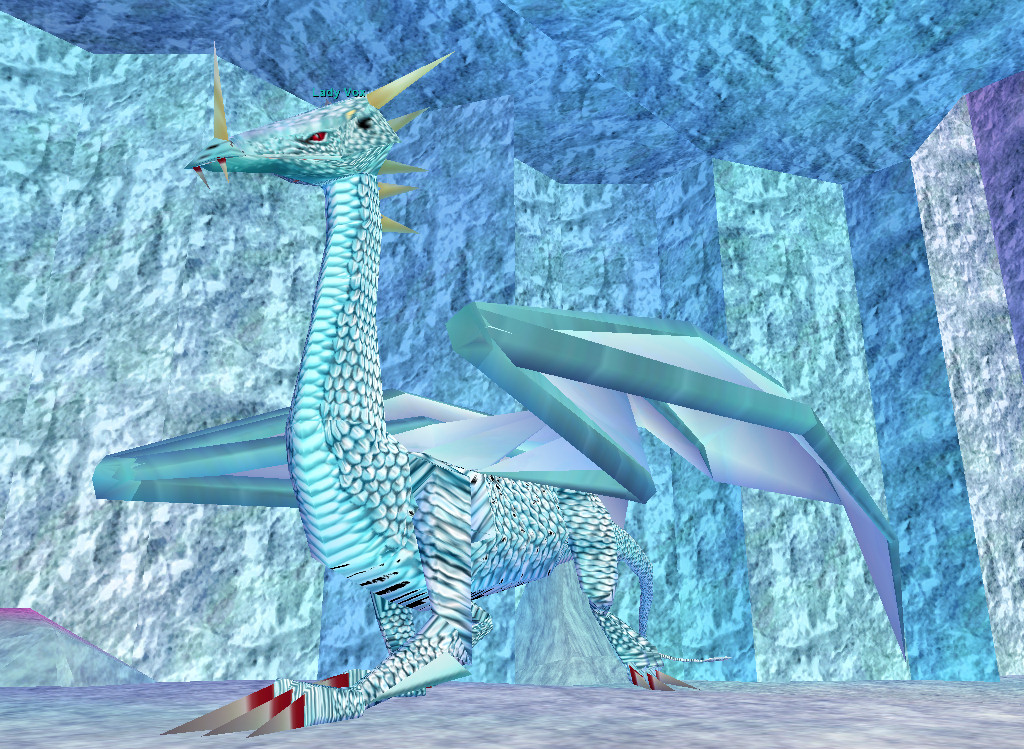
2276365-vox90b

I got plunged headlong into the world of raiding in EQ. I’d reached max level and had, up to that point, spent most of my time camping rare spawns for items and gearing up alts. My druid wasn’t my most powerful character; my Enchanter was, but this group needed a healer, not a chanter, so Druid it was. Anyone who raided in EQ is probably cringing at the idea of replacing an established raiding cleric with a relatively newly max-level healing druid. Let me add onto that that I played EQ for years on an iffy dial-up connection, so I lagged out constantly and would often have my connection stall without it actually kicking me from the game. From the perspective of anyone watching, I was just standing around, doing nothing.

I was horrible. Absolutely, appallingly bad. The other healers in the group carried my weight for me (with a smile, because they all missed Julie), but it was painfully apparent to me that I was contributing next to nothing. Occasionally, someone would speak up about how terrible I was, and a chorus of people would shout them down. It was extremely uncomfortable, doubly so because I knew that most of them were thinking of me as a memory of Julie; she’d apparently talked about me a lot.

Prior to this, I played aggressively casually. I really wasn’t very good at the game, and had gotten to high levels mostly through sheer stubbornness rather than any actual skill. I very, very quickly started picking up skill at the game, reading what few guides existed online and discreetly talking to some of the other healers about how to improve. It was the first big lesson of working in a team for me– I learned very quickly that the chorus of people shouting down the naysayers couldn’t give me useful advice; I got a lot of “no, you’re fine, don’t worry about it” saving-my-feelings kind of responses. Instead I started asking the outspoken critics– okay, so I’m terrible, what do you want me doing better? Most backed down when confronted, but a few gave me tips, and I started using those to improve.

b7e

This was really enlightening for me. I couldn’t get useful help from the people who were ostensibly on my side, but I could from my critics. I hadn’t heard the term “echo chamber” before, but it would have resonated with me (ha!) if I had. It changed the way I started working on mods for games like Morrowind and Oblivion in my free time– rather than listening to the people who said only good things, I got a lot from the people who criticized me. I started to crave brutal criticism, and it wouldn’t be until later that I realized the value of positive feedback. At the time, I felt like I didn’t deserve positive feedback– that was for people who were actually good at things, whereas I was demonstrably not. I reserved my praise for other people who I thought were more skilled than I was (read: everyone) and retained the criticism for myself.

I also started intentionally subbing out for other healers. It would be easy to say that it hurt my pride to do so, but it really didn’t– I was a pretty insecure teenager at the time and I wanted the group to succeed, so I’d show up on time but then opt out for someone who I thought was better (read: everyone). On the rare times I played at a friend’s house who had DSL, my performance was dramatically better, enough that people commented on it. I took this as a sign that I shouldn’t continue holding the group back. I eventually said I couldn’t play anymore, making up some nonsense story about me using too much internet time, and while the group was sad, they told me I should come back if I could get playtime. I thought that was unlikely, but I agreed, and figured they’d forget about this terrible player and move on. For me, it was a relief, because I was still hyper-insecure about my skill and thought it would be better if I wasn’t dragging down the group.

1065605-satellite_dish

A little while later, we got a satellite internet connection at home. It was laggy, largely terrible for games, but perfectly functional for MMO speed and, more importantly, STABLE. I hopped on EQ and immediately had tells waiting for me– want to hop in a raid? I couldn’t imagine why, but it turned out they needed a healer badly enough that I’d make or break their ability to go. I didn’t like it, but I figured I’d do my best and see.

I had already had terrible ping from my out-in-the-boonies dialup connection, so I was used to that, but the stability of satellite meant I could actually predict what might happen. I had things down cold, and it felt like it was easy to see what was going to happen and prepare for it. It was obvious to everyone who was paying attention that I was much, much better, and it was at this point where I got to see my first massive leadership failure.

The raid leader was thrilled that I was back and now actually *good*, and wanted to give me a permanent spot on the raid. This annoyed a number of people, particularly those who had criticized me before but now didn’t have a leg to stand on because I was legitimately skilled. It was seen as the leadership playing obvious favorites, and it absolutely was. I watched as I became the reason why this raid group and guild imploded. In retrospect, the problems were there and I had just been a catalyst for everything, but at the time it felt like I was the problem, why this otherwise perfectly functional and successful group was now failing.

670px-Disband-a-Guild-on-World-of-Warcraft-Step-1-Version-2

I couldn’t take it, and after the guild shattered, I quit EverQuest for good. I hated the drama, and hated myself for causing it, but it did leave me with a little seed that became really important later: I could be good at these games. It wasn’t something I’d ever thought about for myself before– I liked games but wasn’t very good at them– but now I was thinking it. Not just “good”, but “better than other players”. It got me eyeing a new sort of game, one where I could prove that I was better than other players. I got into DAoC shortly thereafter, where I did a number of things I’m not proud of and tried to atone for them, though that’s a story for later.

My experience with Julie’s guild left me looking at organizations though, especially online ones where it’s easy to miscommunicate, and thinking about how it could be done better. It would be a little while before that took root, but that’s where the seed was planted. I thought a lot about how groups functioned after that, spending my time in the next few games I played looking at how things were going. It eventually drove me to start my own guild– also a story for later.


Source: Digital Initiative
Remote Teams, the Wrong Way

NBI Talkback 3 – What Made You A Gamer?

Early Beginnings

searstelegames I had an extremely strange couple of days, so instead of talking about that I thought I would tackle the third talkback challenge.  For this one my good friend Jaedia posted a prompt on the Newbie Blogger Initiative website asking “What Made You A Gamer?”.  This is one of those topics that I have thought long about for years, and I am not really sure what the answer is.  I am not sure if there is any one thing that makes someone a gamer.  I think you are either born with the natural proclivities in that direction or you are not.  My earliest memories of gaming are pretty clear however.  My parents had a Sears and Roebuck version of the Atari Tele-Games console system…  aka Pong.  I remember being completely enamored with being able to move the bar on screen to intercept the square bouncing around the screen.  I don’t necessarily remember playing this all that often because well… it was my parents toy and not mine, but I remember the desire being real.

A few years later thought my parents purchased an Atari 2600, and that is the system I remember being “mine”.  My mom was a teacher and I guess one of her students was selling theirs used.  This is important because it sets up a long tradition of me buying console systems second hand that I continue today with my Craigslist finds.  The console came with the base system, several well worn controllers and a dozen or so games for the big price of $50… which actually was quite a bit of money back then.  I was enthralled by the games and while they really had no story to tell on their own, it didn’t stop me from making up stories.  Even the most generic game could be a vehicle for me to tell tales of valor and bravery.  I remember for whatever reason that Sea Quest was one of my favorite games at the time, which was this simple game about going down in a sub marine to save divers.  In my head I was this crack submarine pilot fighting off sharks to rescue my troops.

Discovering Role-playing Games

DaveTrampierPlayersHandbook At this point we are going to take a bit of a detour, because I was happily an Atari kid for years making up stories to fill in the gaps that the games were not providing for me.  Then an event happened that literally changed my trajectory permanently.  As I have said before I grew up the child of a teacher, and that means a bunch of things.  Not the least of which is that you end up spending a lot of time up at school waiting for your teacher parent to “wrap things up”.  I knew all of the janitorial staff by name and they were a kind of family that I hung out with as they did their things, and I waited on my mother.  At the end of the school year there was a tradition, the great locker cleanout.  On the last day of school, anything that was left in the student lockers at 4 pm was going to get dumped in the ground and thrown out, to clear the lockers to be cleaned for the next school year.  I learned my scavenging instincts at a young age, and this was pretty much a magical time for me as I wandered around through the piles of debris picking up gems.

Most of the treasures I found were in the realm of nifty “stationary” items like binders or notebooks, but I remember during second grade I stumbled upon a book that quite literally changed my life from that point onwards.  That seems like a fairly bold statement but finding a dusty well worn copy of Advanced Dungeons and Dragons Players Handbook was like opening a whole other world to me.  To say I was obsessed with this was a bit of an understatement.  I poured over the pages of the tome soaking in everything I could from it.  While I didn’t understand anything about the game itself, it provided for me a structure of types of heroes, types of weapons, types of magic that imprinted upon me.  I loved the artwork and the next year at school it dominated the recess games I played with my friends.  We were a band of warriors, and the fact that the Dungeons and Dragons cartoon started around this same time only served to fuel the fire.  The only problem being that we lived in the bible belt, and “Dungeons and Dragons” was an evil thing.  So instead I got wrapped up in the Marvel Super Heroes game also by TSR.  For some reason my friends parents could stomach them playing a game based on comic book heroes, so long as we never referred to or referenced it as being “like” D&D.  We had to go so far as to hide the dice needed to play it, so as a result I became the game master because my parents were cool with all of this.

The Nintendo Christmas

nintendo-nes-mario-console-boxed The next major event in my game development came with the release of the Nintendo Entertainment System.  Up until this point I had been doing everything I could to squeeze the joy out of a combination of the Atari and my scattered pen and paper role playing games.  Then my cousins came to town with their Super Mario Bros and completely destroyed my world.  Everything about the NES was just better.  There were stories being told through the games, and with characters that you could actually recognize as characters.  I grew up in a pretty small town and the arcade was a less than savory place.  So my exposure to Arcade games to that point was pretty much limited to the occasional lobby of a department store.  While I craved playing them, and begged my parents for a quarter anytime we were near one… it was not something I really got to do all that often.  When the NES came on the scene I was completely blown away by the graphical fidelity and my entire existence became about getting one.  This was the Christmas that the Nintendo was universally sold out around the country.

I had to be the most annoying kid because I kept tabs on which stores had them, which stores were rumored to have them… and which stores were sold out.  I kept my parents up to date on my findings, in hopes that they would rush out and get one.  So as Christmas rushed towards us and there was no Nintendo shaped box under the tree…  I was completely devastated.  Then Christmas morning happened… and I had put on a good face and was prepared to swallow down the disappointment.  There under the tree was sitting a gleaming Control Deck box just like the one above.  This was probably the most joy I had experienced to that moment, and if my parents had a video camera it probably would have looked a lot like the N64 kids.  This was the single best and worst Christmas I had ever experienced.  About two hours after getting my Nintendo…  we lost power due to an Ice Storm that was raging… and we did not get power back for three days.  So while I had the object of my desire…  I had no power with which to actually enjoy it.  The rest is pretty much history, games like Final Fantasy were able to merge my love of RPGs and my love of games, and now I spent most of my time playing MMOs.  I still think however that people either are inherently game lovers or they are not, and there isn’t really much that can “make” a gamer.


Source: Tales of the Aggronaut
NBI Talkback 3 – What Made You A Gamer?

Relationships in Cyberspace and Realspace

Advance warning: some feels in here. I haven’t told this story in a while.

I spent much of the weekend watching Sword Art Online with Kodra– as of this writing, we’ve watched everything that was available on Netflix, so the first two seasons. The central premise of the show focuses on the concept of a relationship borne of a game and a relationship borne of a real-life meeting. Specifically, the show’s underlying message is that while most people have a hard time understanding it, the relationships forged digitally are every bit as ‘real’ as ones forged in ‘real life’.

11876

I’m in a not-so-unique position to comment on this. Of my closest friends, nearly all of them are people I interact with digitally above all else. I have friends that I’m physically close to that I interact with more online than I do in real life. I’ve heard this described as ‘sad’, and I find that sort of dismissiveness irritating.

Let me tell you a story, of the first online friend I made. I was in high school, playing Everquest shortly after its launch. I had just hit level 29 on my Druid, which was an important level for that class as it unlocked a bunch of potent spells and let me travel and hunt like I hadn’t been able to previously. It was a big deal, and so I very quickly started using my new spells and got myself killed while soloing. Everquest had experience loss on death, so I was looking at a level drop to 28, locking me out of my new spells and setting me back days of progress. I was out in the middle of nowhere, on an island in one of the ocean zones, but I thought it was worth shouting for help, seeing if anyone could assist me. A reasonably-high level cleric could resurrect me, restoring enough XP to return my level to me. I didn’t really expect anything, and I told myself I’d wait an hour to see if anyone might come.

Everquest

Forty minutes in, I’d gotten ten or so private messages asking for my location, and each one had said “too far, sorry” when they found out how out-of-the-way I was. When I got a response that was simply “omw!” I was genuinely surprised. It took nearly an hour for the cleric to make it out to where I was– I was THAT far out of the way (anyone remember trying to navigate those EQ ocean zones, particularly the islands the boats DON’T go to?), and we chatted all the while. I kept half expecting to hear “ugh, this is ridiculous, sorry man” but it never came. Instead we joked about the boats, the sharks, how I died, how exciting level 29 was for Druids, etc.

When she got to me, he was pretty battered. She’d had a run-in with some wildlife (who largely didn’t bother me, a perk of being a Druid that I’d forgotten about) but was still okay. It took her a while to recover and then resurrect me, and bam, I had my level back. I could get us both out of there, and cheerfully did– using the (level 29!) Druid ports to get us to safety, near a major city. I went to tip the cleric, per the standard etiquette, only to find that he was trying to tip *me* for the port. We laughed about it, I expected we’d part ways, and got a last PM for the day: “oh hey, friend me? lemme know if you need a rez, if you don’t mind porting me sometimes :)”.

Ocean_of_Tears_Docks

We were never close in level (he was much higher level than I was, and he was gone by the time I got up in level), but we talked a lot, almost exclusively about game stuff. For the better part of a year, one of us would bug the other for a rez or a port and we’d come running to help out, often from the other side of the world, and we’d chat about whatever while we did so. I knew nothing about him in reality, but it didn’t matter– we were fast friends and the context of the game world gave us plenty to bond over. Instead of having lunch together and sharing the food experience, we’d chat while waiting on boats and bond over (lack of) inventory space.

Near the end of the year, I got a message from him: “hey, I’m probably gonna have to stop playing soon but I wanted to say thanks for hanging out with me. i know it’s rude to ask, but can i have your e-mail address? i want to send you something.”

Players left EQ on occasion; this was not a new concept for me. I was sad that he was leaving, but didn’t think much of it. This was the first time anyone who’d left had tried to make a connection after the fact, though, and I hesitated. Bridging that gap between game and ‘real life’ was sort of taboo– that was how all of the “abuses” and “scary people” on The World Wide Web got to you, to use the scare quotes of the late ’90s/early ’00s. This was my cleric friend, though, and if he’d been hiding his true self for a year, he’d done a really good job of it. With as much as we’d talked, it would’ve been very hard to hide anything, or so I told myself. I gave him my e-mail, not sure what to expect.

livejournal-logo1

The next morning, I woke up to an e-mail in my inbox from a “Julie”, which I didn’t expect, with a character name, class, set of items, and a bunch of other identifying information to prove that it was, in fact, from my cleric friend. At the bottom was a link “to some pictures, nothing bad, I promise” and a note “thanks for everything, I wanted to show you the real me”. Having spent a lot of time on the internet up to this point, I was leery of clicking any links I didn’t recognize, but it was a livejournal link (yep, one of those) so I figured it was safe.

The LJ page was someone named Julie, the cleric I’d spent a year hanging out with. She was wheelchair-bound and a cancer patient– every picture from the last year was of her in the hospital. The post I’d been linked to read simply: “To my druid friend Tam: Hi.” and included a bunch of pictures and links to old posts. I wound up reading her livejournal back entries, finding out about this girl’s struggle with cancer and the ways she took her mind off it, and started to realize that all of the references to “my best friend” were me.

We never spoke after that– when she left EQ she also dropped off the internet, and her LJ stopped updating. It was updated one more time, six months later, by her brother, with a “rest in peace, thanks for reading” message. At the very bottom of the post, there was a picture of her, happy, in her hospital bed. Next to it was a laminated picture, clearly a computer printout, taped up on the wall. It was a shot from Everquest, of a druid and cleric.

There’s nothing less real about online friendships than ones in physical space. RIP, Julie.


Source: Digital Initiative
Relationships in Cyberspace and Realspace