I Think I’m Learning Japanese (i really think so)

I spent about four hours today studying Japanese, and working on my process for teaching myself. A few people asked me what resources I was using, so I figured I’d talk a bit about those as well as how I’m structuring my study.

My first step was the free “level 1″ Rosetta Stone program, which I got for iOS. It lets you ‘sample’ various languages, in the form of a roughly two hour course, broken out into chunks. It’s a very high-immersion piece of software, using exclusively audio input/output, images, and kana (written Japanese) to teach. It doesn’t really hold your hand as far as explaining how to use it goes, so I had a number of missteps while I figured out what each type of exercise wanted me to actually do.

What I like about the Rosetta Stone software is that it teaches by showing rather than telling. It doesn’t explain how the grammatical structure works or what the words it uses mean, it leaves you to intuit what it’s saying through context. While this sounds very frustrating, it’s structured in such a way that you can pick up a lot of tangential lessons while doing the exercises it provides, and it mixes up the ways it demonstrates these. As an example, in one exercise it might have you match pictures with statements like “the boy drinks juice” or “the woman drinks water”. You’ll have learned “juice” and “water” prior to this exercise, and are basically now hearing them in sentences to get a sense of how they’re used. The last section of the exercise will then say “the man drinks tea”, introducing you to a word you haven’t seen before, but that you can guess at because the other options you have are “juice” and “water”, so the remaining new word must be “tea”.I Think I’m Learning Japanese (i really think so)

What I don’t like about Rosetta Stone is that, first and foremost, it’s extremely expensive. The software costs hundreds of dollars, and while I think it’s a good piece of software to get an early handle on the language, it’s not going to work for everyone and the depth to which it can reach is relatively shallow. It’s essentially a very expensive way to get a solid handle on a very small piece of the language, though its focus on audio puts it decently ahead of most learning tools shy of a tutor or study group; the latter may not be easily available and the former is going to cost rather more than Rosetta Stone in the long run (though cover a lot more material).

I can neither afford a tutor nor Rosetta Stone, so once I’d completed the free trial lessons, I went looking elsewhere for material. The next tool I started using was another iOS app: iKana, which is essentially a set of flash cards for all of the Japanese syllabaries. As a minor aside, it’s important to note that Japanese doesn’t use an alphabet the way we understand it in English. Each symbol in Hiragana and Katakana corresponds to a particular syllabic sound, which is either a vowel (e) or a consonant-vowel combination (ke). Because each symbol has a single sound (unlike English, which has anywhere from two to five sounds for a given letter), there are a LOT more kana than letters in the alphabet.

I Think I’m Learning Japanese (i really think so)

My approach as a raw beginner was to tackle this bit of memorization first. It requires very little structure and it’s going to be the foundation of me being able to read or speak the language. I spent about a week doing nothing but studying Hiragana for an hour each night, using iKana’s flash cards, stroke order practice, and built-in memory tests. The app comes in a package with iKanji, which is a similar app for learning Kanji (Japanese symbols for words/concepts, rather than syllables), though I haven’t yet used it much. The overall cost of the pair of apps was ten dollars, and I’ve gotten more than my money’s worth out of just iKana, without even touching iKanji. The convenience of being able to practice anywhere I have my phone is great, and it’s become a nightly ritual for me.

What I *don’t* like about iKana is that its tests aren’t extremely robust. Speed recognition tests give you a syllable or a kana and have you match it with its pair, letting you select from four. This is fine and good early on, but it’s a lot easier to score highly on a multiple choice test than it would be for me to simply write all of the Hiragana on a piece of paper. Essentially, iKana can get me a leg up, but I’m going to need to spend some time with something else (read: a pencil and paper, honestly) to get the rest of the way. I can’t speak much about iKanji, because I’ve opened the app all of once thus far. I’ll get to it later.
I Think I’m Learning Japanese (i really think so)

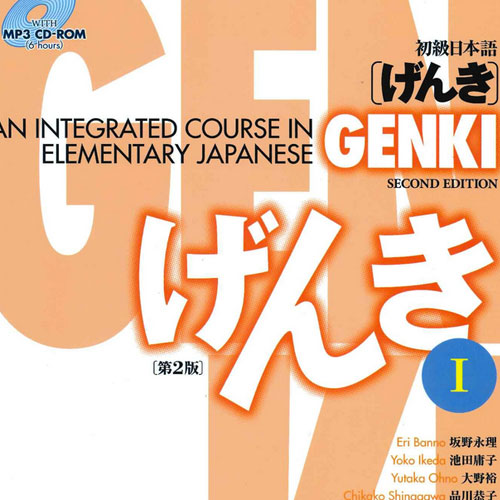
With a pretty okay basis for Hiragana, I felt like I was ready to tackle a textbook. The last purchase I made was the Genki textbook and workbook, for about $70 on Amazon. It’s by far the most highly recommended Japanese learning tool, though it comes with the caveat that it doesn’t hold your hand when teaching you. The textbook moves quickly and comes with some audio CDs for both textbook and workbook. What I like about it is that it provides Japanese text without visible romaji (English alphabet letters) so that I’m forced to actually read Hiragana rather than reading romaji and glancing at the actual Japanese text.

What I don’t like about Genki is that it really wants to be taught by a teacher that’s got a lot of other study work paired with each lesson, and it’s structured for use in a classroom. There are a number of exercises that ask you to talk with classmates, for example. Obviously an entirely self-taught language is going to be nearly impossible, but still.

I Think I’m Learning Japanese (i really think so)

The structure I’m putting together for my study looks something like this:

  1. Kana recognition, to the point where I can read kana by looking at it. I don’t need to be fast at this, I just need to be able to do it.
    • This is basically to lay a foundation for everything else. If I can read or hear sounds, I can put them together and work out what I’m hearing, but until then I’m going to be floundering.
  2. Basic grammar and phrases, enough to say some basic things and ask simple questions, and start to get a handle on constructing sentences of my own.
    • This is to get a grasp of sentence structure and start to get a feel for how to both speak in and listen to the language. I’m less concerned with grammatical perfection here than I am the basics.
  3. Vocabulary, vocabulary, vocabulary, both in kana and in kanji.
    • Sort of self-explanatory, and it’s honestly going to be a part of every step of the process, but here is where I’m going to start trying to express more complex thoughts, and I’m going to need the vocabulary to do so.
  4. Advanced grammar and sentence structure; how to say complicated things.
    • A lot of language learning programs will try to get you saying the complex English things you’re used to early on, which I find frustrating because I can’t break it down the way I do in English. When I tried to learn Spanish, I had a bad tendency to try to directly translate whatever I would have said in English straight to Spanish, and got frustrated because my (large) English vocabulary didn’t map neatly to my (small) Spanish one. It’s a trap I fell into previously and one I’m trying to avoid here. My hope is that I can afford a tutor by this point.
  5. Eloquence, more vocabulary, specialized communications.
    • I have no idea if I’m going to get here. I doubt I will unless I wind up spending some significant amount of time in Japan for whatever reason, or wind up with friends who’ll speak the language around and with me. If I can speak the language well enough to communicate for business purposes, that’ll be great, but that’s another thing I’m going to need specialized training in.

We’ll see how well this structure holds up to me actually trying to learn!

Liebstered!

Blaugust 2015, Day 5

Liebstered!On Sunday I finally caught that infamous blogging disease, the Liebster Award! Thanks Noctua and Mylex at Gamers Decrypted!

11 Random Facts About Me:

  1. I love origami, and can fold a mean shark.
  2. I have never played KOTOR, to my shame.
  3. I have 3 cats and only one of them hates me.
  4. My mom is the one who inspired and enabled my nerdiness. She still always calls me to make sure I don’t miss an episode of Doctor Who or a particularly cheezy made-for-Syfy movie.
  5. I came to MMOs relatively late, and WoW was my first MMO. I never played in vanilla.
  6. My first computer was a Commodore 64.
  7. In school I had to learn typing instead of programming due to my schedule. I hated and resented it right up until I realized that knowing how to type is amazing, and programming I could teach myself.
  8. Hands down, my favorite movie of all time is Pacific Rim. It is like it was made just for me and my childhood kaiju love.
  9. I absolutely hate wearing dresses or skirts. But I always end up playing casters in video games so my characters are constantly wearing dresses even though I won’t.
  10. I love Star Wars and Star Trek equally. Don’t drag me into your arguments, I won’t choose sides!
  11. My favorite food is cheese. If you don’t like cheese I will fight you.

Now to answer Noctua’s questions:

  1. What about writing do you love the most? Writing a blog is great because it forces me to reflect more deeply on what I’ve been doing, and connects me to the world of other game bloggers outside my social circle.
  2. Which is your favorite gaming console of all time? I’d have to say the original Playstation. It marks the point where I was capable of buying games I wanted without having to beg my parents for them.
  3. Do you believe in good and evil? I’m going to go with the sage words of god, or a computerized space probe that collided with god: “Right and wrong are just words, what matters is what you do.”
  4. What are your worst and best qualities? I can be overly competetive sometimes, but I make a mean spaghetti sauce.
  5. Are you an achievement, immersion, or social focused player? I’m definitely achievement focused first and foremost. I enjoy escaping into games, but once I’m there I need some objective to chase.
  6. What is your most beloved character of all times from a game?  If this means my personal characters, it would definitely be my forsaken priest in WoW, so many memories there. In terms of actual written characters, probably Sam from Gone Home. Never before had a game made me just outright weep at the end.
  7. What is your favorite book? This one is almost impossible to answer, there’s too many great ones! My favorite of what I’ve read recently would have to be One Salt Sea by Seanan McGuire because it is full of sea fey.
  8. Which is your favorite fictional villain and why? I always love villains that are smart and scheming.  My favorite Disney villain is Ursula, because she’s amazing and because her design was based on Divine.
  9. DC or Marvel? I’m not a comics fan at all. I’d have to answer Marvel to this question though, just from enjoying their movies and playing lots of Marvel Heroes!
  10. What about maintaining your blog do you find the most difficult? Coming up with new things to say, and believing that my opinions are worth posting for everyone to see.
  11. Which is your personality type? INTP, the classic absentminded professor archetype, I guess it makes sense. I most certainly am an introvert.

Now for my questions for my victims awardees:

  1. Why do you blog?
  2. What was your favorite childhood cartoon show?
  3. Fantasy or Sci-Fi?
  4. What’s the most amazing place you’ve ever been?
  5. Pizza: Chicago or New York?
  6. If you could only pick one game genre to play for the rest of your life, what would it be?
  7. What inspired your character name?
  8. What is your greatest gaming moment or achievement?
  9. Do you share your love of games with your real-world friends and family, or keep it to the internet?
  10. Have you ever had a really weird pet?
  11. What is your favorite type of environment/biome in-game and IRL?

Phew that was a workout! I’ve chosen a couple of my Aggrochat buddies who are also participating in Blaugust to answer my questions and share their 11 random facts:

Ash and Thalen consider yourselves Liebster-ed! I look forward to seeing your answers.

I hope you’ve enjoyed getting to know me a little better!


Progression and Achievement

I used to be a bleeding-edge-of-content type. At various points in my MMO-playing career, I’ve pushed hard against the wall of the most advanced content in various games at various times, and I’ve reached a point where I no longer feel the need to chase that. That having been said, I still love the sense of accomplishment of beating something legitimately difficult, even if I’m not doing it the fastest, or the hardest possible way.

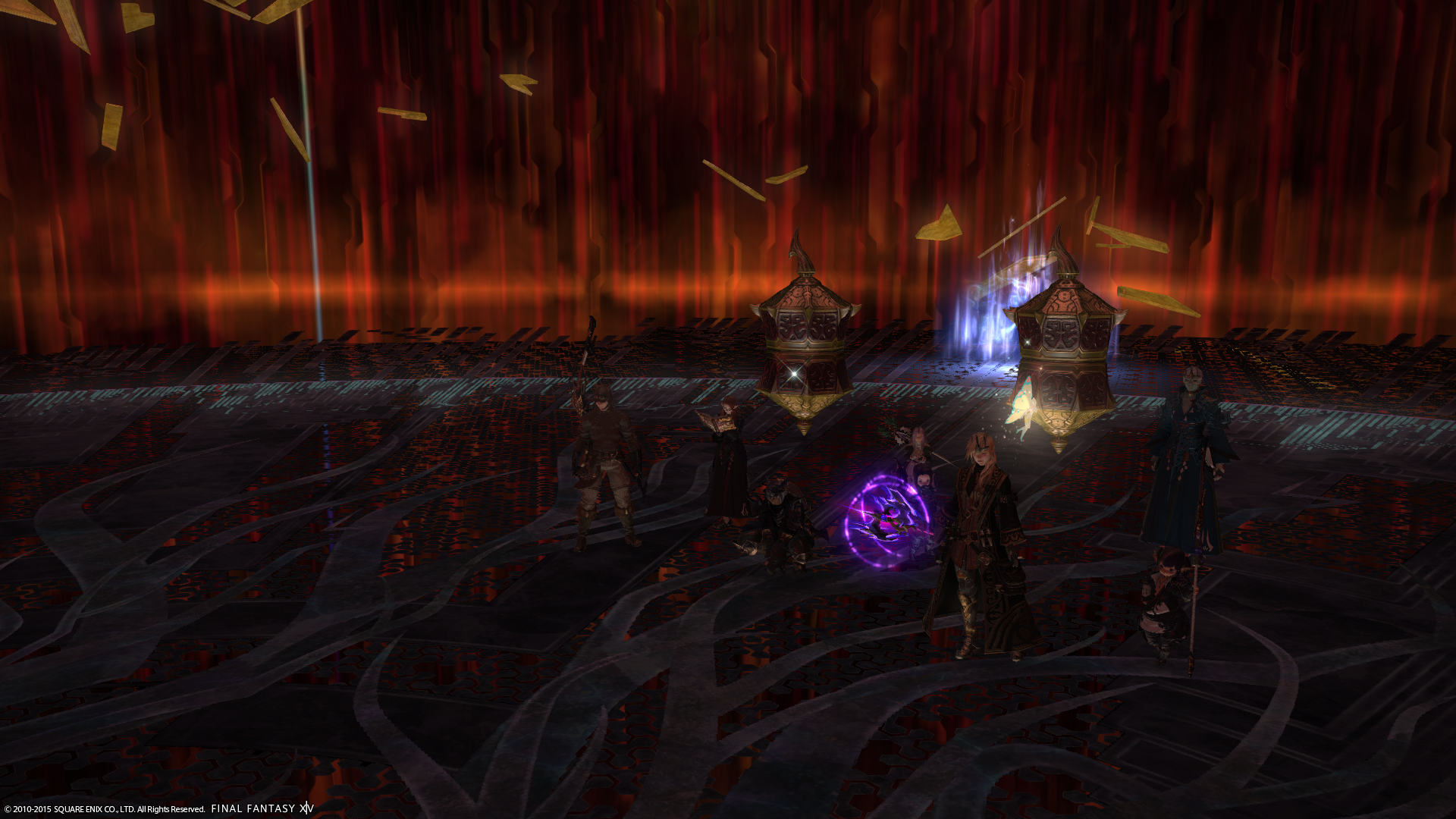
Last night, we beat Turn 13, finishing out the Binding Coil of Bahamut in its entirety. Even at the expansion power level, the final boss isn’t a trivial encounter, and took us more tries to beat than the first section of Alexander (expansion raid content, which we did immediately after T13). Part of this has to do with how shallow the power curve is in FFXIV– we’re not looking at orders of magnitude of power increases for the most part. The other part is that the mechanics of the fight are very, very nasty. Even on “easy”, it will happily wreck you if you don’t know what you’re doing.

What I like about this pace of content is that it keeps everything fun. Sure, we’re not going to be the first to beat everything, but we can and will beat it all, and we’ll do it without burning ourselves out. The only time I’ve been fatigued with the regular raid we run has been when we were bashing our heads against Turn 9, and even that was much less nasty than the severe burnout I was feeling doing Naxx40 in Vanilla WoW, or some of the plane raids as they came out in EQ, or hardmode Soa in SWTOR.

Progression and Achievement

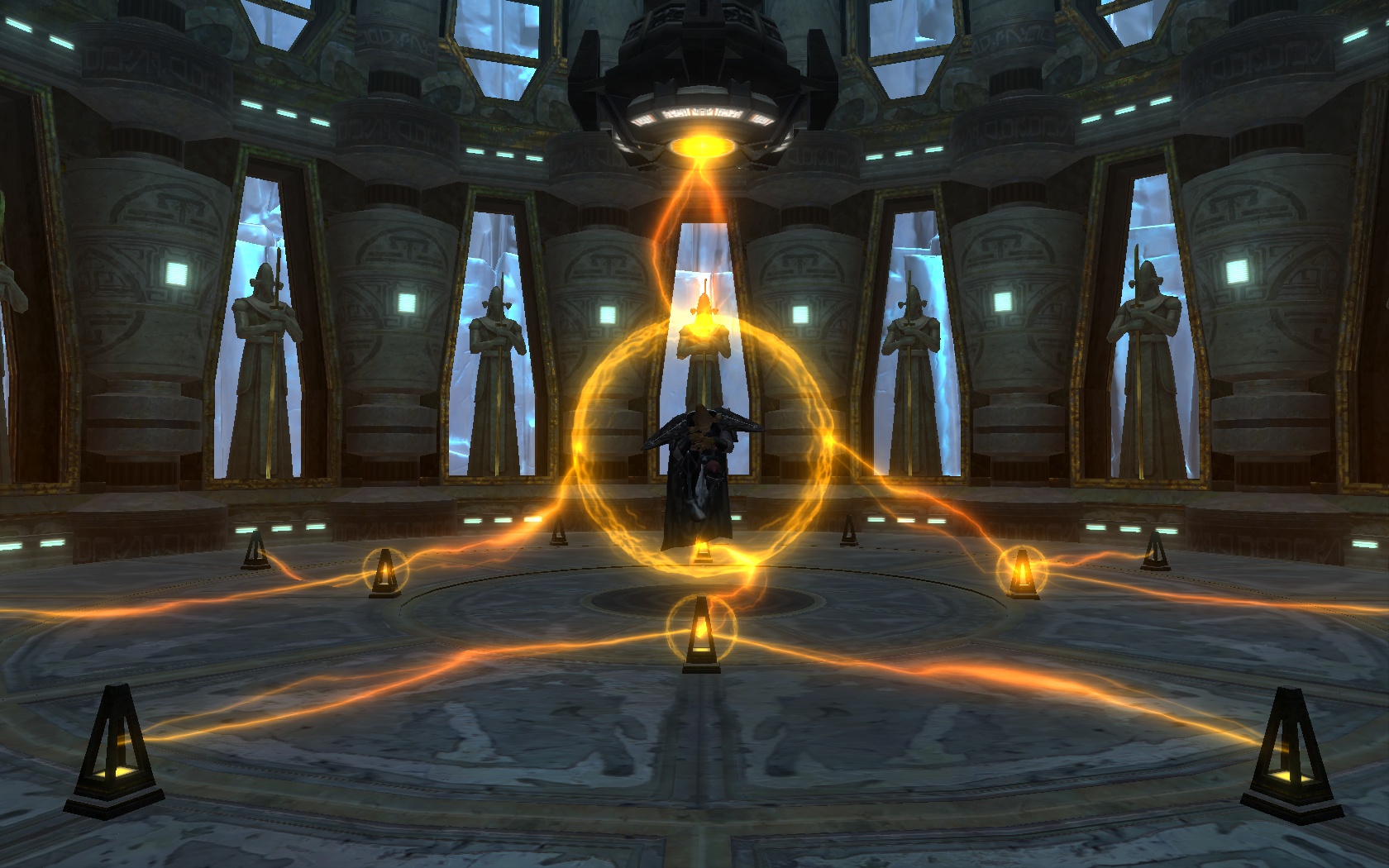
this picture is titled “swtor-soa-bug-fix” which should tell you a lot about the frustrations with that awful, awful fight.

I think a big part of it is that I feel like I’m getting a reward that’s more than an item or a title or an achievement for beating a boss. I’m getting a solid, notable chunk of story. The cutscene following the defeat of Arthas in Wrath of the Lich King is basically par for the course for FFXIV raids; every Coil ends with a cutscene like that, and there are also a goodly number of equally significant ones scattered throughout the progression. I’m getting a big chunk of interesting story that means a lot more to me than a fancy new sword or a piece of armor that will be outdated with the next release.

Indeed, at no point while we were raiding Coil were any of the drops going to be relevant for us. They look cool, and that’s about it; we were never going to see upgrades out of there. I think it helped things, and made our experience a lot smoother and more fun. We did each thing as often as we wanted to, rather than grinding them repeatedly just to get drops to gear up for the next one.

Progression and Achievement

As for myself, I got a little burned out getting my gear level up high enough to take on Alexander, grinding Law tomestones to get upgrades. I haven’t had the desire to log in and grind more dungeons, and I’ve been holding off on raiding Alexander on my own until I can see all the pieces of it with my team. I’m looking forward to new dungeons and new story quests to keep moving things forward, but in the meantime I’m branching out into a few other games. I may make a return to Archeage and muck about with that, although as mentioned before I’ve been fairly deep in SAO: Hollow Fragment.

After a fairly long period of being a bit uninterested in the games I had available to me, it’s exciting to have things I want to play again.

Thinking in Abstractions

I’m continuing to work on teaching myself Japanese, which has been a fascinating process. It’s been described to me as an extremely difficult language to learn, and as I familiarize myself with it, I’m starting to understand why.

Japanese is, in a lot of ways, a very straightforward, regular language, with very few exceptions to its rules and a surprisingly comprehensible set of grammatical rules. It’s difficult because almost none of these things map to English. I used to wonder how older (and some recent) translations of games and shows could be so incredibly bad, and I’m discovering that it’s because there’s really no direct translation. As I start to parse sentences, it feels a bit like one of the old Magic Eye pictures, where you have to look at it indirectly to allow your brain to see the hidden picture, and if you try to focus on it too much you lose it.

I can’t translate what I want to say in English directly to Japanese; I have to turn the sentence into an abstract thought, and communicate that. It’s made me a lot more aware of how I construct sentences in English, and I’ve started trying to think of English sentences as abstract thoughts to get a better handle on how to better express myself. In English, it’s easy for me to construct elaborate walls of words, adding complexity and waxing poetic to make a very simple thought seem like something a lot more ornate than it actually is. It’s a tendency that’s made it very difficult for me to learn languages in the past. I’ve made attempts at Spanish, and while I can understand it very well, I don’t have the breadth of vocabulary or understanding of complex forms to translate what I want to say from English into Spanish. Faced with Japanese, a language where I can’t make that translation, I’m finding that relying on my intuition to pick up meaning from sentences is really effective.

Thinking in Abstractions

It makes me think a lot about games and the comfort zones we play in. I had a discussion with a guildmate recently who was intensely frustrated by Summoner, because (as he put it) “you’re always guessing at what you should do next so it’s a constant panic”. He loves rotation-based classes, where he can plan his next moves multiple steps ahead, and couldn’t understand why I, someone who has the same love for planning, liked the class so much. For me it’s because the Summoner playstyle is an abstraction of what a rotation is trying to accomplish– having all of the right things happening at the right times. I’m never guessing at what I need to do next on my Summoner, because I’ve developed a feel for how things should go. I’m not thinking in terms of “this ability, then this one, then this one”, it’s more like “right now feels like the right time to use this”.

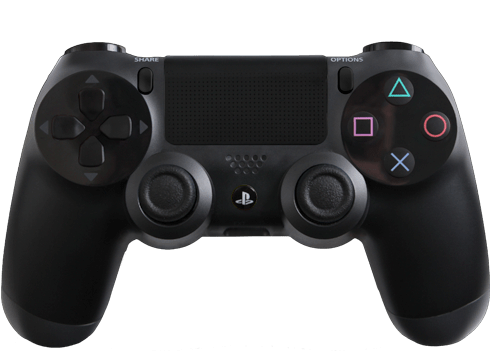
Similarly, I watched someone pick up a controller for the first time this past week. He’d been playing games on the PC for twenty years, but had never owned a console. I could see the frustration as he played a game he knew well (FFXIV) via a control scheme he wasn’t familiar with. He knew what he wanted to do, but couldn’t make the buttons respond quite the right way. His intuition about how to control the game was thrown completely off.

Thinking in Abstractions

Both things map to language learning for me. Speaking a new language is like trying to play a game through an unfamiliar control scheme, and understanding it is like making sense of a game by feel. I could, if I wanted, break down when to use every Summoner ability with a clock during a fight, so that you could work out a ‘rotation’ that mapped to when everything needed to be used. It would be like trying to translate through English for every sentence in Japanese– doable, but you lose a lot and you’ll never be as quick as if you can internalize the abstraction and just maneuver by feel.

Different people find different things difficult. I have two friends nearby, both from China. One of them speaks English with almost no accent, but sticks to relatively simply constructed sentences and misses a lot of nuance in other people’s speech. The other has a very heavy accent, but a much broader use of vocabulary and sentence construction, but struggles with making her actual words understandable. I’ve had the opportunity to speak with both of them via text over the internet, and their speech patterns are starkly different– both are very eloquent and have a firm grasp of the language. They’re both playing a game with a control scheme they aren’t yet used to, but taking different approaches.

Thinking in Abstractions

In the meantime, I’ve reached the point in about two weeks of study where I can almost read hiragana and I can hear the shape of sentences– I can’t understand them, but I know enough to pick up pieces and figure out what the subject, topic, verb, etc all are even if I don’t know what they mean. It’s going to be a long time, if ever, before I can hold myself to the same standard in Japanese as I do in English, but the process is giving me a lot of insight into how I speak in English, and how I can improve.