Luck

Luck is believing you are lucky.

quote-luck-is-believing-you-re-lucky-tennessee-williams-199155

It’s a pithy quote, but one that’s resonated with me, and I think is deeper than it first appears. I have been described as lucky, and from a cosmic standpoint, I am. I won the character creation die roll at birth and have been gifted with a great deal of opportunity throughout my life.

At the same time, I’ve known a great many people who have had the same opportunities and gifts as I have and have failed to do much with them. Often, this is a result of a cascade of events that leaves them rather worse off than they started– a “string of bad luck”. I joke with friends about bad luck (I’ve commented about how my luck in games is awful unless I stand a chance of harming someone else’s experience through a random string of good luck, at which point it happens a lot), but the reality is I don’t actually believe in bad luck.

Luck, for me, is something you can only see in hindsight. After something has happened, you can look back on it and say “wow, that was lucky”. Much of the good fortune I’ve had in my life I can look back and say “oh, huh, that was lucky” in hindsight. Luck isn’t a safety net; you can’t live expecting things to go well for you because when they inevitably don’t, everything will fall apart because it’s easy to get into a cascade failure if you’ve left things to chance and have no real safety nets.

image from the new york times

image from the new york times

I use luck as a way to appreciate good things that have happened to me that I wasn’t a direct part of, and to clear my mind about the bad things that have occurred that I’ve had no control over. It lets me better understand what I should take credit or responsibility for and what I shouldn’t. It helps me keep my cool and keep a clear head in a crisis.

To use a recent, low-impact example: In the Infinity tournament I played recently, I suffered what some might call a string of bad luck in the second round, losing more than half my force in my opponent’s first turn, to a single model that cut a bloody swathe through my lines, and then getting heavily locked down. My opponent commented later that he was intimidated by how calm I was as I lost almost every single one of my critical pieces. The reality was that I was rapidly trying to figure out what to do next as I lost die roll after die roll, but I was confident that my choices had been correct ones and my dice failing me wasn’t something I could control. Instead, I focused on my turn, and what actions I was going to take in response. It gave me a clarity of purpose that was entirely separate from the die rolls I was losing.

photo courtesy of Toadchild

photo courtesy of Toadchild

By the end of my second turn, I’d won the round, despite suffering crippling losses and barely scratching the paint on my opponent’s force– I think he lost perhaps a single model in the entire round. I could have easily gotten caught up in how bad my luck had been (and falling into the trap of assuming it would continue), or started taking reckless chances with low odds of success (something I’ve seen a lot of people do when put in tight spots). Rather than blaming my poor luck or trying to use luck as a safety net, though, I was able to win by doubling down on the choices I’d previously made that I thought were good, not using luck as a proof that my choices were bad and not worth following through on and not breaking from the plan. I had fewer tools to work with, but the plan was still intact.

In the previous turn, I’d set up a number of objectives for myself, playing very aggressively and securing a strong lead. I was still in the lead as my opponent ended his turn, just not quite as far ahead. Rather than trying to retaliate against my opponent, I simply continued the plan I’d started with, finishing off the objectives I’d set up. I had one model who could accomplish that goal, but he was able to do it before getting knocked out at the end of my turn. Looking back, I was lucky that my rolls worked out as well as I would’ve liked, but the reality was that my choices in my previous turn had given me what I needed to secure victory, even put very far behind in my opponent’s turn.

photo by joe philipson

photo by joe philipson

Despite appearances, I’m actually extremely risk-averse. I take a lot of chances that seem risky, but I’ve often done a lot to mitigate or negate the penalties for failure. I’ll take long-shot chances if the risks are low, but I’ll rarely take even good chances if the stakes are very high. As a result, from the outside, it looks like I’m taking a lot of chances and somehow making most of them work, but the reality is that I’m only taking chances that don’t harm me overmuch if I fail.

From the outside, this looks like luck. On the inside, I believe in my ability to assess and mitigate risk, and the choices I make as a result.

Luck is believing you are lucky.


Source: Digital Initiative
Luck

Playing Competitively

I’ve talked before about the joys of unsophisticated play. The low-to-mid tier of play has a lot of joys that are often left out in the mad scramble many make for the top, competitive tiers of play. Whether that’s missing out on the fun of playing suboptimally and organically discovering strategies or remembering to read the story as you work your way to max level, there are a lot of things you miss if you don’t stop and smell the roses.

UI_Difficulty

On the other hand, the experience of playing a game both competently and competitively is an experience and a joy all its own, and is worth pursuing even if you don’t consider yourself a competitive player. I’ve spoken to a lot of people who look at games or parts of games that seem “too hard”, and I know they’re able to do them– I’ve seen them exercise the necessary skills. Our (first) raid in FFXIV was extremely skittish about going into Coil, because coil was “really hard” and we weren’t sure of ourselves. We crushed everything up to Turn 5, and once we passed Turn 5 we slammed through most of Second Coil all the way to Turn 9. This week, we took our break from Turn 9 attempts to fight some new primals, taking down Titan EX for some folks who hadn’t gotten it, and also dropping Odin and Leviathan EX.

We had avoided Good King Moggle Mog Extreme for months, because of its reputation for being super rough, and once we stepped foot inside we won within three attempts, and can more or less trivially farm that boss. The group is very skilled and very capable, we just need to remind ourselves of that on occasion.

51tvpTzuwdL

I want to take a little break to talk a bit about fun. Stealing a page from Raph Koster’s book, fun is what happens when your brain is exercising. You see patterns and enjoy watching them recur, and causing them to recur in the game. When you’ve mastered the patterns, the game becomes boring. You become frustrated when the game presents you with what looks like noise. When that noise resolves itself into a pattern, or when you can start to see how the chaos becomes something sensible, that’s when your brain is having fun.

Everyone is at a different level when it comes to this sort of thing. Players playing at unsophisticated levels of play are having fun because they’re resolving the noise into patterns still. Highly skilled players playing at that level will be bored, because they’ve mastered those patterns and want to move to higher tiers.

You can keep a game fun for a lot longer than you might expect by raising the difficulty– either literally or by trying more and more difficult things, keeping yourself at that level where you haven’t mastered the patterns but you’re not just looking at noise. The worst that happens is you fail, no different from an accidental misclick or a lost ‘net connection, or just jumping off a platform to see if you can.

tumblr_m9zvboUjlW1qbh26io1_1280

I mentioned above that there’s enjoyment to be had in watching patterns recur– this is why we see very similar movies and similar themes in TV shows, why a particular type of entertainment is popular for a while and you feel inundated with the type. If you’re looking at the available offerings and feel like they’re all the same and uninteresting, you’re either looking at a pattern and just seeing noise, or you’ve mastered the pattern and gotten bored with it. It’s why game publishers run franchises into the ground and why WoW gets a spike of people with each expansion and loses them more and more quickly each time.

For myself, I don’t play fighting games or most board games at a terribly sophisticated level. If I play either one at all, I play it once or twice and move on to something new, a different experience. In the case of fighting games, I understand the patterns conceptually but in practice they’re all just noise to me. I have a low threshold for memorization, and tend to avoid games where skill is about memorizing or keeping long strings of data in my head.

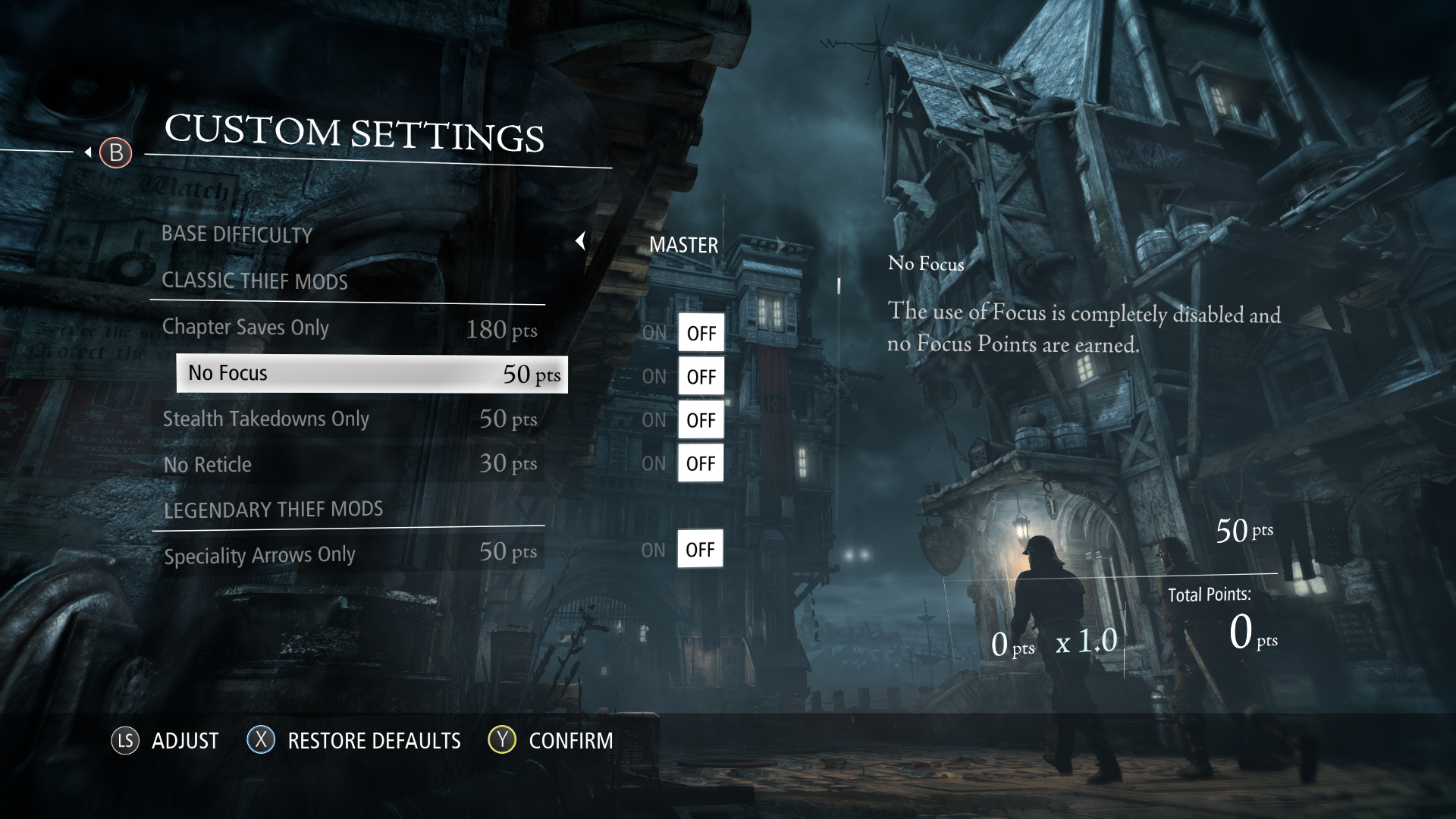
blog_customdiff_big

On the other hand, when the new Thief came out, I played it start to finish not just on the highest difficulty setting, but with about 80% of the additional “even harder” options active. I played through Dishonored on my first playthrough at the highest difficulty setting and went for the wholly-pacifist “Clean Hands” ending. I love those types of games, and I’m used to the patterns enough that I want the additional challenge or the game is boring for me.

In a similar vein, I have rarely played the same Infinity list twice, and have never brought the same list to two different tournaments. Constantly changing my lists keeps me seeing new patterns and keeps the game fresh for me.

The trick is to find a balance between trivial, assured victory and frustrating, predictable defeat. Don’t be afraid to lose or fail, because doing both of those things is how your brain realizes something is exciting and a potential test of its abilities.


Source: Digital Initiative
Playing Competitively

Gaming Ennui and The Pendulum

I haven’t been playing a lot recently. I’ve hopped on for FFXIV raids which have been a blast as always, but I haven’t been on much other than that to work on my character. A lot of that is I’m throttling back in preparation for Heavensward, which I plan to greedily consume as soon as it’s out. Normally, I play other games in the interim, but nothing is jumping out at me.chronometer-black_design_1024

This probably has a lot to do with what I call “the pendulum”. I like a really wide swathe of genre fiction, from high fantasy to hard sci-fi and everything in between. My interests tend to swing back and forth– for a while I’ll be really, REALLY into swords and sorcery, and later on I’ll find fantasy boring and want to delve deep into cyberpunk or spaceflight. The pendulum is slow, and the right thing can keep me somewhere or another for months or more.

When a game comes out at “the wrong time” for me, it’s often because the pendulum hasn’t swung the right way yet. As of this writing, I’m fairly deep into a sci-fi arc. I want cyberpunk games, fancy technology, and exciting futures in my entertainment. I spent several minutes this evening holding the most recent expansion pack for Android: Netrunner, despite knowing that no one I know plays it and I don’t even love it myself, just because it scratched that cyberpunk itch. I’ve been doing a lot of work with my Infinity stuff lately, rebasing an entire faction and fiddling with colour schemes in photoshop to see what I like.

This part of the pendulum swing has lasted for a while. I started playing Elite: Dangerous in January, played all the way through Deus Ex: Human Revolution in February, have played around a lot with Dreamfall, and all the while have been hip deep in Infinity. In the meantime, I’ve tried multiple times to get into Pillars of Eternity, Warmachine Tactics, and my second playthrough of Dragon Age: Inquisition, all without much luck.

1396228023049

Last year, I was playing a ton of Dragon Age: Inquisition, Shadows of Mordor, Assassin’s Creed IV, and even some Divinity: Original Sin (when Ash and I remembered to sync up schedules). Borderlands: The Pre-Sequel dropped at a point where I really wanted to swing swords around and be a wizard, and it kind of passed me by.

There’s a bunch of stuff that sits neatly in the middle of the pendulum, though, and I can usually get into it no matter how I’m feeling. The biggest one of these is Star Wars, which blends sci-fi and fantasy well enough that I can be interested no matter how I feel. Loading up KOTOR is something I’ll do frequently, though I’ve been a little starved for good Star Wars games lately. Final Fantasy is often another that fits the bill, leaning a little more on the fantasy side but still pretty techy and satisfying. Even further towards fantasy are steampunk games like Arcanum or Dishonored or Thief. Modern Supernatural settings (Vampire: the Masquerade, The Secret World) are on the other side of middle, and Shadowrun is a little closer to sci-fi but still has that touch of fantasy (I’m convinced it’s the only reason I can talk some of the people I know into playing it).

cloud-atlas

What happens with me is that I’ll need to complete the swing, get all the way to one side of the spectrum before coming back. Right now, I really, REALLY want to play something in a nice chrome-and-holographics world and I’m frustrated by my inability to find anything. I could fly spaceships if I wanted, but I really want, essentially, Cloud Atlas the game. Fantasy is a lot easier for me– I can hop into Diablo or Guild Wars 2 or anything LOTR to get my fantasy fix, but sci-fi is a lot harder.

I’m still trawling for something that might give me the sci-fi fix I’m looking for, or, failing that, get the pendulum swinging back towards something else. In the meantime, time to reroll my Shadowrun: Dragonfall character for the tenth time or so.


Source: Digital Initiative
Gaming Ennui and The Pendulum

Believable Settings

1302162014076

In games, there’s a balance to be struck between realism and heroism. If the setting is too realistic, too much like the players don’t play a significant enough role, the game will feel pointless, with a lack of agency on the part of the players. If the setting is too unrealistic and caters to the players too much, it will feel contrived, like the world is just a set of facades without anything real behind them.

In a similar vein, agency is important. If your players have too much agency, they can run roughshod over anything you present, wandering the world and acting to their whims like callous, self-absorbed gods. If the world punishes them too harshly for any transgressions, the game can feel like a prison, where they must walk certain paths at certain times or get the lash.

I’m going to talk a bit more explicitly about tabletop games, but the kinds of things I’m describing can apply to other kinds of games as well.

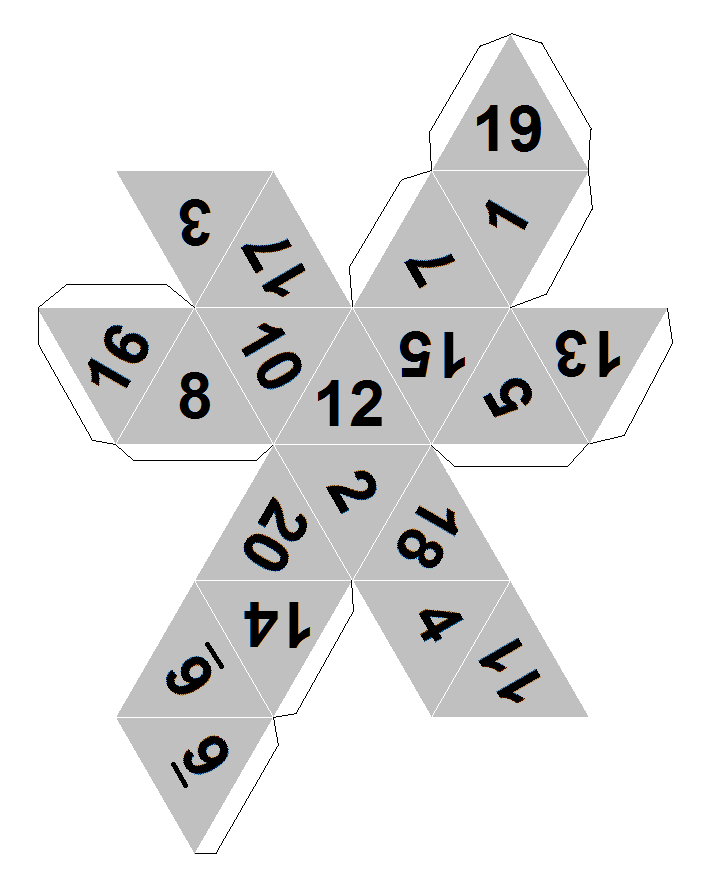
D20

Despite not ever running punishing, punitive games, I have a reputation among my players of setting up extremely worrying campaigns with a low margin for error. I chalk this up to me leaving a lot to my players’ imaginations, rather than being explicit about what’s going on. It’s the difference between saying “there aren’t any traps here” and “you detect no traps”. I take very detailed notes on the actions of my players in any given session, so that I know what information to present in later sessions. I drop a variety of vague hints as we play, but I like to leave it to my players to ask the right questions to accomplish their goals. This leaves me open to answer questions I didn’t anticipate and open up new paths, rather than proscriptively deciding how a puzzle or problem is to be solved before starting.

Much like improv theatre, it’s best to think of things in terms of “yes, and” rather than “no, but”. To use an example from a recent game session: the (Shadowrun) party is presented with a place to break into in order to spy on a pair of corporate executives who have been making their lives difficult. It’s a private casino that’s surprisingly inaccessible. The very first question I’m asked is “how do we get invitations?” This leads down an interesting path, where instead of a stealthy break-in, the team is looking at waltzing in like they belong. It’s a perfectly legitimate option, and there’s no reason they can’t make this sort of plan. What happens once they’re inside is going to be interesting, but it’s not an inherently flawed idea. The mission has just changed from a stealthy break-in to an elaborate masquerade.

I’ve had people comment to me that I’m extremely flexible when running games and never seem to be caught off-guard when my players take a random turn towards something bizarre. There’s a trick to this that I’ve used for years, that’s also how I keep my worlds feeling like worlds and not facades.

stock-footage-abstract-gold-clockwork-d-animation

Behind the scenes, there are events that are playing out, based on a script. Mostly these aren’t things the players can influence, because they’re too detached from what the players are doing. Each session, every quest, mission, dungeon, and break-in yields more information about these events that are occurring out of sight. These aren’t the plans of the main villain of the campaign (if there even is one), they’re what’s going on in the broader world. There’s (rarely) any direct, earthshattering consequence to ignoring them, but they serve as my adventure hooks. Many are ignored, and the wheels continue turning in the background. Sometimes one comes to the fore, and the players can get ahead of it and start influencing the events either as they’re happening or before they occur.

The important thing here is that they don’t necessarily relate to the players. A lot of the loops resolve themselves without the players getting involved, and the world changes, and they may or may not notice. Sometimes they decide they have opinions about the world changing and do something to either hasten or stop the change.

It’s a trick I learned from reading Terry Pratchett’s Discworld series, which I still consider to be some of the finest longform worldbuilding out there. Over the course of the series, the Discworld changes significantly, and a lot of the changes have enormous repercussions, but aren’t necessarily traumatic. A lot of times, a game will only have one or two single, major events affecting the status quo, and those are the only things making any noticeable impact on the world. I prefer my games to feel like worlds in which the players are a part, but not the center of things (until they force themselves into center stage). Events and changes constantly occur, but aren’t necessarily directly threatening to the players. It lets my NPCs have lives and motivations outside of how they interact with the players that are more than just a prewritten text block, and can change over the course of the game without breaking things.

Above all, keep the world changing. Most of the games I’ve had that have petered out have done so largely because I finish a story arc and don’t have anything to follow it up with, and I haven’t made enough rolling changes to the world to introduce something new without it feeling contrived.


Source: Digital Initiative
Believable Settings